Northeast’s ‘New Engine of Growth’: What Has Changed, and What Issues Remain?
The Northeast is being described as one of India’s engines of growth, but the region’s development story is not just about infrastructure, investment or economic potential. It is also about the recognition of its many communities, the preservation of regional identities and the resolution of longstanding local concerns.
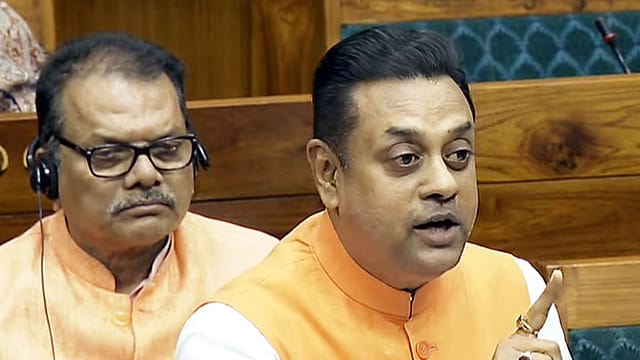
That was the message BJP MP Sambit Patra sought to convey at a press conference in New Delhi on September 23, when he described the transformation of the Northeast under Prime Minister Narendra Modi’s government. Patra’s remarks combined a political assessment of the period since 2014 with a list of issues that, he said, had been discussed with newly elected MLAs from the region.

Zeroing In on ECI
09 Oct 2026 - Vol 05 | Issue 41
Constitutional legitimacy versus political opportunism
His central claim was captured in a play on the abbreviation NE. Before 2014, he said, it stood for “Non-Existent”. Under the Modi government, he argued, it had become the “New Engine of Growth” for India.
“From no existence to a new engine, this is a huge change for the northeastern states,” Patra said.
The statement is a political characterisation of the region’s development, rather than a measure of it. But the issues he raised alongside it offer a way to examine what development means in a region made up of different states, languages, tribes and communities.
Why Sambit Patra says the Northeast has changed since 2014
Patra attributed the Northeast’s changing position to the government’s focus on development and cultural recognition since 2014. He also referred to discussions with newly elected MLAs on matters concerning the region.
The BJP MP said these discussions covered four important development-related issues, although his remarks specifically identified language recognition, coal mining and the rehabilitation of the Sikh community.
The emphasis on regional concerns is significant because development in the Northeast cannot be understood as a single, uniform process. The region’s states have distinct political histories, social identities and economic priorities. Questions concerning language, livelihoods, land and community rehabilitation can therefore sit alongside wider debates about economic growth.
Patra presented the government’s approach through the slogan “Sabka Saath, Sabka Vishwas and Sabka Vikas”, saying it aimed to respect every language and tribe in the Northeast.
However, his comments did not provide a detailed account of the projects, expenditure or development indicators behind his broader assessment of transformation.
Khasi and Garo language recognition: Why the demand matters
One of the issues Patra highlighted was the demand for recognition of Khasi and Garo languages.
He said discussions had taken place on including the two languages in the recognised language list, framing the demand as part of a wider commitment to respecting the region’s linguistic and tribal diversity.
Language recognition is not merely symbolic. It can have implications for cultural visibility, education, public administration and the relationship between communities and institutions. For communities seeking greater recognition of their languages, the question is also about how their identity is represented within the larger Indian framework.
Patra said the government was looking into certain amendments and issues raised by people from the region, but did not specify the proposed amendments or provide a timeline for any decision on Khasi and Garo.
The distinction between a demand being discussed and a formal decision being taken is important. Patra’s remarks establish that the issue was raised during the discussions he described; they do not establish that the languages have been granted the recognition being sought.
Coal mining and Sikh community rehabilitation: The issues still on the table
Patra also identified coal mining and the rehabilitation of the Sikh community as matters requiring attention.
“Coal mining is one of the issues which we will look into, and as far as the Sikh community and the rehabilitation of the Sikh community, that issue is also an important issue,” he said.
His comments did not specify which coal-mining questions were being considered, what changes might be proposed or what rehabilitation measures were under discussion.
Nor did he provide details about the Sikh community rehabilitation issue, including the precise measures being sought or the status of any proposed resolution.
Patra expressed confidence that the concerns would be addressed under Modi’s leadership, saying: “We will successfully resolve the issue under the Honourable Prime Minister Narendra Modi.”
The statement signals the BJP MP’s assurance that the issues will receive attention, but it does not establish that they have been resolved.
What the Northeast’s development debate is really about
Patra’s remarks bring together two strands of the Northeast’s development debate: the government’s claim that the region has gained greater importance in India’s growth story, and the continuing need to address specific concerns raised by communities within it.
The first is a question of economic and political positioning. The second concerns the practical experience of development, including whether communities see their languages, livelihoods and rehabilitation needs reflected in policy.
For the region, these questions are connected. Growth is not only about how much economic activity takes place, but also about how development is experienced across different states and communities.
Patra’s comments offer the BJP’s account of the transformation since 2014, while the issues he identified show areas where discussions and decisions remain relevant.
The next measure of progress will be the details: what action follows on Khasi and Garo recognition, what coal-mining concerns are addressed, and what steps are taken on Sikh community rehabilitation.
For now, the phrase “New Engine of Growth” captures the government’s political framing of the Northeast. The more concrete test lies in how the region’s varied development demands translate into policy and outcomes.
(With inputs from ANI)