Tamil Nadu Assembly Election 2026: MK Stalin, the Inheritor at Bay
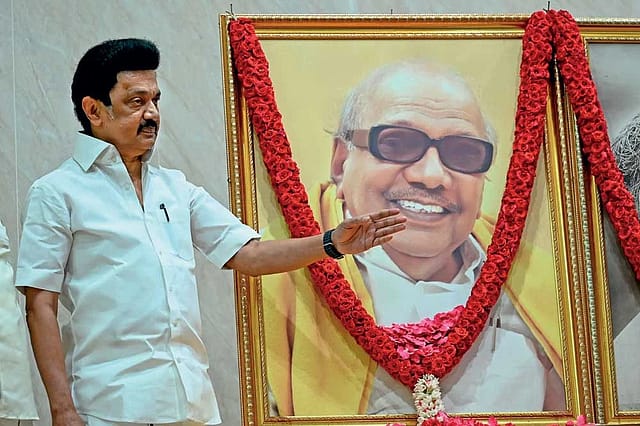
The DMK came to the fourth of May with five years of governance, a welfare record, and the weight of six decades. It was not, as the counting progressed, proving to be enough. This election was supposed to be Muthuvel Karunanidhi Stalin’s coronation by ratification, and the votes, piling up slowly through the morning, had other ideas.
Tamil Nadu under Stalin posted 16 percent nominal GSDP growth in 2024-25. Illam Thedi Kalvi sent nearly 165,000 volunteers into the homes of nearly 10 million children to repair pandemic learning losses; the women’s reservation in government employment rose from 30 to 40 percent. DMK truly thought it was on safe ground. The prize on offer was genuinely historic: no party had won consecutive terms since MGR in 1984 and Jayalalithaa in 2016, before she died in office. The state has otherwise rotated its masters with the dutiful regularity of a tenant who has never been permitted to own. A second consecutive term would have been an achievement for Stalin that his own father never managed, across five attempts.
Throughout the campaign, Stalin reached again and again for the same instrument. This election is Tamil Nadu versus Delhi, he roared. He burned the Delimitation Bill in Namakkal. Kanimozhi, his half-sister, workshopped the line in every interview: 2026 is about delimitation, Hindi, federalism, the South punished for having had fewer children than the North. The grievance is real. The proposed redrawing of Lok Sabha constituencies would transfer parliamentary mass from the demographically responsible South to the prolific North. Stalin may have been right to oppose it. He was wrong to suppose it would carry an election. He ran the campaign as if the assembly election were a referendum on the Union government, framing every local grievance as a Delhi conspiracy. The DMK’s manifesto, by contrast, was thin on new commitments. It did double its women’s cash transfer to Rs 2,000 and introduced a new household appliance scheme, but TVK’s Rs 2,500 still outbid it, and on the unemployment question the party had no comparable answer. It contested, in effect, on the credibility of its record rather than the ambition of its promises—the most dangerous platform available to a party facing an insurgent in a three-way fight.

Open Minds 2026
26 Jun 2026 - Vol 05 | Issue 26
The power of ideas and arguments in 50 portraits
The DMK’s failure to see Vijay coming is now a matter of record. Kanimozhi had spent the campaign assuring anyone who would listen that Vijay could not be compared to MGR and that the DMK was not bothered. His candidates campaigning by hologram were labelled “interesting to watch”. The party had seen many parties like TVK. By the morning of the fourth of May, the distance between the DMK’s confidence and its circumstances had become measurable in seats. TVK was leading in 14 of Chennai’s 16 assembly seats, the two exceptions being constituencies held by the chief minister’s son and a cabinet minister. According to the ECI website, updated after 2pm, TVK at 109 was short of a majority but led the DMK’s 52 by more than two to one. The DMK had been reduced from 159 seats in 2021 to leads in 52, a collapse of over 100 seats. The AIADMK at 55 was actually ahead of the DMK, meaning the ruling party would finish third if the numbers do hold.
The DMK had arrived at this election having won 159 of 234 assembly seats in 2021 and, three years later, 39 of Tamil Nadu’s 40 Lok Sabha constituencies, the most complete dominance the state had seen in a generation. It was the kind of record that produces, in political organisations, a particular form of paralysis: the inability to imagine that what worked before might not work again, that the voter who gave you everything can take it back without apology.
Whatever the final numbers say, the verdict on the campaign has already been delivered. Stalin had governance, welfare, legitimacy, and six decades of his father’s capital lying around unused. He chose to spend the campaign quarrelling with Delhi. Delhi was not on the ballot. Vijay was. The day, at least, belongs to that fact.