Assembly Election 2026 Result: How the Lotus Bloomed in West Bengal
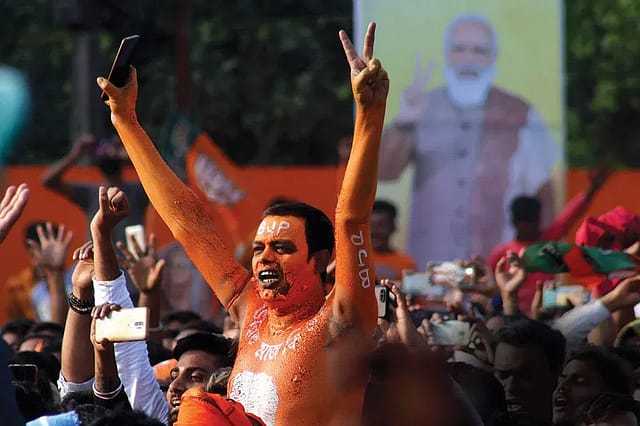
The most beguiling argument about why the Bharatiya Janata Party (BJP) will not make in West Bengal was that the party is a cultural interloper in the state and is incapable of connecting with its beating heart. The counting trend at noon on Monday pointed to a massive BJP win in an election that was sharply bi-polar. The “bhadralok” sentiment has turned and did not feel anything amiss about rejecting Mamata Banerjee’s daughter of the soil appeal and buying into BJP’s promise of a “double engine” sarkar.
Prime Minister Narendra Modi’s act of buying and digging into “jhal muri” might have seemed a passing cameo but offered a symbolism that West Bengal’s voters recognised. Nativist sentiment alone was not enough to sway voters as the realisation that the state had slipped even when compared to states like Uttar Pradesh and Bihar once seen as near permanent laggards began to bite. Playing victim by claiming to be standing up to BJP’s “foreign” presence and an overbearing Centre was not good enough when everyday reality revealed a disappointing present and a less than hopeful future.
Culture as Politics
The cultural argument was always overstated. The Bengali “exceptionalism” professed by a section of elites – many of them who have made other parts of India home or are ensconced abroad – chose to ignore a revivalist undercurrent never far from the surface of a state known for social reformers and which bore the brunt of Partition. While hardline secular opinion chose to gloss over the demographic disequilibrium due to illegal migration from Bangladesh the view from ground zero looked rather different. The steady ingress of illegals into cities and the immunity that criminal gangs came to enjoy threatened the very identity Trinamool professed to embrace.

Open Minds 2026
26 Jun 2026 - Vol 05 | Issue 26
The power of ideas and arguments in 50 portraits
Many BJP leaders made sure to be seen eating fish during the campaign and this was not just to reassure voters that Trinamool Congress’s warnings that non-vegetarian food will be banned under an NDA government but to stress there is no conflict between Hindutva ideology and the Bengali ethos. Rather BJP’s preparedness to take on infiltrators and halt illegal migration was very much a facet of its “cultural nationalism” credo. Over the years BJP’s ranks have been filled by leaders who were once with the Trinamool. Leader of Opposition Suvendu Adhikari and others not only knew what will move voters but were also aware of the limits of the ruling regime’s strengths which had clearly peaked.
The tyranny of vote banks
The 90-odd seats Trinamool was leading on by midday reflect the power of Muslim consolidation and also demonstrate the extent to which the party is handcuffed to aggressive anti-BJP positions. It has no choice but to pursue minority votes almost to the last voter and make sure Muslims do not consider Congress and Left as options. Congress and CPM appear to be getting 7% votes and it will be argued that this weakened “secular” unity. There is never a perfect line up in any election and such excuses mask the uncomfortable truth that Hindu consolidation undid Trinamool. Apart from areas like Murshidabad where the Muslim vote can be decisive, BJP has done well in constituencies with a significant Matua vote despite reports that the Dalit community was adversely affected by the Election Commission’s special intensive revision of the electoral rolls. Trinamool had nothing to offer them.
The SIR served to clean up the voter roll with 57 lakh deleted in the first edition of the exercise and ahead of polling the figure crossed 90 lakh. Yet, there was also a big jump in the overall turnout and just as it was argued that the deletions worked to BJP’s advantage, it could also be said that the SIR reduced Trinamool’s unfair leverage due to an unverified roll vulnerable to voting fraud.
The SIR effect
It has become clear that only verified voters will be able to exercise their franchise and the onus is as much on individuals to ensure that they are on the electoral roll. Similarly, the heavy deployment of central paramilitary forces discouraged good squads who work for the ruling dispensation from venturing out on polling day. The viral videos of attempts to intimidate voters being dealt with sternly drove home the message and served to encourage voters from showing up at the polling booth. The fear of retribution should BJP not win could not be exorcised completely but the sentiment against Trinamool had reached a tipping point.
The difference between the polling percentages of BJP and Trinamool was less than 4% but as the day progressed the saffron leads became a tsunami that swept Trinamool out of office. A more granular examination of the results is likely to indicate that Trinamool’s vote was more concentrated in certain areas while BJP’s support rose across the board barring constituencies where it could not overcome demographics. Ahead of elections media was rife with reports of a “crisis” caused by domestic helps and workers going back to West Bengal. The results pouring in from the state make it evident who most of them support. They would have been well placed to see the difference between what they left behind and the states where they live and work.