Will India follow Britain’s junk-food ad ban? A question bigger than advertising
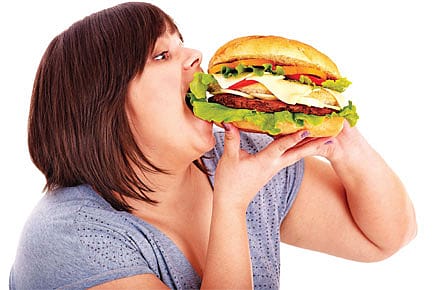
For years, junk food advertising blended seamlessly into children’s screen time: bright, noisy, and largely unquestioned. This week in Britain, that background noise went silent.
Under new regulations, foods high in fat, sugar and salt have been pushed out of daytime television and banned outright from online advertising. What may look like a routine media regulation is, in fact, a profound policy shift: a government deciding that early food habits are too important to be left to marketers. Officials estimate the move could strip billions of excess calories from children’s diets over time.
Which raises an obvious question closer home: Should India do the same?
At first glance, the logic feels hard to argue with. Indian children are consuming more ultra-processed food than ever before. Screens—TV, phones, tablets—are now constant companions. And food advertising, especially for snacks and sugary drinks, remains relentless.
But India, as always, is more complicated.
For decades, India’s nutrition conversation focused on hunger and underweight children. That balance is now shifting. According to UNICEF’s Child Nutrition Global Report 2025, obesity has overtaken undernutrition to become the most common form of malnutrition among school-aged children and adolescents worldwide.
Today, one in ten children globally, around 188 million, is living with obesity. India is part of this global turn. Data from the National Family Health Survey shows that overweight and obesity among children under five more than doubled, rising 127% from 1.5% in 2005–06 to 3.4% in 2019–21. The increase is even sharper among adolescents, especially boys, where prevalence has risen nearly four times over the same period. Adults are not far behind, with obesity levels up 91% among women and 146% among men in the last decade.

India's Action Hero
27 Mar 2026 - Vol 04 | Issue 64
Riding the Dhurandhar Wave
What is driving this change is not hard to see. India’s food environment has transformed rapidly, with packaged and convenience foods becoming cheaper, more visible and more aggressively marketed. The Economic Survey 2024–25 notes that India’s ultra-processed food market grew from $900 million in 2006 to $ 37.9 billion in 2019, reflecting a deep shift in what households are eating. If current trends continue, over 27 million Indian children and adolescents are expected to be living with obesity by 2030, accounting for 11% of the global burden (CNNS). Together, these numbers tell a simple story: India is no longer choosing between undernutrition and obesity. It is now grappling with both at the same time.
What Advertising Really Does
One uncomfortable truth sits at the heart of the debate: advertising doesn’t just sell products; it shapes habits early.
Multiple Indian and global studies show that children exposed to junk-food advertising consume more calories almost immediately. According to a research study conducted by the University of Liverpool and presented at the European Congress on Obesity (ECO) in Malaga found that even five minutes of exposure to HFSS ads could push kids to eat roughly 130 extra calories in a day. Another large survey of Indian adolescents showed nearly 70% felt advertising influenced what they ate—and nine out of ten ads they saw promoted high-fat, high-sugar foods.
Yet banning ads doesn’t automatically mean people stop eating those foods.
“I see such bans less as consumption stoppers and more as influence shifters. In India, where children consume media with family, advertising pressure may move from kids to parents through pricing, promotions, and availability,” says Mukesh Kharat, Assistant Professor of Marketing & International Business at K J Somaiya Institute of Management.
In India, children rarely consume media alone. Parents sit nearby. Grandparents watch TV in the same room. Which means advertising pressure doesn’t disappear—it moves. From kids to parents. From TV spots to price packs, store shelves, influencer reels and brand placements.
“Advertising bans work best when they complement, not substitute consumer education. In India, empowering parents and caregivers with simple nutritional cues and price transparency may be more effective than limiting messages alone. Without parallel efforts in affordability and access to healthier foods, regulation risks becoming symbolic rather than transformative,” Kharat added.
In other words, when you shut one door, marketers find a window.
India’s Nutrition Paradox
Unlike the UK, India isn’t fighting a single public-health battle.
Childhood obesity is rising sharply in urban India, particularly among middle-income families. At the same time, undernutrition and micronutrient deficiencies remain stubbornly high in large parts of the country. Malnutrition and obesity coexist—sometimes in the same household.
That’s what makes a blanket advertising ban feel blunt.
For millions of Indian families, food choices aren’t driven by ads alone. They’re shaped by price, availability, habit, and convenience. Packaged snacks are often cheaper, more accessible, and more filling than healthier alternatives. Fresh food is not always affordable, available or aspirational.
In that context, experts believe that removing advertising without addressing affordability risks missing the point.
What India Already Regulates, and Where It Falls Short
India isn’t operating in a regulatory vacuum.
Food advertising is governed by the Food Safety and Standards Act, Advertising Standard Council of India’s (ASCI) self-regulatory code, and the Consumer Protection Act. Together, they require ads to be truthful, not misleading, and careful about health claims—especially for products high in fat, sugar and salt.
ASCI’s guidelines go further, laying down rules on portion depiction, moderation messaging, parental guidance and scientific substantiation of nutrition claims.
Manisha Kapoor, CEO and Secretary General of ASCI, points out that the real challenge isn’t absence of rules—it’s enforcement. “Both in India and globally, the key practical challenges lie in implementation and enforcement. With food marketing extending beyond traditional media to digital platforms, OTT services and influencer-led promotions, it has become increasingly difficult to consistently identify child-targeted content and monitor compliance across multiple channels,” she says.
In short, regulators are playing catch-up with algorithms.
While stricter advertising norms can help curb misleading messages, consumer behaviour in India is shaped by multiple factors such as affordability, access, family habits and parental choices, Kapoor added.
Even globally, enforcement is messy. In the UK, brands have already pivoted to “brand-only” advertising—promoting logos and mascots without showing products. Others are leaning harder on outdoor media and in-store promotions. The intent of the law survives; its impact gets diluted.
If Not a Ban, Then What?
The more useful question for India may not be whether to ban, but how to regulate intelligently.
Advertising bans work best when they complement, not replace, consumer education. Countries that have seen meaningful change. Chile is a frequently cited example—paired marketing restrictions with bold front-of-pack warning labels, school-based nutrition education, and controls on in-store placement.
For India, experts suggest a smarter approach that goes beyond a blanket ban. This includes targeted restrictions on child-focused advertising across TV, digital platforms, and social media influencers; clearer, easy-to-understand nutritional labelling; incentives for companies to genuinely reduce sugar, salt, and unhealthy fats; consumer education focused on parents and caregivers; and improved access to affordable, healthier food options, especially in urban areas where fresh produce is scarce.
Without these parallel efforts, regulation risks becoming symbolic—a headline without lasting behaviour change.
The Bigger Question for Brands
For food companies and advertisers, the writing is already on the wall.
Regulation is tightening globally. Consumer scrutiny is sharper. And Gen Z parents—today’s children, tomorrow’s buyers—are more label-aware and sceptical of marketing than any generation before them.
Whether India introduces a UK-style ban or not, the direction of travel is clear: the era of carefree junk-food marketing to children is ending.
The real opportunity lies not in dodging regulation, but in staying ahead of it. Because in the long run, no policy—however strict—can out-market a food system that makes unhealthy choices the easiest ones. And that, more than advertising alone, is the story India needs to confront.