US Has Chosen to Become a ‘Lonelier Power’, Says Jaishankar
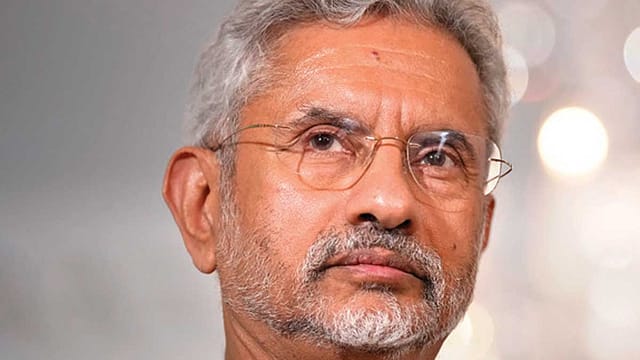
External Affairs Minister S Jaishankar said on Sunday that the United States had “deliberately become a lonelier power”, describing Washington’s changing posture and China’s rise as the two defining features of the global order.
Speaking at the Munich Leaders Meeting in New Delhi, he said competition extended beyond the two powers and had led countries to weaponise whatever leverage they possessed.
“No one in the room would disagree with the fact that the landscape today is primarily marked by a radical repositioning of the United States. A repositioning which is a posture of choice and, in a way, it has deliberately become a lonelier power,” Jaishankar said.
He identified China’s emergence as the other major force reshaping international relations, describing its perception of itself as a unique country as both a matter of self-image and, in several respects, reality.

The Health and Wellness Issue
25 Sep 2026 - Vol 05 | Issue 39
COMPETITION AMID INTERDEPENDENCE
Jaishankar said the increasingly competitive environment had implications for countries well beyond Washington and Beijing.
“That competition today, not limited to these two countries, has led to a weaponization of any leverage that any country has. And that competition coexists with the complexity of interdependence,” he said.
Against this backdrop, emerging and middle powers had reasons to strengthen cooperation with one another wherever their interests did not directly clash. They would also continue working with both the US and China, he added.
“Amongst the emerging and middle powers, to the extent that they don’t have direct clashes of interest, they have an interest in strengthening their interstate cooperation, but it is also natural that they would have cooperation with the US and China,” he said.
SMALLER GROUPS, SHARED INTERESTS
The minister cited the Quad as one example of such cooperation. In connectivity, he pointed to the India-Middle East-Europe Economic Corridor, the International North–South Transport Corridor and the Northern Sea Route.
BRICS, he said, brought together countries that believed their collective voice carried greater weight than their individual positions.
He also highlighted the International Solar Alliance and the Coalition for Disaster Resilient Infrastructure, both initiated by India, as examples of countries organising around shared priorities.
Countries did not have to be the leading global powers to build effective arrangements, he suggested. Where interests converged, they could develop agendas, institutions and sustained cooperation.
“They come together where their interests require them to do so: they find working arrangements, develop an agenda, develop organizations, develop habits of cooperation, and this is today’s evolving global order,” Jaishankar said.
HEDGING IN A MULTIPOLAR WORLD
Referring to the accelerating emergence of multipolarity, Jaishankar said countries would maintain relationships with different powers even when those ties were difficult to reconcile.
“The idea that countries will have relationships with players which may not always be easy to harmonize, but nevertheless are a reality, is a compulsion for countries. It’s a sort of strategy of advancing by hedging,” he said.
That approach also raised questions about the future of multilateralism. Jaishankar described the United Nations as “very visibly gridlocked” and said the wider multilateral system was already under pressure.
Smaller groups built around shared interests, he indicated, would be an increasingly important feature of the emerging order.
With inputs from ANI