Union Cabinet Approves Aqua Line Extension to Boost Noida Metro’s Connectivity
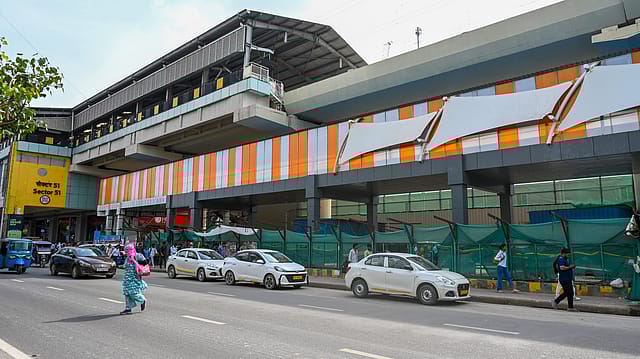
In a major boost to urban connectivity in the National Capital Region, the Union Cabinet has approved the extension of the Noida Metro’s Aqua Line from Botanical Garden to Noida Sector 142, a move aimed at improving last-mile connectivity and easing congestion across key residential and commercial corridors.
The 11.6-kilometre extension will include the construction of eight new elevated stations and will be implemented by the Noida Metro Rail Corporation Limited at an estimated cost of Rs 2,254 crore, with a completion timeline of four years.
The Botanical Garden station will serve as a major interchange hub, linking the Aqua Line with the Delhi Metro’s Blue and Magenta Lines, thereby offering seamless travel options for commuters travelling between Noida, Greater Noida, and Delhi.

Zeroing In on ECI
09 Oct 2026 - Vol 05 | Issue 41
Constitutional legitimacy versus political opportunism
With the addition of this new stretch, the total metro network in Noida and Greater Noida will expand to over 61 kilometres, supporting the city’s rapid growth as a manufacturing and service hub.
Minister for Railways, Ashwini Vaishnaw, announced the expansion of the Noida Metro in a cabinet briefing today, stating that as per the expansion plan, Noida and Greater Noida will cross 61 km overall.
What does Delhi Metro Phase V(A) approval mean for public transport modernisation?
Earlier, on February 11, the Delhi government also took a major step towards strengthening and modernising the capital’s public transport system.
The Cabinet meeting, chaired by Chief Minister Rekha Gupta, approved Metro Phase V(A), an ambitious project that will develop three new corridors totalling 16 kilometres in length, including 13 metro stations.
The estimated cost of the entire project is Rs 12,014.91 crore, with the Delhi Government’s budgetary share being Rs 2,940.46 crore, and the project is targeted for completion in 2028, according to a release from Delhi CMO.
The Chief Minister had also thanked Prime Minister Narendra Modi for his support and said the project is a significant step toward implementing his "7-C Vision" for transportation -- Common, Connected, Convenient, Congestion-free, Charged, Clean, and Cutting-edge mobility.
She emphasised that strengthening public transport is essential for achieving environmental protection and net-zero emission goals.
The expansion is expected to facilitate seamless interchange with the existing metro network and further improve connectivity between the airport, commercial centres, and residential areas, while reducing dependence on private vehicles and providing citizens with a clean, efficient, and integrated transportation system.
(With inputs from ANI)