India Plans to Buy US-Made Javelin Anti-Tank Missiles: What the Deal Means
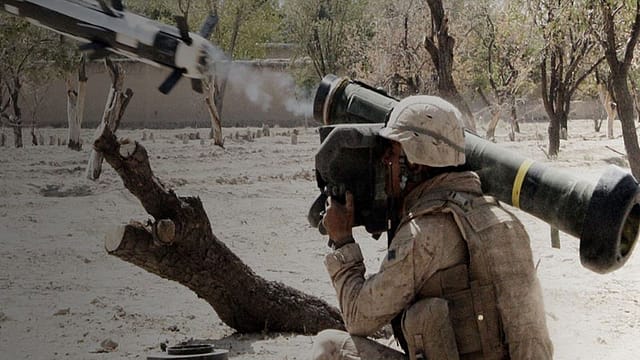
India plans to purchase the US-made Javelin anti-tank missile system, US Ambassador to India Sergio Gor said on Friday, August 28. The proposed procurement is expected to further deepen defence cooperation between India and the United States and could also open opportunities for joint production in India.
“BIG news! India plans to buy the battle-tested Javelin anti-tank system,” Gor said in a post on X.
The Javelin is a portable, shoulder-fired anti-tank guided missile (ATGM) system jointly developed by Lockheed Martin and RTX. It is designed to engage armoured vehicles and has been extensively used by the US and allied forces.
How does the Javelin anti-tank missile work?
The Javelin is designed as a fire-and-forget missile system, meaning the operator can lock on to a target before launch and move away from the firing position after the missile is fired.

Zeroing In on ECI
09 Oct 2026 - Vol 05 | Issue 41
Constitutional legitimacy versus political opportunism
The system uses an automatic guidance mechanism that allows the missile to track its target after launch. This gives the operator the ability to take cover or reposition rather than remain exposed to enemy counterfire.
One of the Javelin's key features is its top-attack capability. Instead of travelling directly towards the target, the missile follows an arched trajectory and strikes from above, targeting areas of an armoured vehicle that are generally less protected.
The operator selects the target through the command launch unit. Once the target is locked before launch, the missile can be fired without requiring continuous guidance from the operator.
The Javelin also uses a soft-launch system, allowing it to be fired from enclosed locations such as buildings and bunkers. This gives troops greater flexibility when operating in urban or fortified environments.
India-US Javelin deal
The proposed Javelin procurement comes as India continues to expand its acquisition of US defence equipment.
In November 2025, the US State Department approved a potential $93 million sale to India covering up to 100 Javelin systems and 216 Excalibur guided artillery projectiles.
India already operates Excalibur ammunition with its M777 lightweight howitzers.
The latest announcement indicates that the Javelin could become another important component of India's growing inventory of US-origin defence systems.
Gor said the proposed procurement could also create opportunities for co-production between India and the United States, as defence cooperation between the two countries reaches what he described as “record high levels”.
Why the Javelin matters for India
The Javelin's mobility and fire-and-forget capability make it particularly suited to infantry units operating against armoured threats. Its top-attack capability also gives troops an option for engaging heavily protected armoured vehicles.
For India, the proposed acquisition also fits into the broader expansion of defence cooperation with the US.
India already operates several major American defence platforms, including AH-64 Apache attack helicopters, CH-47 Chinook heavy-lift helicopters, C-17 and C-130J transport aircraft, P-8I maritime patrol aircraft and M777 howitzers.
The two countries also signed a framework for a major defence partnership last year aimed at strengthening interoperability across land, sea, air, space and cyberspace.
Gor also referred to remarks by US Secretary of War Pete Hegseth at the May 2026 Shangri-La Dialogue, arguing that the latest development could further strengthen the US-India defence relationship.
The proposed Javelin procurement therefore goes beyond another weapons purchase. With potential co-production on the table, it could also add another layer to India's effort to deepen defence manufacturing and technological cooperation with the United States.
With inputs from ANI