Supreme Court lawyers read Constitution Preamble in protest over colleagues’ detention
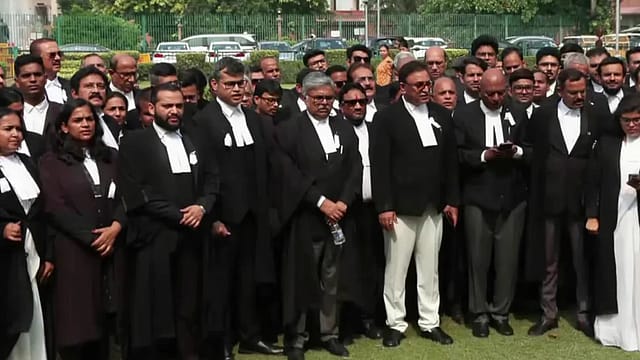
A copy of the Constitution, a reading of its Preamble and a message about the right to protest: lawyers gathered at the Supreme Court premises on Tuesday to express solidarity with colleagues who were detained during demonstrations against Chief Election Commissioner Gyanesh Kumar.
The advocates said their protest was intended to defend constitutional values and oppose what they described as unjustified police action against lawyers exercising their right to peaceful assembly. They also stressed that the gathering was not affiliated with any political party.
The protest follows a series of demonstrations in Delhi over alleged irregularities in the Election Commission’s Special Intensive Revision (SIR) of electoral rolls. The police action against protesters has prompted concerns among lawyers’ associations and petitions before the Supreme Court.
Why Supreme Court lawyers protested against police action
Addressing the gathering, one lawyer said the protest was organised to stand with colleagues and citizens who had allegedly faced force during peaceful demonstrations. The advocate said lawyers had a responsibility to defend the Constitution and uphold its values, adding that the reading of the Preamble was intended to reaffirm that commitment.

Zeroing In on ECI
09 Oct 2026 - Vol 05 | Issue 41
Constitutional legitimacy versus political opportunism
Another lawyer argued that citizens and advocates must be able to raise their voices against the government or any institution on matters they believe warrant scrutiny. The speakers also emphasised that political differences should not weaken a shared commitment to constitutional principles.
The lawyers thanked Chief Justice of India Surya Kant for intervening after the detentions were reported and for allowing them to assemble.
What happened when Delhi Police detained lawyers near the Supreme Court?
The controversy stems from police action on October 10, when several advocates, including senior and women lawyers, were detained near the Supreme Court complex amid heightened security ahead of a planned protest against the Chief Election Commissioner.
According to Hindustan Times, the Supreme Court Bar Association sought the Chief Justice’s intervention after receiving reports that lawyers had been taken to the Yamuna Sports Complex. The lawyers were subsequently released after the CJI contacted authorities.
The Supreme Court Advocates-on-Record Association has also approached the court, seeking an independent, impartial and time-bound inquiry into the alleged detention and manhandling. The petition calls for the identification of police personnel involved and the preservation of evidence relating to the incident, according to legal news outlet Bar and Bench.
The allegations are now part of a broader legal dispute over restrictions imposed during the protests. The claims of excessive force and unlawful detention remain allegations to be examined through the legal process.
Supreme Court hearing on Delhi protests adjourned to October 15
The demonstrations are taking place amid a wider confrontation over the SIR of electoral rolls, which opposition parties say has raised concerns about voter deletions and transparency.
On October 12, INDIA bloc leaders, including Rahul Gandhi, marched towards the Supreme Court and filed a petition challenging the Election Commission’s decisions relating to the revision. The march was stopped by police barricades, while the petition was submitted through lawyers.
The Supreme Court had earlier stressed that security measures should not unnecessarily obstruct public transport, access to courts or the work of lawyers and journalists. It also said peaceful, unarmed people should not be detained outside areas where prohibitory orders apply, except in accordance with the law.
The court was scheduled to hear petitions related to the protests on Tuesday, but, according to LiveLaw, the matter was adjourned to October 15 after Justice V Mohana fell ill.
For the lawyers who gathered to read the Preamble, the message was clear: the dispute is not only about the detention of their colleagues, but also about how constitutional rights are protected when protests and public order collide.
(With inputs from ANI)