From Water to Chips: India and the Netherlands Eye Closer Defence and Technology Ties
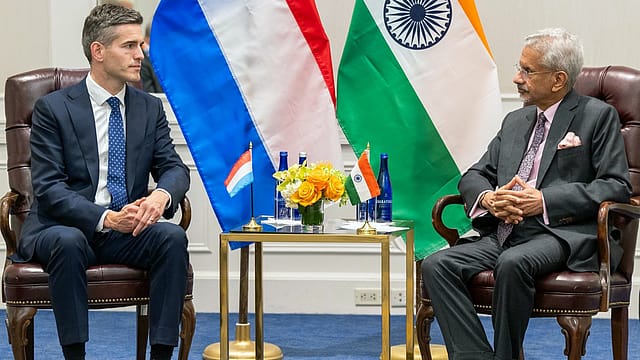
India and the Netherlands built their strategic partnership around water management. On Sunday in New Delhi, semiconductors, defence and renewable energy were on the agenda as External Affairs Minister S Jaishankar and Dutch Foreign Minister Tom Berendsen met to review how far that partnership had grown. Berendsen pointed to a problem both countries face: dependence on too few suppliers for energy, critical raw materials and technology.
It was the ministers’ sixth meeting this year, but their first under a new arrangement to review the strategic partnership. In an interview with ANI after the talks, Berendsen set out how he wanted progress to be judged. “It’s not about signing documents and memorandums of understanding. It’s really about tangible steps taken forward together,” he said.

The Wealth Issue 2026
06 Nov 2026 - Vol 05 | Issue 45
Portraits of Dreamers and Doers under 35
Why semiconductors are on the India-Netherlands agenda
Jaishankar said water, agriculture and health remained central to the relationship. Elevating ties to a broader strategic partnership had given the two governments a roadmap to pursue newer areas, including chip technology, defence and renewable energy. The two countries will mark 80 years of diplomatic relations in 2027, and Jaishankar said the ministers would discuss how to mark the anniversary.

For Berendsen, semiconductors are one area where the case for finding additional partners is particularly strong. India and Europe both want to reduce their dependence on individual suppliers. He identified similar concerns over access to energy and the raw materials their industries need.
Technology is also on the agenda for the second day of Berendsen’s November 22–23 visit. On Monday, he is scheduled to meet Ashwini Vaishnaw, the Union minister whose portfolios include electronics and information technology, railways, and information and broadcasting.
After 19 years of trade talks, the focus turns to the India-EU deal
Berendsen said negotiations on the India-European Union free trade agreement had spanned 19 years. What brought fresh momentum in recent years, he said, was a recognition on both sides that changes in the global economy made closer trade ties more valuable. For Dutch and Indian businesses, he said, the agreement would open opportunities across several sectors.
Jaishankar described the trade deal as the centrepiece of India’s recent engagement with the EU. The two sides have concluded negotiations and are looking towards signing the agreement. “We look forward to the operationalisation of the FTA,” he said. He also pointed to the India-EU security and defence partnership as an area where relations had advanced over the past two years.
Jaishankar thanked the Dutch government for its support for the Indian community in the Netherlands. The Indian diaspora and the Hindustani Surinamese community together form a “living bridge” between the two countries, he said.
Dutch minister backs Modi’s appeal to Moscow
The ministers also discussed the war in Ukraine and the situation in the Black Sea. Berendsen welcomed Prime Minister Narendra Modi’s public appeal to Russia to stop the war and return to the negotiating table. He also expressed support for India’s efforts towards an impartial ceasefire in the Black Sea.
Berendsen linked that diplomatic effort to a concern well beyond Europe. Disruption in the Black Sea, he said, had consequences for food security in countries far from the fighting. “I think that’s crucial, as this conflict is not only impacting Ukraine or Europe; it’s really impacting the world, and it needs to stop,” he told ANI.
Jaishankar said the Gulf conflict and its implications also warranted discussion, while the Dutch minister’s visit offered an opportunity to exchange assessments of developments in the Indo-Pacific. He identified terrorism and climate change as two further challenges on which India and the Netherlands had reason to work together.
With inputs from ANI