Ladakh to Get High Court Bench: What President’s Article 240 Regulation Means
For people in Ladakh, accessing the High Court has long involved a geographical problem that is difficult to separate from the legal one. The Union Territory is vast, mountainous and sparsely populated, while the principal seat of the High Court of Jammu and Kashmir and Ladakh remains outside Ladakh.
That could now change.
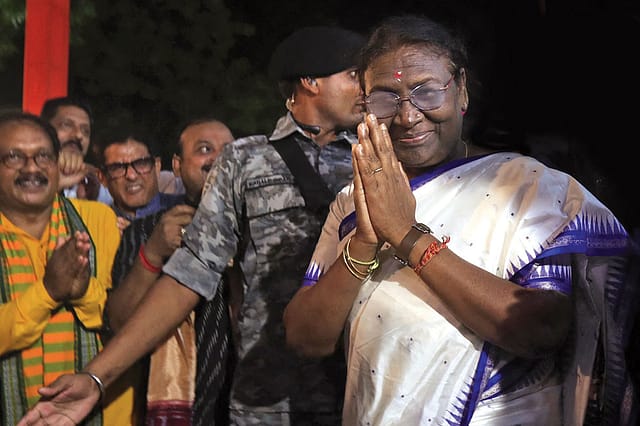
President Droupadi Murmu on August 27 promulgated the Union Territory of Ladakh (Sitting of Bench of the High Court of Jammu and Kashmir, and Ladakh in Ladakh) Regulation, 2026, creating the legal framework for the common High Court to hold sittings in Ladakh.
The move does not create a separate High Court for Ladakh. Instead, it allows the existing High Court of Jammu and Kashmir and Ladakh to establish a sitting in the Union Territory.

Zeroing In on ECI
09 Oct 2026 - Vol 05 | Issue 41
Constitutional legitimacy versus political opportunism
That distinction matters. The new arrangement is essentially about bringing the existing judicial infrastructure closer to litigants rather than creating an entirely new institution.
What exactly has changed?
The regulation gives the Chief Justice of the High Court the power to designate a place in Ladakh where judges and Division Courts can sit, subject to the approval of the Lieutenant Governor of Ladakh.
In practical terms, this means cases arising in Ladakh can potentially be heard within the Union Territory rather than requiring litigants to travel to the High Court's existing principal seat.
But the regulation does not make Ladakh the new permanent principal seat of the court.
The existing principal seat remains unchanged. The Chief Justice can also direct that particular cases, or categories of cases arising in Ladakh, continue to be heard at Srinagar or Jammu.
This gives the High Court considerable flexibility over how the Ladakh sitting operates.
The arrangement therefore appears designed as an additional judicial access point rather than a wholesale restructuring of the High Court.
Why does a High Court bench matter for Ladakh?
The significance of the move is partly geographical.
Ladakh became a Union Territory in 2019 following the reorganisation of the former state of Jammu and Kashmir. While the Union Territory has its own administrative and political institutions, higher judicial matters continue to fall under the jurisdiction of the common High Court of Jammu and Kashmir and Ladakh.
For a litigant, however, access to justice is not only about whether a court legally has jurisdiction. It is also about how easily a person can reach that court.
A High Court sitting in Ladakh could reduce the practical burden involved in pursuing cases at the higher judicial level, particularly for litigants, lawyers and other parties who would otherwise have to travel outside the Union Territory.
The change could therefore be viewed less as a new layer of administration and more as an attempt to make an existing institution physically accessible.
Why is Article 240 in the spotlight?
There is another reason this announcement is constitutionally interesting.
The regulation has been promulgated under Article 240 of the Constitution, read with Section 58(2) of the Jammu and Kashmir Reorganisation Act, 2019.
Article 240 gives the President the power to make regulations for the peace, progress and good government of specified Union Territories. Ladakh falls within the framework under which this power can be exercised.
This is different from the President's ordinance-making power under Article 123.
A presidential ordinance is generally associated with circumstances in which Parliament is not in session. Article 240, however, operates under a different constitutional mechanism. The exercise of this power does not depend on Parliament being in recess in the same way an ordinance under Article 123 does.
That distinction is important because the President's action here is a regulation under Article 240, not an ordinance under Article 123.
The constitutional route used for the Ladakh High Court bench therefore tells us something about how the Union Territory's governance framework works after the 2019 reorganisation.
Is the bench operational immediately?
Not necessarily.
The regulation has been promulgated, but it does not automatically mean that judges will begin sitting in Ladakh immediately.
The notification states that the regulation will come into force on a date to be specified by the Administrator of Ladakh through a notification in the Official Gazette.
There is therefore a difference between creating the legal framework for a bench and starting its actual functioning.
The next step will be the notification bringing the regulation into force, followed by decisions concerning where the judges will sit and how cases will be allocated.
What happens to cases from Ladakh?
The regulation provides flexibility here as well.
Cases arising in Ladakh may be heard at the designated place in Ladakh. At the same time, the Chief Justice retains the authority to direct that a particular case, or a class of cases, be heard at the existing principal seat in Jammu or Srinagar.
This means the new arrangement does not eliminate the existing judicial structure. Instead, it adds another possible venue.
For litigants, the eventual importance of the move will therefore depend on how broadly the Ladakh sitting is used, which categories of cases are assigned to it and how frequently the court holds sittings there.
The larger significance
The announcement may look administrative on paper, but its significance lies in a basic question of access.
Ladakh's geography has always made physical connectivity a central issue in delivering public services. Courts are no exception. A legal right can exist on paper while remaining expensive or difficult to exercise if the institution responsible for enforcing it is physically distant.
The proposed High Court sitting addresses that gap without creating a separate High Court for Ladakh.
It also illustrates how the constitutional architecture created after the 2019 reorganisation continues to evolve. Article 240, a relatively less discussed constitutional provision, has been used to create a specific institutional arrangement for the Union Territory.
For Ladakh, the immediate question is no longer whether its High Court can sit within the Union Territory. The legal framework now exists.
The more consequential question is how the bench will function once the regulation is brought into force, and how much easier it will make access to the higher judiciary for people in Ladakh.
(With inputs from ANI)