Delhi CM Rekha Gupta promises action on college safety: 1 lakh streetlights, WhatsApp grievance channel
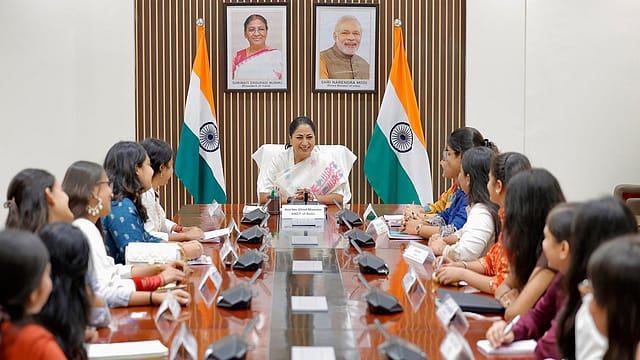
For many women students in Delhi, the college day does not end when the last class finishes. The journey home can mean navigating a poorly lit road, waiting for a bus that may not arrive on time or finding a safe way to cover the last stretch from a public transport stop. These everyday concerns took centre stage when Delhi Chief Minister Rekha Gupta met female student representatives from colleges across the capital on Monday.
At the meeting at Mukhyamantri Jan Seva Sadan, Gupta assured students that their concerns about women’s safety, campus security and public transport would be taken up on priority. The discussion also produced a proposed communication channel linking student representatives with administrative and police officials, aimed at making it easier to report problems and follow up on complaints.

Zeroing In on ECI
09 Oct 2026 - Vol 05 | Issue 41
Constitutional legitimacy versus political opportunism
Delhi plans one lakh smart streetlights to address dark spots
One of the key announcements concerned street lighting. Gupta said work was underway to install approximately one lakh smart streetlights across Delhi, connected to the Integrated Command and Control Centre (ICCC).
“These smart streetlights will operate under an Annual Maintenance Contract (AMC) system, making it mandatory for the concerned agency to fix any defunct light within a defined timeframe. Wherever streetlights are required around college premises, necessary steps will be taken in coordination with local agencies and college administrations,” CM Gupta said.
The maintenance commitment matters because installing lights is only part of the task; keeping them functional is equally important. Students also called for safety audits to identify vulnerable spots, more women police personnel, regular patrolling near student hubs such as Mukherjee Nagar and Siri Fort Road, and accessible Pink Booths.
Students want safer buses, PG accommodation and routes home
Representatives from Lady Shri Ram College, Gargi College, Daulat Ram College, Jesus and Mary College, Maitreyi College, Aditi Mahavidyalaya, Bharati College and Janki Devi Memorial College raised concerns extending beyond college gates.
They sought better Delhi Transport Corporation (DTC) and University Special bus connectivity for off-campus colleges, regular stops at designated locations, tighter regulation of e-rickshaws and improved security around paying guest accommodation.
Their message was that safety cannot depend on restricting women’s movements. Students need the freedom to attend classes, participate in campus activities and return home without fear. The practical test, therefore, will be whether improvements reach the routes and neighbourhoods they use every day.
WhatsApp channel and helpline 112 aim to speed up complaints
Gupta directed officials to maintain an active WhatsApp group connecting student representatives with relevant administrative and police personnel. The proposed channel is intended to help students report safety concerns directly and enable time-bound follow-up. She also advised them to call emergency helpline 112 in distress situations.
The meeting follows wider efforts to address women’s safety around Delhi University. The Indian Express reported last week that the university had directed colleges to repair faulty lights, identify vulnerable areas and review CCTV coverage after student protests over safety concerns.
Delhi CM says women’s safety must go beyond assurances
Reaffirming the government’s position, Gupta said: "Direct dialogue is the bedrock of sensitive and accountable governance. The issues raised today reflect the broader need for a secure academic environment and seamless mobility. Our daughters must have a fear-free environment where they can realise their aspirations and contribute fully to society."
The next question is implementation: whether dark spots are fixed, buses become more dependable and complaints receive timely responses. For students, the measure of progress will be simple: whether getting to college and returning home becomes safer in practice, not just on paper.
(With inputs from ANI)