The Bay’s New Temper: Why Andhra’s Coast Keeps Taking the Hit
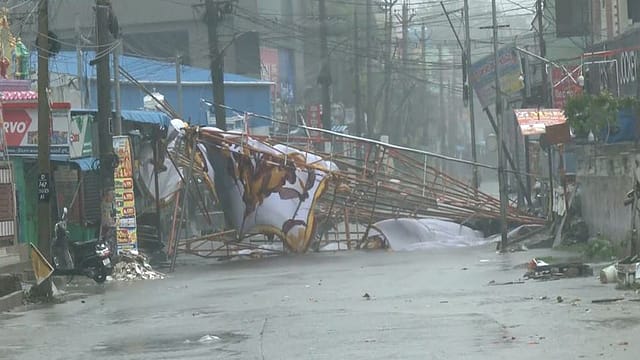
When Cyclone Arnab crossed the Andhra coast in late October, it did more than damage homes, infrastructure and nearly 200,000 acres of cropland. It exposed a larger truth that the state’s coastline is increasingly exposed to storms that form quickly, intensify rapidly and arrive with extraordinary rainfall. Even as I write, Cyclone Murasu is threatening to pour its fury along the very coastline. “Another cyclone [Murasu] is approaching Andhra Pradesh and officials must remain fully prepared to undertake relief and rescue operations, as a severe cyclonic storm is expected to cross the coast near Bapatla on the morning of November 3,” Andhra Pradesh Chief Minister Chandrababu Naidu said in an official press release.
Andhra Pradesh has long been vulnerable. Most of its cyclones originate in the Bay of Bengal, then travel northwest toward the coast; the state typically faces two active windows—May–June, around the monsoon’s arrival, and September–November, as it retreats. But the present pattern is not simply the familiar post-monsoon season. It reflects a convergence of ocean heat, atmospheric moisture and changing large-scale climate conditions.

The Era of Forever Wars
30 Oct 2026 - Vol 05 | Issue 44
Coping with an explosive Middle East
The first driver is the Bay itself. Tropical cyclones feed on warm seawater. Heat and moisture rise from the ocean, condense into clouds and release energy that powers the storm. The Bay of Bengal is especially productive because its surface remains warm and moisture-rich, and because it generates far more cyclones than the Arabian Sea.
Crucially, the Bay retains that heat even while a cyclone passes over it. Monsoon rain and river discharge create a lighter, less salty layer at the surface, which resists mixing with cooler water below. When a storm churns the sea, it draws up more warm water rather than cold water, allowing the system to keep strengthening.
This year, meteorologists reported unusually high temperatures across the Bay, along with heat stored beneath the surface. Those conditions helped Arnab intensify rapidly before landfall. A warmer atmosphere also holds more moisture, raising the potential for extreme rainfall even where wind speeds alone do not tell the full story.
El Niño has added another layer of complexity. Although El Niño can reduce overall cyclone activity in the Bay in some years, it can also shift where storms form and how they move. During El Niño conditions, cyclones in the North Indian Ocean tend to develop closer to the Equator, making tracks toward Andhra Pradesh and Tamil Nadu more likely than toward Odisha or West Bengal.
The result is a coast that faces not just more frequent warnings, but less forgiving storms. Rapid intensification compresses evacuation timelines; heavier rain turns a wind event into a flooding disaster; and storm surges push seawater into low-lying villages, farms and ports. The Bay’s shallow northern waters can further amplify surge risk along densely populated coastal belts.
Climate change does not create every cyclone, but it loads the dice. Human-caused warming amplifies the rainfall potential of tropical storms and raises baseline ocean temperatures, giving developing systems more energy to work with. For Andhra, whose economy and settlements hug a long coastline, that means cyclone preparedness can no longer be treated as a seasonal exercise. It must become permanent infrastructure with stronger early-warning systems, resilient housing, protected wetlands, better drainage, and evacuation plans designed for storms that strengthen faster than forecasts once assumed.
The Andhra coast is being battered now because the ocean that borders it has become warmer, wetter and more volatile. The storms are natural; their escalating force is not.