Supreme Court Slams 'Men's Clubs' Culture in Bar Councils, Orders High Courts to Induct Women
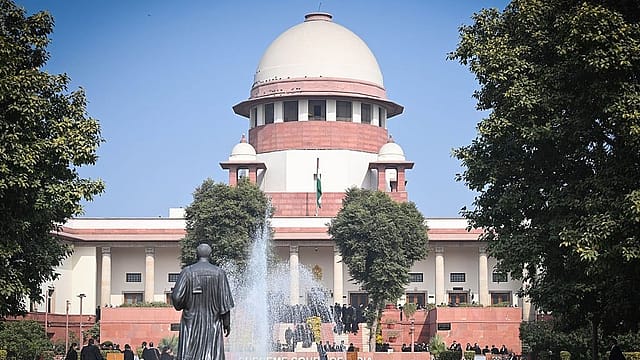
The Supreme Court on Tuesday delivered one of its sharpest observations yet on gender imbalance within India's legal institutions, declaring that State Bar Councils have become "men's clubs" and warning that the monopoly over their functioning "must be completely dismantled."
Hearing a batch of petitions on elections to the Bar Council of India (BCI) and State Bar Councils, a Bench led by Chief Justice of India Surya Kant, along with Justices Joymalya Bagchi and V Mohana, ordered Chief Justices of jurisdictional High Courts to nominate two co-opted women members to every State Bar Council.
The Court directed that one of the co-opted members should be a former High Court judge, while the other should be a senior woman advocate of standing. Both must remain independent of the electoral process to ensure neutrality in the functioning of the councils.

Rise of the Pivotal Power
18 Sep 2026 - Vol 05 | Issue 38
The BRICS declaration is a strategic victory for Modi
The Bench clarified that women who unsuccessfully contested State Bar Council elections would still be eligible for co-option.
The issue of calculating transferable votes for women candidates was referred to the High-Powered Supervisory Committee headed by former Supreme Court judge Justice Sudhanshu Dhulia. The committee has been asked to revisit the methodology after inviting suggestions from members of the Bar and conducting oral hearings.
The Supreme Court had earlier constituted the committee to supervise elections to the Bar Council of India and State Bar Councils, while also resolving election-related disputes.
The directions form part of the implementation of the existing framework providing 30% representation for women in State Bar Councils. Under the scheme, 20% of seats are filled through direct elections, while the remaining 10% are filled through co-option.
The Court's remarks underscore growing judicial concern over the lack of women's representation in institutions that regulate India's legal profession and set professional standards for advocates across the country.
(With inputs from ANI)