Strait of Hormuz Tensions Trigger LPG Crisis in Surat, Workers Head Home
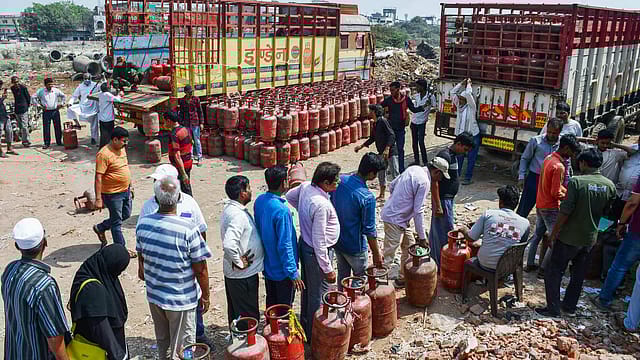
A distant geopolitical conflict has begun to ripple through everyday life in India, exposing how fragile supply chains can upend livelihoods overnight.
In Surat, the fallout is already visible, where a growing number of migrant workers are abandoning the city and heading back to their villages. The trigger is not unemployment, but survival.
A severe shortage of LPG has made it impossible for many to cook food, pushing workers to the brink.
At the crowded Udhna Railway Station, families are making difficult choices, even as work remains available in the city’s textile units.

Zeroing In on ECI
09 Oct 2026 - Vol 05 | Issue 41
Constitutional legitimacy versus political opportunism
Speaking about the crisis with news agency ANI, one migrant worker, Sachin, said, “We are going to the village because we have not been getting gas for the last few days. Our companies are also shutting down... We don't have money, that's why we are going back. Nobody is helping us here... We will return once the gas supply resumes. Many people are going back.”
How severe is the LPG shortage on the ground?
The situation has spiralled into a full-blown affordability and access crisis. Workers allege that LPG is being sold at an exorbitant Rs 500 per kilogram, well beyond their means.
For many, the shortage has lasted weeks.
Seema Devi, another migrant worker, described her ordeal: “I am going back to my village because of the gas issue... Our accounts are getting closed... And we do not have money. We haven't been getting gas for the last 15 days. Our gas ran out a week ago, and then it was announced that there was a gas shortage. After that, we informed the gas agency, but we are still not getting it. My daughter and I are going back, while my husband and two children are being left here. We are not getting even the small cylinders.”
Why can’t workers find alternative ways to cook?
Even traditional coping mechanisms have been shut off. Many workers say they are not allowed to cook using firewood in rented accommodations due to safety concerns and property damage.
With no fuel and no fallback options, migration becomes the only viable choice.
What impact is this having on Surat’s industries?
The sudden exodus is beginning to hit Surat’s labour-intensive textile sector. Even as factories struggle to stay operational, the departure of workers is creating fresh disruptions, raising concerns about production slowdowns.
How is the global conflict affecting India’s energy supply?
The crisis traces back to escalating tensions in West Asia, which have disrupted global energy flows, particularly through the strategically vital Strait of Hormuz.
India has been working to secure supplies, with two LPG carriers, MT Shivalik and MT Nanda Devi, successfully delivering over 92,000 metric tonnes of fuel after navigating the volatile route.
What steps is the Indian government taking?
The Centre has stepped in with a Rs 497 crore financial relief package aimed at exporters impacted by the disruption. At the same time, diplomatic efforts are underway to stabilise supply chains and ensure the safety of Indian nationals in the Gulf.
Ministry of External Affairs spokesperson Randhir Jaiswal acknowledged the scale of the challenge, stating, “It has been a testing time for not just us, but for the entire global community. Our leaders have been in touch with their counterparts.”
What triggered the current West Asia crisis?
The current escalation began on February 28 following the killing of Iran’s Supreme Leader, Ayatollah Ali Khamenei, in joint military strikes by the US and Israel. In retaliation, Iran has targeted US and Israeli assets and effectively choked energy movement through key routes, intensifying global supply fears.
(With inputs from ANI)