Common Man Hit Hard as Fuel Prices Surge Across India
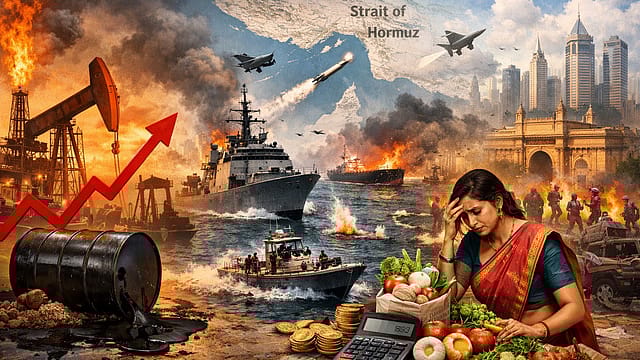
Fuel prices across India have gone up once again, adding to the financial strain on households. In New Delhi, petrol prices rose from Rs 97.77 to Rs 98.64 per litre, while diesel increased from Rs 90.67 to Rs 91.58 per litre. Similar hikes have been reported across states such as Bengaluru and Telangana, with prices climbing close to or above Rs 100 per litre in several regions.
The increase, roughly around 90 paise per litre, comes at a time when global energy markets are under pressure due to geopolitical tensions.
The latest hike is closely linked to the global energy crisis triggered by the ongoing conflict involving the US, Israel, and Iran. A key flashpoint is the Strait of Hormuz, a crucial oil shipping route facing disruptions.
As a result, Brent crude prices have surged past USD 100 per barrel, pushing up fuel costs worldwide. Since India imports a large portion of its crude oil, domestic fuel prices are directly affected by such global fluctuations.
How Are People Reacting?
The price hike has triggered widespread frustration, especially among middle- and lower-income groups who rely heavily on daily commuting.
“The inflation is very high. They have raised the prices up to 90 paisa. How will the common man survive like this? The rich won't be affected, but the middle-class people who travel by bike and somehow earn their livelihood will face difficulties. The price of CNG has also been increased. What will happen to the country? Soon, we will have to beg,” said a citizen at a fuel station.

Open Minds 2026
26 Jun 2026 - Vol 05 | Issue 26
The power of ideas and arguments in 50 portraits
Kapil Rampal, another resident, sharply criticised the government’s tax policy: “They did a very good job, as their job is to loot the nation. They should have reduced their taxes after the war (US-Israel vs Iran conflict) instead of feeding on the general public. Inflation will rise further, and then they will bring stimulus. They should reduce their taxes to zero on fuel and see how fast the economy rises.”
Another individual expressed resignation over the situation: “They have raised prices on gas and petrol, the government will do that. That's what they do. Everything is expensive. There is no point in saying anything because they don't care for what we have to say.”
Impact on Daily Earners and Transport Sector
The burden is being felt most acutely by those whose livelihoods depend on fuel.
Gagan, a CNG taxi driver, highlighted the imbalance between rising costs and stagnant fares: “I drive CNG cars, where CNG prices have increased by Rs 3. Our rates are the same as before, but inflation keeps rising. This is hurting the common man.”
An auto driver in Telangana described the daily struggle: “The poor people are burdened. Earnings are negligible. Where will the auto drivers go if petrol prices increase like this? How will we pay the school fees of our children and the rent of our houses? The government increases fares as per its wish. Where will we poor people go? We work in the scorching heat all day, but still cannot return home with adequate money. It keeps on increasing.”
Another citizen pointed out the arithmetic of survival: “A person who earns Rs 400-500 per day, if he invests it in petrol and diesel, how will he feed his family? How will the poor maintain? The government should see this. How will poor people manage? I want to appeal to the government that they should not only focus on the rich but also on the poor. They need to ensure that poor people are also able to live. At least reduce the prices on food products.”
Are There Any Differing Views?
While the dominant sentiment is frustration, some believe the increase is manageable.
Mohan, a taxi driver, said, “Prices generally increase by Rs 2 to Rs 4. It's okay. It won't affect much.”
Surender Paul echoed a pragmatic view: “At least we are getting the fuel., Obviously, it is going to affect the common man, but it is better than not getting the fuel at all.”
A traveller in Bengaluru added, “What can we do? Nothing can be done. Prices are increasing day by day. It is too much; we are facing a lot of trouble.”
The Government’s Position and Bigger Picture
Despite rising prices, India has maintained that there is no shortage of fuel and that supplies remain stable. However, the broader challenge lies in balancing global price shocks with domestic affordability.
With geopolitical tensions continuing and crude prices remaining elevated, fuel costs are likely to stay volatile. For now, the pressure is being felt most by those least equipped to absorb it—the everyday commuter and the working poor.
(With inputs from ANI)