Amit Shah to Launch ‘Jan Jan Suvidha Kendra’ in Bastar, Turning Security Camps into Rural Service Hubs
India’s interior ministry will on Monday launch a new rural service delivery model in Chhattisgarh’s Bastar region, repurposing security camps into multi-service public centres in a shift from a security-led to a development-focused approach in areas affected by Maoist insurgency.
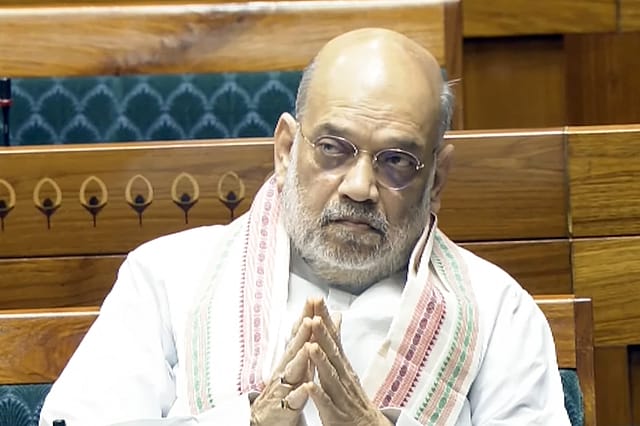
Union Home Minister Amit Shah is set to inaugurate the “Jan Jan Suvidha Kendra” initiative from Netanar village during a two-day visit to the state, officials said, as part of broader efforts to improve governance access in remote tribal belts.
The programme, developed by the Chhattisgarh government, aims to deliver essential administrative, financial and healthcare services closer to communities that have historically remained disconnected from formal systems due to poor infrastructure and distance from district centres.
Under the model, selected security camp premises — originally established over the past two decades by Central Armed Police Forces and state police to stabilise insurgency-hit zones — will be converted into integrated service hubs offering multiple government facilities under one roof.
These centres will provide services typically available through Common Service Centres, including Aadhaar updates, banking access, certificate applications, ration card services, Ayushman Bharat enrolment, e-Shram registration, utility payments and transport ticket bookings, along with basic digital services such as printing and scanning.
Officials said priority would be given to villages with limited access to administrative offices, healthcare facilities, banking networks and internet connectivity, where residents often travel long distances for routine services.

Open Minds 2026
26 Jun 2026 - Vol 05 | Issue 26
The power of ideas and arguments in 50 portraits
The initiative aligns with the federal government’s stated goal of eliminating left-wing extremism by March 2026, marking a transition toward what officials describe as a “development-oriented” strategy as security conditions improve across parts of Bastar.
Authorities expect the centres to accelerate financial and digital inclusion by linking remote populations directly to welfare schemes while reducing dependence on intermediaries and improving transparency in service delivery.
Healthcare services are also expected to form a key component of the rollout. The centres will offer primary care, vaccination, maternal and child health services, nutrition programmes and malaria control, addressing gaps in regions where access to hospitals remains limited.
Officials said the facilities would go beyond administrative functions, incorporating skill development training, employment guidance, agricultural advisory services and support for government schemes such as PM-Kisan, alongside information on forest rights and produce.
The model is also designed to act as a local economic catalyst, with plans to involve youth groups and self-help collectives in operations, while adding infrastructure such as fair price shops, drinking water systems, internet connectivity, community spaces and educational facilities.
Implementation will take place in phases, beginning with identification of camps with reduced operational requirements, followed by infrastructure upgrades and integration of services across departments, officials said.
Analysts say the initiative reflects a broader policy recalibration in insurgency-hit areas, where lack of economic opportunity and access to basic services has long been seen as a driver of unrest. Expanding state presence through welfare delivery could help strengthen local trust in governance, they added.
The Bastar rollout is being positioned as a pilot for similar interventions in other affected regions, signalling a shift in how the state seeks to consolidate gains from improved security conditions by embedding development infrastructure deeper into rural landscapes.
(With inputs from ANI)