How a Paperless Theft Became a NEET Trick
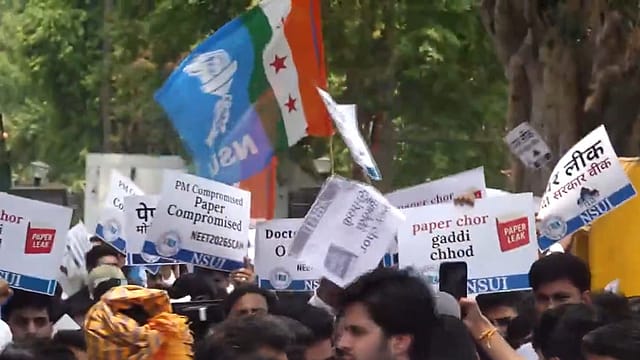
The current leaks are the result of weak test protocols, resistance to scrapping pen and paper formats, ingenuity of an accused who could “memorise” questions he translated and the preparedness of test takers to pay large amounts. Excuses such as logistical requirements, difficulties in normalisation of answer sheets and purported disadvantages to rural students were advanced to prevent a shift to computer-based testing. Paper tests are vulnerable to localised leaks and allow unscrupulous colleges, chaffing over restrictions on management quota seats, to manipulate admissions. The CBT format, though not fool proof, will reduce leaks and improve transparency.
In Alfred Hitchcock’s 1935 classic “The 39 Steps,” a plot to smuggle specifications for a secret new “silent” aero engine does not involve stealing blueprints. The character of “Mr Memory,” an onstage performer with a phenomenal recall, who can answer questions such as “How old is Mae West” and “How far is Winnipeg from Montreal” in a jiffy, is the medium for a paperless theft. For in his head lie details of the new weapon that a ring of spies named after the film’s title intends to deliver to a hostile power keen on gaining the upper hand over England.
Greening the Future
23 Jul 2026 - Vol 05 | Issue 30
Securing a sustainable India
In the film’s climatic scene, leading character Richard Hannay confronts Mr Memory at the London Palladium asking “What are the 39 Steps?” As the overwrought artiste breaks down, he is shot by an enemy agent. But before he dies, Mr Memory blurts out the information locked in his mind. The compression values of the engine, formulae for the power train, design detail of the cylinder and the noise suppression technology all come tumbling out before he breathes his last gasping “Thank you Sir. Thank you. I am glad it’s off my mind.”
The Paperless Theft
Retired chemistry lecturer P V Kulkarni, arrested by the Central Bureau of Investigation (CBI) as a point of origin in the NEET (National Eligibility cum Entrance Test – undergraduate) leak case, was a translator of question papers. Blessed with a photographic memory, he used his access to the papers to memorise questions which he later wrote out. The ingenuity of the operation lay in – like Mr Memory’s feat – not needing to make copies or smuggle out papers. Co-accused Manisha Mandhare, a college teacher close to retirement, was also a translator for NEET question papers and two acted through another co-conspirator to connected them to students willing to pay large sums for a quick fix.
Acting in cahoots with Kulkarni who appears to have led the way, Mandhare too used her access to prepare the “leaked” question paper. The duo reportedly had access to both the paper that was given to examinees as well as one that was the spare or dummy set. The questions did not remain confined to the students Mandhare “coached” and travelled to other destinations including an individual in Gurgaon and a family in Rajasthan who seems to have particularly benefitted by the leaks. The in turn passed on the questions to others, for a price of course.
Private College Lobbies
The nub of the problem lay in the arguments offered by a certain set of interests to retain a paper format. The excuses offered include concerns over availability of computer-based test centres for the 23 lakh test takers (the number this year), likely inequities in “normalising” exams conducted over multiple shifts and the possible disadvantage students in rural areas might suffer due to online or hybrid testing models. The issues may not be without validity but were certainly not insurmountable. Now the leak case has forced the matter. NEET will be a CBT from next year, possibly organised in 8-10 shifts to accommodate the high number of test takers.
The unfortunate foot-dragging has provided an opportunity to lobbies that have been relentless campaigning for scrapping NEET to target the exam format yet again. Arguments range from differences in the fee structure between government and private medical schools, the advantage urban and well-off aspirants derive from coaching centres and the handicap faced by students from state boards. The previous Dravida Munnetra Kazhagam (DMK) government elevated the case to a “test” of “federalism,” demanding Tamil Nadu be excluded from NEET altogether.
Most of these criticisms lead back to powerful private medical school lobbies that are chaffing at the vastly improved transparency of the NEET exam and the resultant serious setback to the “management” quotas these colleges and universities were happy to offer. Many of the colleges are run by politicians, some of who have claimed that “earnings” from management quotas allow them to fund scholarships for students without means. This must rank as one of the most patently specious and self-serving argument ever used to pass off avarice as charity.
Red Herrings
The gap between fees at a government run medical school and even a mid-ranked private one will remain irrespective of NEET though a certain percentage of seats are subject to capping. Private medical schools are needed because neither the Centre nor the states can meet the demand and in any case one cannot stifle private participation. As of August, 2023, the number of UG medical seats had increased by a 110% since 2014 when the Modi government assumed office and the number of colleges gone up from 38 to 704. Today the number of medical colleges has crossed 800 and continues to rise.
The desire for a medical career drives lakhs of aspirants to register for NEET each year but is worth considering just how many actually have the aptitude for medicine. Parental and peer pressure, the perception that doctors rake in big bucks and possibilities of working well paid jobs abroad – both assumptions can be over cooked – push lakhs of students to enrol for classes and boost the economies of “coaching centre cities” like Kota. Unfortunately, no amount of coaching is going help a significant number of test takers who would be better advised to seek options that suit their talents rather than a fruitless quest for the Holy Grail of an MBBS seat.
Aptitude versus Ambition
The large sums parents of test takers are willing to pay for the leaked papers is a constant temptation for corrupt and weak-willed persons involved in paper setting. A CBT is not invulnerable. The hacker’s universe is a constant threat but use of technology can allow the question paper to be changed even hours before the test. Students sitting next to one another need not receive the same paper. It is now for the National Testing Agency to ensure NEET becomes as secure as other competitive exams like the Joint Entrance Examinations for admissions to the IITs and hundreds of other colleges across the country.