NEET Paper Leak: IIT Madras Director V Kamakoti Says Question Paper Setters Are Now the Biggest Security Risk
NEET paper leaks have a new weak link. And it isn't technology.
For years, India's examination reforms focused on one challenge: stopping question papers from leaking while they were being transported. Technology appears to have solved much of that problem. The bigger threat now lies elsewhere.
According to IIT Madras Director V Kamakoti, who serves on the high-powered task force on National Testing Agency (NTA) examination reforms, the biggest vulnerability today is the integrity of the people who set the question papers themselves.
Speaking to ANI, Kamakoti said the reforms introduced after the NEET-UG 2024 controversy successfully prevented leaks during distribution in the 2026 examination. However, investigations suggest that the latest breach originated from the question paper setter rather than the distribution chain.
The Vanguard
21 Aug 2026 - Vol 05 | Issue 34
BJP Rearmed for 2029
Kamakoti said India's entrance examinations have steadily become more secure through technology. The shift from descriptive papers to objective tests, the introduction of Optical Mark Recognition (OMR) sheets, and later computer-based testing (CBT) have dramatically reduced opportunities for question papers to leak during transit.
"When we started doing computer-based tests, question paper leaks stopped completely," he said, while acknowledging that isolated attempts to manipulate digital systems had been detected and dealt with.
He added that question papers in CBT systems are opened only on the morning of the examination, leaving little scope for advance leaks. The reforms followed the controversy surrounding the NEET-UG 2024 examination, where the leak reportedly occurred while printed papers were being transported to examination centres.
The issue reached the Supreme Court, which ultimately ruled that a nationwide re-examination was unnecessary after investigators identified and arrested those who had benefited from the leak.
Following the episode, the Union Education Ministry constituted the Radhakrishnan Committee, whose recommendations focused on strengthening security during printing, transportation and distribution of question papers. According to Kamakoti, many of those recommendations were implemented by the NTA before NEET-UG 2026. "The leak did not happen in the distribution. The recommendations of the Radhakrishnan committee had helped," he said.
Despite technological improvements, Kamakoti believes no examination system can eliminate the human element. He said every examination ultimately depends on two groups whose integrity is critical: question paper setters and invigilators. "If the setter is compromised, the whole system shatters," he said, describing this as the biggest challenge facing examination reforms today.
Even if artificial intelligence is used to help generate question papers, he noted, a human expert would still need to verify and approve the final paper, making trust impossible to remove from the process.
Kamakoti also said technology could play a larger role inside examination centres. He suggested AI-based surveillance systems that can detect suspicious conversations or interactions between candidates during examinations, helping invigilators identify potential malpractice in real time. According to him, the June examination passed without complaints because multiple safeguards had already been put in place.
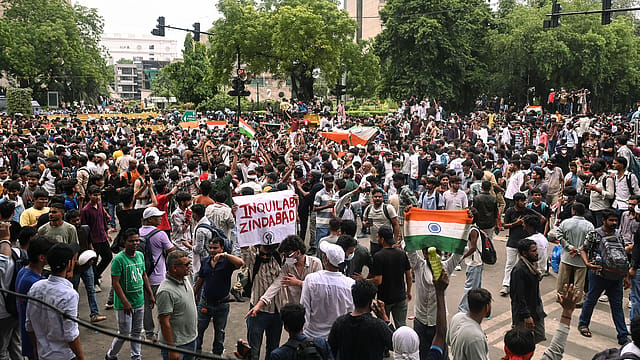
Following widespread protests over examination integrity, Prime Minister Narendra Modi constituted a multidisciplinary task force to recommend structural and technological reforms for examinations conducted by the National Testing Agency. The committee is chaired by Nandan Nilekani and includes former ISRO chairman S. Somnath, former Intelligence Bureau Director Tapan Deka, IIT Madras Director V. Kamakoti, former Education Secretary Anita Karwal, and logistics expert Amrit Lal Meena. Its mandate is to strengthen examination security, improve transparency and recommend long-term reforms aimed at restoring public confidence in India's competitive examination system.
(With inputs from ANI)