Fast track courts to try pending paper leak cases under tough new law

Not only does the Public Examinations (Prevention of Unfair Means) Amendment Bill, 2026, steeply increase monetary penalties and jail terms for paper leaks, it seeks to transfer to the proposed special court mechanism all pending cases related to breach of confidentiality regarding public examinations.
The Bill tabled in Parliament states that "cases or trials pertaining to offences under this Act or any other law for the time being in force as specified in sub-section (3), which are pending on the date of commencement of the Public Examinations (Prevention of Unfair Means) Amendment Act, 2026, shall stand transferred to the Special Fast Track Court designated under sub-section (2)."
This means the cases relating to the 2024 and the more immediate 2026 NEET leaks will also be fast tracked. Since education is a concurrent subject, states can refer investigations under the central act including seeking a probe by a central investigation agency.
The Bill states, "The trial of cases transferred under sub-section (5) shall be conducted by the Special Fast Track Court designated under sub-section (2) from the stage it is received upon such transfer and shall be completed within a period of three months from the date of such receipt."
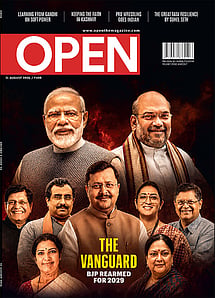
The Vanguard
21 Aug 2026 - Vol 05 | Issue 34
BJP Rearmed for 2029
The three month time period for completion of trial is accompanied by a provision limiting period of appeal to a High Court to 30 days unless the litigant can show a valid reason for delay.
"Every state government and Union territory administration shall, by notification, appoint one or more Special Public Prosecutors for every Special Fast Track Court in accordance with sub-section (8) of section 18 of the Bharatiya Nagarik Suraksha Sanhita, 2023, for conduct of cases under this Act," the Bill states, setting out guidelines for state governments.
"Notwithstanding anything contained in the Bharatiya Nagarik Suraksha Sanhita, 2023, an appeal shall lie from any judgment, sentence or order, not being an interlocutory order, of a Special Fast Track Court to the High Court," the Bill states.