The BIS Bottleneck: Why India May Exempt High-Tech Manufacturers From its Own Quality Rules
India wants the world’s most advanced factories. But before some of those factories can begin manufacturing, the machines needed to manufacture anything must first pass through India’s certification machinery.
That is proving to be a problem.
A semiconductor fabrication plant cannot be assembled from equipment found in an ordinary industrial catalogue. Its lithography, deposition, etching, inspection and cleaning systems are specialised machines made by a small group of global suppliers. Their components change frequently. Some may be imported only once, for one factory or one production line.
India’s quality-control system, however, can treat these machines and components much like products entering the mass market. If they fall under a mandatory Quality Control Order, their foreign manufacturer may need a Bureau of Indian Standards licence before the equipment can enter the country.
Certification can involve applications, factory inspections, laboratory testing and compliance with Indian standards. For an ordinary consumer product sold in millions, that scrutiny may be justified. For a custom-built component entering a secured semiconductor plant, the same process can delay the factory it is supposed to serve.

Zeroing In on ECI
09 Oct 2026 - Vol 05 | Issue 41
Constitutional legitimacy versus political opportunism
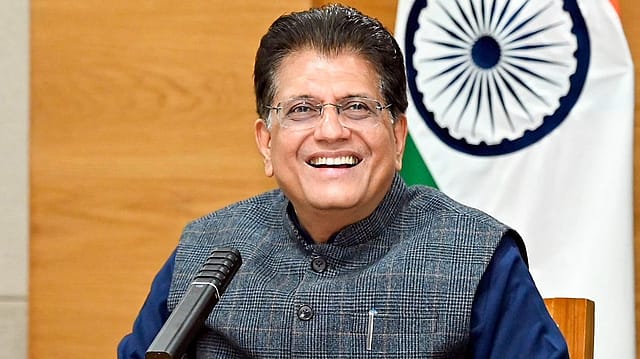
India has now acknowledged the contradiction. After Japanese semiconductor companies, including Tokyo Electron, raised the problem during a meeting in Tokyo, Commerce and Industry Minister Piyush Goyal said the government would create a framework to exempt certain equipment and components imported for high-tech manufacturing. “We will work on the framework as I get back to India and find a solution for bulk exemption or product or project-based exemption or company-based exemption,” Goyal said.
The proposal raises a larger question: can India protect quality without allowing its standards regime to become a barrier to the high-tech manufacturing it is spending billions of dollars to attract?
What exactly is BIS certification?
The Bureau of Indian Standards is India’s national standards body. It develops standards covering the quality, performance and safety of products, processes and systems. Compliance with a BIS standard is voluntary for many products. It becomes compulsory when the government places a product under a Quality Control Order, or QCO. Once an order takes effect, the covered product generally cannot be manufactured, imported, sold or distributed in India unless it conforms to the specified Indian standard and carries the required certification mark.
The legal obligation does not arise from BIS acting independently. Product-specific QCOs are issued by the ministry or department responsible for that industry, using powers available under the BIS Act. Foreign manufacturers whose products are covered must ordinarily obtain certification before exporting them to India. Depending upon the applicable scheme, this may require technical documentation, product testing and an inspection of the overseas manufacturing facility.
Why did India tighten its quality rules?
The policy has a legitimate purpose. Quality Control Orders are intended to keep unsafe and substandard products out of the Indian market, protect consumers and raise the quality of domestic manufacturing. They can also prevent Indian companies that meet prescribed standards from being undercut by cheaper imports that do not. The government has steadily widened mandatory certification across steel, chemicals, electrical appliances, machinery, toys, footwear and other product categories. The rules also support Make in India by encouraging overseas manufacturers either to comply with Indian standards or establish production in the country.
This framework is relatively easy to defend when applied to toys used by children, electrical appliances installed in homes or construction material sold across the country. These are standardised products that reach large numbers of consumers and can pose serious safety risks. The difficulty begins when the same regulatory architecture reaches specialised industrial equipment that is neither sold in shops nor released into the wider market.
Why do semiconductor machines not fit easily into the BIS system?
A semiconductor fabrication plant, or fab, is among the most complicated factories ever designed. A chip can pass through hundreds of production steps before it is completed. Machines deposit microscopic layers of material, print circuit patterns, remove selected material, clean wafers, implant ions and inspect defects that may be smaller than the human eye can comprehend. Companies such as Tokyo Electron manufacture highly specialised systems used for coating, cleaning, deposition, etching and testing. Some machines are customised for a particular factory, production process or generation of chips.
Each system may contain thousands of components sourced across multiple countries. Those components can change as designs improve. A replacement part may be imported in tiny numbers but may also be urgently required to restart a production line. If every specialised component must undergo a full Indian certification process, a rule designed for quality assurance can become a supply-chain blockade.
Japan External Trade Organization, or JETRO, has reported that obtaining Indian certification for an imported product can take more than six months. It has warned that mandatory certification of components can disrupt manufacturers dependent upon overseas supply chains. JETRO has also described rising concern among Japanese businesses as India expands compulsory BIS certification. In semiconductor manufacturing, six months is not a clerical delay. It can alter a factory’s construction schedule, inflate costs or leave extraordinarily expensive equipment idle while one component awaits clearance.
Is India removing BIS requirements for all high-tech imports?
No. Goyal has announced the intention to create a framework. The exemption has not yet been formally notified, and its scope, conditions and safeguards remain to be defined. The four options he mentioned indicate the models being considered. A bulk exemption could cover a defined category of machinery or components. A product-based exemption could exclude particular specialised goods from mandatory certification. A project-based exemption could apply to equipment imported for an approved semiconductor fab or high-tech manufacturing facility. A company-based exemption could recognise selected manufacturers or investors that meet prescribed conditions.
A project-based or end-use exemption may offer the most defensible balance. Equipment imported directly for installation in an approved factory does not create the same regulatory risk as an uncertified product released into the retail market. The importer, quantity, destination and intended use can all be identified and monitored. The exemption could also be restricted to equipment conforming to recognised international standards, thereby avoiding duplicate certification without abandoning quality control.
Has India granted similar regulatory relief before?
Yes. The government already allows limited exemptions for certain products imported for research and development. It has postponed enforcement dates when industries have argued that manufacturers, laboratories or supply chains were not ready. India has also suspended or withdrawn some Quality Control Orders covering chemicals, polymers, fibres and specialised steel after downstream manufacturers warned that mandatory certification could restrict access to essential inputs.
In June 2026, the Directorate General of Foreign Trade widened QCO relief for Special Economic Zones. Permissible raw materials, components, consumables, spares, capital goods and equipment imported for authorised SEZ operations were exempted from compliance at the import stage. Certification requirements can return when covered goods enter India’s Domestic Tariff Area. The principle is already visible: certification requirements may be adjusted according to where a product is going, how it will be used and whether it will enter the open market. The proposed framework for high-tech manufacturers would apply that logic to specialised factories beyond a narrow SEZ exemption.
Why is Japan raising the issue?
Japan controls some of the most valuable links in the global semiconductor supply chain. Its companies are particularly strong in silicon wafers, photoresists, speciality chemicals, precision components, testing systems and chip-manufacturing equipment. A country may design chips or build a fabrication plant, but production remains dependent upon these machines and materials.
India has engineering talent, a rapidly expanding electronics market and substantial government incentives. It does not yet possess the complete industrial ecosystem required to manufacture advanced chips independently. The two countries signed a memorandum on semiconductor supply-chain cooperation in July 2023. Japan’s Ministry of Economy, Trade and Industry said the partnership would promote collaboration in semiconductors and other advanced sectors. India now wants Japanese companies to invest across chip design, fabrication, advanced packaging, manufacturing equipment, materials, research and talent development.
The BIS complaint exposes the distance between signing a semiconductor partnership and making one work. A company may welcome subsidies and industrial parks. It may still hesitate if essential machines or replacement parts can be stranded while certification is completed.
Why does the proposed exemption matter now?
India’s semiconductor ambition is moving from announcements towards factory construction. Goyal said the first phase of India’s semiconductor programme provided approximately $10 billion in government incentives and helped seed around $19 billion of investment across 13 projects.
The government has committed another $15 billion for Semicon 2.0 and expects the programme to help catalyse approximately $50 billion in investment. India’s semiconductor demand is projected to reach $150 billion by 2032, while the country’s first fabrication unit is expected to be commissioned in 2028. Semiconductor plants also compete for capital globally. The United States, European Union, Japan, South Korea and China have all offered incentives to secure chip production and supply chains.
India is, therefore, competing not merely on subsidies or labour costs but on execution. Investors will examine land, electricity, ultra-pure water, logistics, customs procedures, environmental clearances and the speed with which machinery can be installed. Regulatory delays can weaken the value of financial incentives. Subsidising a factory with one arm of the state while delaying its equipment with another defeats the purpose of the programme.
Is BIS the only regulatory obstacle?
No. Goyal also acknowledged concerns involving Special Economic Zone notifications and wider regulatory complexity. Semiconductor projects require coordination among the Centre, state governments, customs authorities, environmental regulators, industrial-development bodies and infrastructure providers.
A fab requires uninterrupted power, vast quantities of ultra-pure water, clean rooms, chemical-handling facilities, waste treatment, dependable logistics and housing for skilled workers. The BIS issue matters because it sits directly on the critical path between ordering a machine and switching it on. But removing that bottleneck will not compensate for delays elsewhere. The government’s larger challenge is to make separate regulators and departments operate according to one manufacturing timetable.
Could exemptions weaken India’s quality regime?
Yes, if they are drafted too broadly. Industrial components can affect electrical safety, worker protection, factory reliability and environmental performance. An exemption without strict conditions could allow ordinary imports to be described as “high-tech”, disadvantage Indian manufacturers already paying to comply or open a route for uncertified products to reach the domestic market.
Company-based exemptions are especially sensitive. If the government grants relief selectively, it could create regulatory privilege for large overseas companies unless eligibility conditions are transparent and available to comparable manufacturers. A credible framework would need clearly defined products and end users, quantity limits, import documentation, traceability and penalties for diversion. It should also specify which overseas standards and certifications India will recognise.
The answer is not to abandon standards. It is to remove duplicate certification when an imported machine already conforms to an internationally accepted regime and is destined for a controlled industrial project. India could recognise equivalent international certifications, approve an entire project instead of processing every component separately, allow audited self-declarations or create a fast-track route for trusted manufacturers.
Does the proposal weaken Make in India?
Properly designed, it could strengthen it. Make in India cannot mean that every nut, sensor, chemical or machine must already be manufactured domestically before an Indian factory can begin operating. Advanced manufacturing ecosystems are built gradually. Countries first import machinery, absorb processes, train engineers and develop suppliers. Domestic capability deepens over time.
Blocking a specialised imported input for which no adequate Indian substitute exists does not necessarily create local manufacturing. It may simply delay the Indian factory that would have used it. The policy challenge is to distinguish between imports that permanently displace Indian production and imports that enable new production within India.
That distinction sits at the heart of Goyal’s proposed exemption. India’s BIS regime was expanded to support Make in India. The Tokyo discussions reveal that, in high-tech manufacturing, the same regime can occasionally stand in Make in India’s way. The government must now ensure that the solution remains narrow enough to protect standards and flexible enough to let the factories arrive.
(With inputs from ANI)