When school lunch becomes a health scare: Why the Kota incident is putting India’s mid-day meal system back in focus
For millions of Indian children, the school bell does not just signal class.
It signals lunch.
Every afternoon, one of the world's largest school feeding programmes serves hot meals to children across the country. The scheme, now known as PM POSHAN, is designed to improve nutrition, boost attendance and ensure that no child studies on an empty stomach.
Which is why incidents like the one in Rajasthan's Kota hit a nerve.
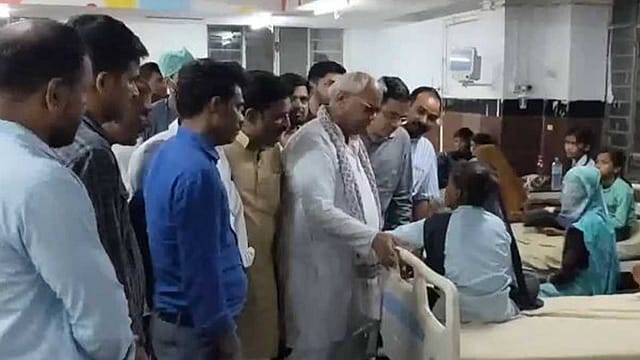
On Monday, 27 students at a government school in Poonia Devli village fell ill after consuming a mid-day meal. Children complained of nausea, vomiting, stomach pain and dizziness, prompting officials to rush several of them to hospitals for treatment. All of the affected students are reported to be stable, and authorities have ordered an investigation into the cause.

Zeroing In on ECI
09 Oct 2026 - Vol 05 | Issue 41
Constitutional legitimacy versus political opportunism
But the Kota incident is not unfolding in isolation.
Just days earlier, dozens of children in Bihar's Nalanda district were hospitalised after detergent powder was allegedly mistaken for salt and added to a school meal. That incident sparked national outrage and renewed scrutiny of food safety practices in school kitchens.
Together, the two episodes have shifted attention from a single school to a much larger system.
What exactly happened in Kota?
According to officials, around 110 students were present when lunch was served at the Government Upper Primary School in Poonia Devli village.
The meal reportedly included a pumpkin preparation. Roughly two hours later, children began reporting symptoms including vomiting, dizziness, nausea and stomach discomfort. Twenty-one students were taken to hospitals in Kota, while others received medical attention locally. Officials have said all of them are now stable.
Importantly, authorities have not yet concluded that the meal itself caused the illness.
District education officials told local media that investigators are examining multiple possibilities, including food quality, water contamination, weather conditions and other environmental factors. Samples have reportedly been collected for testing.
Why is the Bihar incident still looming over this story?
Because it exposed how something as simple as storage practices can have serious consequences.
In Nalanda last week, more than 30 students fell ill after detergent powder was allegedly added to a meal instead of salt. According to reports from PTI, the mix-up may have occurred because detergent and salt were stored in close proximity in the kitchen. All the affected students recovered, but the incident triggered a broader debate about supervision, training and kitchen safety.
The Bihar episode transformed what might otherwise have been seen as an isolated error into a warning about systemic vulnerabilities.
Why do these incidents attract so much attention?
Because the scale is enormous.
The PM POSHAN scheme feeds millions of children across India every school day. For many students, particularly in rural and economically weaker communities, the meal served at school may be the most nutritious meal of the day.
When a problem occurs, it does not affect a handful of customers in a restaurant.
It affects children.
And it affects public trust in one of India's most important welfare programmes.
Is India's mid-day meal system failing?
Not necessarily.
In fact, education and nutrition experts have long credited school meal programmes with improving attendance, reducing classroom hunger and supporting child nutrition across the country.
The challenge is that even a programme with a strong overall record can be vulnerable to local failures.
A storage error in one kitchen.
Poor quality checks in another.
A breakdown in supervision somewhere else.
The vast majority of meals are served without incident. But when something goes wrong, it raises questions about whether safeguards are strong enough and consistently enforced.
What happens next?
The immediate focus in Kota is determining why the children fell ill.
Investigators are examining food samples and reviewing how the meal was prepared, transported and served. Officials have stressed that conclusions should not be drawn before laboratory reports arrive.
The larger question, however, goes beyond one school in Rajasthan.
How do you maintain food quality across a programme that serves millions of meals every day?
That is the challenge policymakers, administrators and schools continue to wrestle with.
The real story behind the Kota scare
The Kota incident is not just a story about 27 children who fell sick.
It is a story about trust.
Parents trust that the meal served at school is safe.
Children trust that the lunch placed before them will nourish them, not send them to a hospital.
And governments trust that a massive welfare programme can be delivered consistently across thousands of kitchens and millions of plates.
Most days, that trust holds.
The concern is what happens on the days when it doesn't.
(With inputs from yMedia and agencies)