The Crown Comes Calling: What Britain Wants From William and Kate’s India Visit
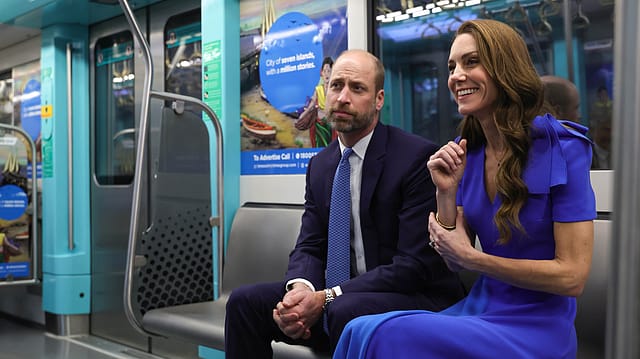
The cricket match, the Bollywood encounters, the carefully choreographed welcome and the environmental awards are likely to produce the photographs that define Prince William and Princess Kate’s visit to India. But behind the spectacle is a more consequential exercise in diplomacy. Britain is bringing one of its most recognisable institutions to a country whose economic and geopolitical importance has grown considerably, and with which it is trying to build a partnership that looks beyond its colonial past.
The Prince and Princess of Wales are in India for a three-day visit that includes the Earthshot Prize ceremony in Mumbai and a meeting with Prime Minister Narendra Modi in New Delhi. The scheduled meeting with Modi has added a political dimension to what might otherwise have been seen largely as a cultural and environmental engagement.

The Wealth Issue 2026
06 Nov 2026 - Vol 05 | Issue 45
Portraits of Dreamers and Doers under 35
Amb Manjeev Singh Puri, a former Indian diplomat who served as India's Ambassador to the European Union, sees the visit as "an opportunity to sustain the momentum in India-UK relations." He says it maintains "continuity in bilateral engagement at a time when a trade agreement is in place and there is a positive atmosphere" around the relationship. The scheduled meeting with PM Modi, he adds, provides another occasion to strengthen ties between the two countries.
Puri also points to the importance of engaging with the British monarchy, which continues to hold a special place in the country's national life. "With William next in line to the throne," he argues that "building a relationship with the future monarch is an important part of sustaining India's engagement with Britain and strengthening long-term bilateral ties."
For Pranav Bhanot, a London-based lawyer, entrepreneur and British-Indian community leader, the meeting is significant because it brings the royal visit closer to the political and economic relationship between the two countries.
"The last-minute decision to include a meeting with Prime Minister Modi adds real significance to William and Kate’s visit to India. It shows the importance both countries place on the relationship and the role the Royal Family can play in strengthening ties," says Bhanot, founder of WYN Legal.
He argues that the opportunity extends beyond diplomacy. "Beyond the diplomacy, there is a wider opportunity to build on growing trade and investment links, with legal and regulatory certainty playing an important part in giving businesses the confidence to invest across both markets."
That is the larger story behind the royal itinerary. The monarchy can attract attention, create goodwill and put a spotlight on Britain's relationship with India. But the economic dividends London hopes to secure will depend on what follows the ceremony.
THE ROYAL SOFT-POWER PLAY
A royal visit is, by its nature, an exercise in soft power. Arts, culture and sport are not incidental additions to the programme; they are the instruments through which the monarchy connects with audiences beyond government and business circles.
Historian and author Shrabani Basu, whose book Victoria & Abdul explores the relationship between Queen Victoria and her Indian attendant Abdul Karim, sees the cultural dimension as central to such visits.
"A visit by the Prince and Princess of Wales is all about soft power: arts, culture, sports is always on the agenda," she says. "Ultimately, what Britain wants is business and investments."
Dr Ruhi Khan, LSE academic working on India-UK partnership in creative economies, sees the visit as a strategic exercise in commercial and cultural diplomacy rather than a ceremonial tour. She argues that "the royal couple's engagements come at a time when the India-UK trade agreement is reshaping bilateral ties, and that the monarchy's soft power can help create the goodwill needed to encourage investment, creative collaborations and the movement of talent between the two countries." She says that the decision to bring the Earthshot Prize to India, alongside engagements with Bollywood, also reflects Britain's interest in expanding cooperation in green technology, sustainability and the creative economy.
"The Prince and Princess of Wales’s visit to Mumbai is much more than a ceremonial tour, it is a high-visibility and strategic exercise in commercial and cultural diplomacy. At a time when the CETA is actively reshaping bilateral ties, the royal soft power generates the cultural warmth and commercial momentum needed to spur cross-border investment, creative partnerships, and talent mobility between India and the UK," says Khan.
The distinction is important. The royal family does not negotiate trade agreements or determine foreign policy. Its value lies in the visibility and symbolism it brings to Britain's international relationships. A royal engagement can generate public interest, attract business attention and provide a warmer setting for conversations that governments want to pursue.
For Britain, India is an especially important destination for this form of diplomacy. It is a major economy, an influential voice in international affairs and a country with which the UK shares deep connections through migration, education, language, culture and business. The royal family offers London a way to foreground those connections while presenting the relationship as one between contemporary partners.
THE BUSINESS BEHIND THE WELCOME
The economic context is significant. The India-UK Comprehensive Economic and Trade Agreement (CETA) is intended to improve market access and expand trade between the two countries. The agreement covers a wide range of goods and services and is part of a broader effort to deepen the economic relationship.
For British businesses, India represents a large and expanding market. For Indian companies, the UK offers access to financial services, technology, research institutions and international markets. But translating the potential into investment requires more than political goodwill. Businesses need predictable regulations, clarity on market access and confidence that commitments will be implemented.
Puri's observation about continuity is relevant here. The trade agreement provides an economic framework for closer engagement, while high-level interactions such as the scheduled meeting with Modi help maintain political momentum. The royal visit adds another layer of visibility to a relationship both sides are seeking to expand.
That is also the point Bhanot makes when he emphasises legal and regulatory certainty. The royal visit may create a favourable atmosphere, but companies making long-term decisions will look for stable rules and a reliable business environment.
The meeting with Modi therefore carries significance beyond the optics. It places the royal visit within the wider political relationship at a time when both governments are looking to expand cooperation in trade, investment, technology, education, clean energy and security.
The challenge is to ensure that the warmth generated by the visit translates into tangible outcomes. A royal couple can help draw attention to the relationship; it is governments, businesses and institutions that must sustain it.
WHY EARTHSHOT MATTERS
The centrepiece of the Mumbai leg is the Earthshot Prize, the environmental initiative founded by William in 2020. It recognises projects working on solutions to some of the world's most pressing environmental challenges, including climate change, air pollution, waste, ocean conservation and biodiversity loss.
India is a significant setting for the initiative. It faces many of these challenges at scale, but is also home to entrepreneurs, researchers and organisations developing solutions that can be applied in other parts of the world. The awards provide a platform to showcase such work and connect innovators with investors, institutions and potential partners.
The event also gives William an opportunity to establish an international identity around environmental action. His public role is not confined to representing the monarchy at ceremonial occasions. Through Earthshot, he has sought to associate his work with a global issue that cuts across national boundaries.
For India, the event offers a chance to present its climate and sustainability work to an international audience. For Britain, it demonstrates that the relationship with India can extend beyond conventional trade and diplomacy to areas where both countries have shared interests.
CRICKET, CINEMA AND CULTURAL DIPLOMACY
The itinerary's engagements with cricket and cinema are equally deliberate. Cricket is one of the strongest cultural links between India and Britain, while Indian cinema has a global audience and a particularly visible presence in the UK.
These encounters bring the people-to-people dimension of the relationship into focus. Britain is home to a large Indian-origin population, and Indian students, professionals, entrepreneurs and artists have long contributed to British public life. Cultural exchanges help sustain those links in ways that official statements cannot.
The royal couple's previous official visit to India was in 2016. A decade later, their roles have changed. William is now the heir to the British throne, and his overseas engagements increasingly reflect the international responsibilities expected of a future monarch.
The cultural programme also presents a contemporary picture of India: a country with a global entertainment industry, a major sporting culture, a growing technology sector and an expanding role in environmental innovation. It allows Britain to celebrate the connections between the two societies without making the visit a purely political exercise.
THE HISTORY THAT CANNOT BE LEFT OUT
There is, however, a historical complexity to the royal welcome. William and Kate represent an institution associated with a monarchy that presided over the British Empire, including the period of colonial rule in India. That history is not erased by the language of partnership or by the ceremonial warmth surrounding the visit.
But the relationship today is not defined by history alone. India is no longer a country receiving British attention from a position of subordination. It is a major economy with its own diplomatic priorities, strategic partnerships and ambitions. The balance of the relationship has changed, and the language used by both governments increasingly reflects that reality.
For Britain, the challenge is to engage with India as a partner while recognising that the two countries will not always see the world in the same way. Differences over trade, immigration, security and international affairs will not disappear because a royal couple receives a warm welcome.
Yet the monarchy's symbolic power remains useful to London. It puts Britain in the Indian public conversation through a channel that is not limited to government policy. It also gives the royal family an opportunity to demonstrate that its role in modern Britain extends beyond ceremony and domestic occasions.
THE TEST BEGINS AFTER THE SPECTACLE
The meeting with Modi brings the royal itinerary into direct contact with the political relationship between the two countries. The larger agenda includes trade, investment, technology, education, clean energy and security. These are the areas in which both sides will ultimately judge the value of closer engagement.
The test of the visit will not be the size of the welcome or the number of photographs generated in Mumbai. It will be whether the goodwill translates into closer institutional and economic engagement. For India, the relationship must deliver investment, market access, technology partnerships and cooperation on issues where interests converge. For Britain, India is a partner it cannot afford to treat as merely another stop on a royal itinerary.
As Basu suggests, the cultural spectacle is the language of the royal visit. The business and investment relationship is its larger purpose. The Crown may bring the attention, but the substance of the partnership will be measured in trade flows, strategic cooperation and the confidence businesses have in operating across both markets.
A decade after their first official visit, William and Kate return to an India whose global position has changed considerably. The royal welcome is familiar theatre. The relationship it is meant to reinforce is being rewritten.