Mumbai’s street food is getting a makeover: Gloves, butter paper and less artificial colour
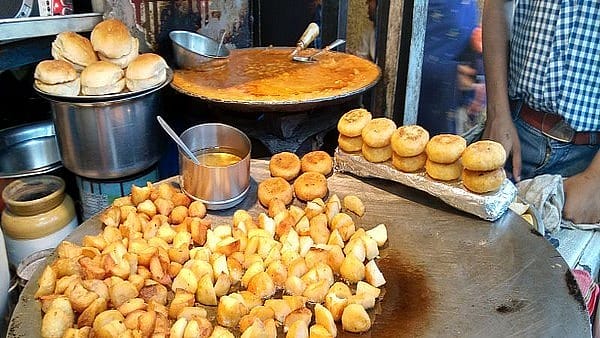
There was a time when you could identify a Mumbai vada pav before taking the first bite.
It came hot. It came spicy. And quite often, it came wrapped in a piece of yesterday’s newspaper.
The newspaper was almost part of the experience. A little oil stain here, a headline there, and your snack was ready to go.
But Mumbai’s street food is now getting a rather unexpected makeover.
The gloves are coming on. The newspaper is going out. Hairnets are appearing. And some of those suspiciously fluorescent red dishes are reportedly being served in their natural colours.
No, Mumbai has not suddenly become a salad city.

Zeroing In on ECI
09 Oct 2026 - Vol 05 | Issue 41
Constitutional legitimacy versus political opportunism
But its street-food culture is being pushed towards stricter food-safety practices — and the transformation is becoming visible enough to catch the internet’s attention.
Why is Mumbai saying goodbye to newspaper-wrapped food?
This one is not merely a social-media trend.
On June 5, the Food Safety and Standards Authority of India’s western region directed food vendors and businesses to stop using newspapers to pack, serve or absorb excess oil from food. The advisory followed joint action by FSSAI and the Brihanmumbai Municipal Corporation after newspaper was found being used by a prominent vada pav vendor.
The reason is fairly simple: newspaper is meant to carry news, not your vada pav.
FSSAI has warned that printing inks can contain chemicals, pigments and other substances that can migrate into food. Used newspapers can also be exposed to contaminants during handling and distribution. The agency said food businesses should instead use safe, approved food-grade packaging materials.
And Maharashtra’s FDA followed that up with inspections.
The Indian Express reported that around 55 food establishments were inspected during a special drive between June 5 and June 16, with 26 found using newspapers for food packaging or serving and facing action.
So if your vada pav now arrives in butter paper rather than wrapped around a page carrying yesterday’s cricket score, there is a reason.
What happened to the brightly coloured Manchurian?
Then there is the colour.
A viral video circulating online has claimed that restaurants and street-food vendors are cutting back on artificial colours, with dishes such as Manchurian and chutneys appearing in more natural shades. NDTV reported the video had crossed 35.5 million views.
But there is an important distinction here.
Artificial food colours are not universally banned.
The Indian Express, while examining the recent chatter around red food colour, reported that FSSAI permits certain food colours for specified uses and that colours used in food must meet regulatory requirements. It also noted there was no official confirmation that Maharashtra had imposed a blanket ban on red food colour as part of the Mundhe-led crackdown.
So the more accurate story is not that Mumbai has declared war on anything red.
It is that food businesses are becoming considerably more cautious about what they put into the food — and how dramatically they make it look.
And yes, the gloves are actually coming on
This may be the most visually obvious change.
Reuters, which recently visited 25 street-food vendors and restaurants in Mumbai, found evidence of vendors changing their practices amid the intensified inspections led by Maharashtra Food Commissioner Tukaram Mundhe.
One vendor had replaced artificial red colouring with natural chilli in Chinese food, while another had begun changing frying oil three times a day and requiring staff to wear gloves and head caps.
That is quite a leap from the stereotypical image of the street-food cook simultaneously handling food, money and half the contents of the stall.
And Mundhe's crackdown is considerably bigger than one viral video.
Reuters reported that since taking charge in May, his teams had conducted more than 3,000 food-safety raids covering street vendors, restaurants, upscale establishments and major chains, with several licences suspended.
Is every Mumbai food stall suddenly squeaky clean?
Not quite.
This is where the viral before-and-after story needs a little seasoning.
The changes are real, but they are not universal.
In August, Mid-Day reported that nearly two months after the newspaper crackdown began, vendors across Mumbai — including vada pav stalls, farsan shops and eateries — could still be seen using newspapers to wrap hot and oily food.
So this is better understood as a transition than a finished transformation.
One stall may hand you a neatly wrapped vada pav in food-grade paper.
Another may still reach for the newspaper.
Mumbai, after all, has never been a city that changes its habits overnight.
What is really changing on Mumbai’s streets?
Perhaps the most interesting part is not the gloves or the butter paper.
It is the fact that food hygiene has suddenly become visible.
For years, Mumbai's street food has lived in a curious space where taste often mattered more than presentation — and certainly more than the cleanliness of the kitchen behind the counter.
Now, customers are beginning to notice the details.
Is the cook wearing gloves?
Is the food covered?
What is the frying oil doing?
Why is the Manchurian that red?
And why, exactly, is my vada pav wrapped in a newspaper from three days ago?
The answers may not always be reassuring.
But the questions themselves mark a change.
Mumbai's street food is still greasy, spicy, chaotic and gloriously democratic.
It is just beginning to discover that the wrapper matters too.