Kamathipura’s Redevelopment Plan Doesn’t Factor In Its Sex Workers
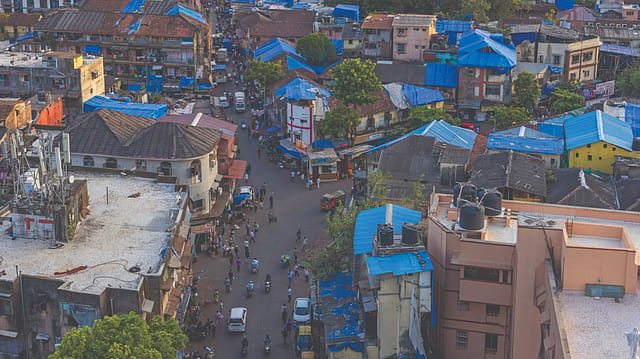
After several failed attempts at redeveloping the neighbourhood of Kamathipura in Mumbai, a few weeks ago, the Maharashtra Housing and Area Development Authority (MHADA) finally signed a Construction and Development Agency agreement with a developer consortium to redevelop the locality. The locality, which traces its history long back to the early years of the British Raj, is mostly famously known for being the city’s red-light district. Often the subject of movies and books, it was until a few decades ago considered one of the largest red-light districts in Asia.
It also sits on a particularly valuable piece of land. Stradling between the old business district of Fort and the new one in Parel, it has been eyed by real estate developers for decades. But the density of the locality, the many diverging interests – of landlords and tenants, owners of commercial units and residents – and the inability of developers to raise enough money to redevelop the entire area at one-go, has meant that the neighbourhood’s redevelopment has never moved beyond proposals.

Zeroing In on ECI
09 Oct 2026 - Vol 05 | Issue 41
Constitutional legitimacy versus political opportunism
This is finally changing now. According to the plan of this cluster redevelopment project, the nearly 800 old buildings stretching across about 34 acres will be pulled down and replaced by modern towers and skyscrapers. Residents and landlords are to get new apartments in these towers, their old, cramped dwellings of around 120 square feet replaced by flats of 500 square feet or more. There are to be wide roads, parks, schools, hospitals and commercial complexes. The plan however appears to have no provisions for the sex workers that continue to operate in this area.
In this interview, Ratoola Kundu, an assistant professor at the Tata Institute of Social Sciences’ School of Habitat who has studied this locality for several years, charts the many ups and downs in the plans to redevelop this locality, and how several waves of anti-sex work mobilisations have led to the dwindling number of brothel-centric sex work in the area. “Sex workers have been systematically excluded from neighborhood-level discussions on redevelopment,” she says. “It is our guess that the sex workers will eventually move outwards into the peripheries of the city to less surveilled geographies which is already happening to some extent.”
Excerpts from an interview:
Question:
Attempts to redevelop Kamathipura have been going on for several years now. Can you talk about these earlier attempts and what led to these not taking off?
Answer:
Kamathipura has been the subject of several redevelopment plans in the past – in 1988 the Govt. of Maharashtra carried out a comprehensive socioeconomic survey of the neighbourhood based on which proposals were drawn up. However, lack of finances and the complexity of the project lead the govt to shelve the plans. Moreover, many inhabitants were wary of MHADA [Maharashtra Housing and Area Development Authority] as several buildings which had been torn down for redevelopment, had taken several decades to be rebuilt, leaving families in far off transit housing.
In early 2000, a private developer sought to redevelop the neighbourhood. Architect Hafeez Contractor drew up the plans. However, at that time, the landlords and longstanding tenants could not agree to the terms and conditions for rehabilitation or compensation. Specifically, the size of apartments was a concern as larger units would make the entire project commercially unviable. At the time, cluster redevelopment rules had not existed which enabled private developers to redesign the entire neighbourhood and utilise higher FSI. The real estate market was going through a worldwide crash and the project seemed too risky to attract private developers. Underlying legal and bureaucratic hurdles existed around contested claims by <pagdi> tenants versus actual landlords to the same property. These attempts did not address the concerns of long-term sub tenants who would not have received compensation and were reluctant to approve the project. A large majority of the buildings were Cessed buildings and under Rent Control, adding to the complex and layered legality of ownership claims and subsequently compensation claims. These redevelopment plans did not address the concerns of several small-scale commercial ventures that operate in Kamathipura offering employment to many people as the redevelopment plans dealt largely with the housing question.
Question:
One of the big issues were disagreements within Kamathipura, especially between landlords and tenants and sub-tenants. How has this issue been dealt with this time?
Answer:
Over the past two decades, the formation and persuasion of the Kamathipura Landlords Association have brought out some of these contestations to the foreground. The persisting political persuasion of [the local] MLA Milind Patel outlining the urgency of redevelopment given the dilapidated and dangerous state of buildings and lack of basic urban services in the neighbourhood – the lack of proper water supply, sanitation, parking spaces, parks and open spaces – also led to the opening of stakeholder dialogues under the Kamathipura Vikas Samiti, bringing tenants and landlords to the table. The possibility of applying the cluster redevelopment model to the entire neighbourhood also provided the regulatory leeway to propose larger apartment sizes, open areas, and accommodation of mixed uses in the area. Above all, the increasing land values in the vicinity of Kamathipura and strong housing demand given its central city location ensured that the project saw several interested parties.
Question:
Over time, the number of commercial sex workers working or living out of this locality have drastically reduced. Can you please talk about the reasons behind this?
Answer:
Several waves of anti-sex work mobilisations amongst the inhabitants of Kamthipura have led to the dwindling number of brothel-centric sex work in the neighbourhood. The AIDS epidemic in the late 80s and early 90s prompted several landlords to empty out brothels. Frequent police raids – given the abolitionist attitude to sex work – also created obstacles for brothel-based sex work to persist. Many landlords were also in favour of renting out their units to small scale businesses rather than deal with the risks associated with brothels which are considered illegal in India. The strong moral stigma attached to the neighbourhood, making it a dangerous zone and social pariah in spite [of] it being located in the heart of the city made many of its residents form vigilance committees to surveil and curtail sex work to particular inner lanes, ruing that the stigmatisation made it difficult for others in Kamathipura to carry out their daily lives or for private developers to sell the units to new inhabitants. COVID pandemic affected the livelihoods of sex workers as well pushing them into the peripheral reaches of the city. Although brothels have declined, replaced by commercial lodges where rooms can be rented by the hour, sex workers commute daily to Kamathipura to look for clients, this time soliciting in hyper-visible ways on the crowded streets, leading to further social friction with the other residents of the neighbourhood.
Question:
What is likely to happen to the commercial sex workers once this area goes under redevelopment?
Answer:
In the current redevelopment plans, there’s no mention on recognition of Kamathipura’s complex history as a largely working-class neighborhood which was forced to accommodate sex workers evicted from other parts of the colonial city. The current plan highlights the workers’ contribution to the city, particularly the Kamathis, seen as the original settlers of the neighborhood. But there’s no mention of the thriving sex work economy and the other sundry businesses it supported in the area – entertainment venues, restaurants and eateries, bars, tailors, etc, beside the steady rents extracted from brothels. Given the complete redesign of the neighbourhood into tower blocks, reconfigured street networks prioritising movement of cars, and the changing demographic of the area, coupled with the erasure of its sex work history, [it] will make it very difficult for the remaining sex workers to continue to work in Kamathipura. The sex workers have been systematically excluded from neighborhood-level discussions on redevelopment, either by the developers, or the community [or] the government. It is our guess that the sex workers will eventually move outwards into the peripheries of the city to less surveilled geographies which is already happening to some extent. The lack of an organised collective front amongst sex workers to fight for their rights, their lack of legal claims to the units they have occupied, and even the lack of address proof or bank accounts make them particularly vulnerable to these proposals.