India-US defence ties: From F-35 fighter jets to Quad patrols, how military cooperation is growing
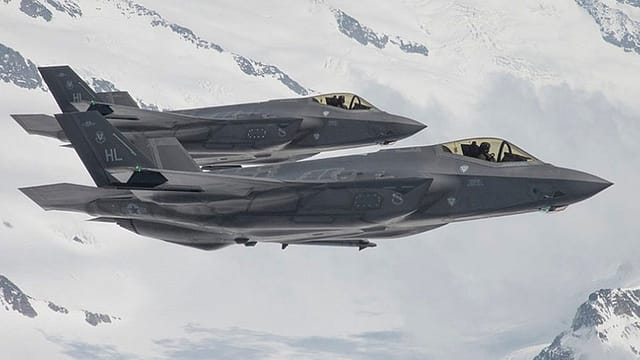
What does a closer military partnership look like? Sometimes it is an American fighter jet flying alongside Indian aircraft. At other times, it is a US Navy vessel docking at an Indian shipyard for repairs. In 2026, India and the United States have been building their defence relationship through both kinds of engagement: on the battlefield, in factories and across the Indo-Pacific.
A US fact sheet on the Major Defence Partnership points to a year of expanding military exercises, defence industrial cooperation and coordination with regional partners. The foundation is a 10-year framework signed by the two countries in October 2025, intended to deepen cooperation across land, sea, air, space and cyberspace.

The Wealth Issue 2026
06 Nov 2026 - Vol 05 | Issue 45
Portraits of Dreamers and Doers under 35
From Yudh Abhyas to Tarang Shakti, India and US expand military exercises
India and the US held several major military engagements this year. The 22nd edition of Exercise Yudh Abhyas took place from September 15 to 27 at Auli in Uttarakhand and the Mahajan Field Firing Range in Rajasthan. According to the Defence Ministry, around 600 personnel from each country participated, training in integrated combat operations, mountainous warfare and the use of drones and autonomous systems.
Another milestone came during Exercise Tarang Shakti in Jodhpur, held from September 26 to October 12. The multinational air exercise brought together seven foreign air forces, including the US. American F-35 fifth-generation stealth fighters participated, marking their first appearance in a military exercise on Indian soil, according to Hindustan Times.
The fifth edition of Exercise Tiger Triumph, meanwhile, focused on humanitarian assistance and disaster relief. Conducted in Visakhapatnam from October 31 to November 5, it brought together personnel from the Indian and US armed forces to practise joint planning and amphibious operations.
US Navy ship repairs in India signal growing maritime trust
The partnership is also moving beyond exercises. On November 20, the US Navy supply ship USNS Wally Schirra arrived at Larsen & Toubro’s Kattupalli shipyard near Chennai for maintenance under the India-US Master Ship Repair Agreement.
The Ministry of External Affairs said this was the fifth occasion on which a US naval vessel had been repaired at Kattupalli. It was also the first such arrival after revised procedures were introduced to facilitate the movement of foreign ship crews.
The development highlights India's ambition to become a regional hub for naval maintenance and gives the partnership an industrial dimension.
Javelin missile co-production brings defence manufacturing into focus
Defence manufacturing is another growing area of cooperation. On August 30, Tata Advanced Systems signed a memorandum of understanding with the Javelin Joint Venture, formed by Lockheed Martin and Raytheon, to explore co-production of Javelin anti-tank guided missiles in India.
The proposed arrangement includes exploring a final assembly and integration facility and local component production. It could create opportunities for Indian industry while strengthening defence supply chains.
Quad's 2027 maritime exercise could take India-US cooperation further
The next major development is expected through the Quad, comprising India, the US, Japan and Australia. At their November 17 summit in Manila, the four leaders announced that their maritime patrol aircraft would participate in an exercise together in 2027 under the Indo-Pacific Maritime Surveillance Collaboration initiative.
The plan involves aircraft such as the P-8 and P-3C, with the objective of improving information-sharing and maritime domain awareness. The announcement builds on the four countries' participation in Exercise Malabar, which began as a bilateral India-US naval exercise in 1992 and has since become a key multilateral engagement.
Together, these developments point to a partnership that is becoming broader and more operational. The question now is how far India can deepen military cooperation with Washington while retaining the strategic autonomy that remains central to its foreign policy.
(With inputs from ANI)