QUICK TAKE | Why Did Andy Warhol’s Soup Can Painting Sell for $9 Million? Seven Things to Know
1. What exactly sold at auction?
Titled Campbell’s Soup Can (Turkey Noodle), the 1962 work sold at Christie’s New York on November 19. It fetched $9,026,000 as part of The Collection of Antonio Homem Sonnabend, above its presale estimate of $6 million to $8 million.
2. Why is a painting of soup considered important?
Warhol turned familiar consumer products into subjects for fine art. His Campbell’s soup works challenged the idea that serious art had to depict traditional subjects. By making a grocery item the focus, he blurred the line between popular culture, advertising and art.
3. What makes this particular painting different?
Unlike many later works, this canvas was hand-painted using casein and graphite on linen. Measuring 20 by 16 inches, it dates from 1962, the year Warhol first exhibited his soup-can series. Christie’s calls it an important example of early Pop Art.
4. What was Warhol’s connection to Campbell’s soup?
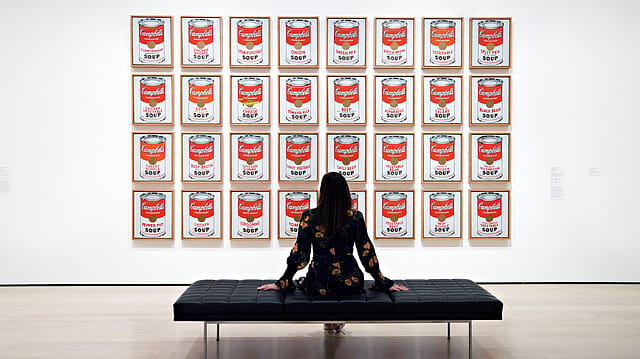
Warhol said he regularly ate Campbell’s soup for lunch. The product became a recurring image in his work. In 1962, he exhibited 32 soup-can paintings at the Ferus Gallery in Los Angeles, each representing a different variety sold by the company.

The Wealth Issue 2026
06 Nov 2026 - Vol 05 | Issue 45
Portraits of Dreamers and Doers under 35
5. Who owned the painting before the sale?
Warhol gave it to his friend, photographer Edward Wallowitch. It later entered the collection of art dealer Ileana Sonnabend and became part of the Sonnabend Collection Foundation. It was on extended loan to the Baltimore Museum of Art from 1985 to 2005.
6. Why does its history matter to collectors?
The painting combines an early moment in Warhol’s career with a documented ownership history and a connection to an influential collection. Its hand-painted surface distinguishes it from the silkscreen works for which Warhol later became known.
7. Does the price mean all Warhol soup cans are worth millions?
No. Auction prices depend on the individual work, condition, provenance, rarity and demand. This result reflects the market’s valuation of this particular 1962 painting, not a standard price for every Warhol soup-can image.