Delhi pollution: Supreme Court weighs BS-VI-only vehicles as it plans a five-year traffic overhaul
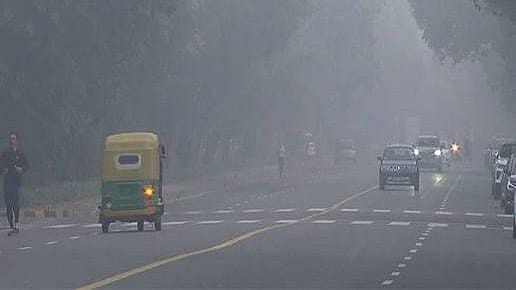
Imagine a truck carrying vegetables, fruit or groceries approaching Delhi. Instead of driving through the city, it unloads at a warehouse on the border. The goods are then transferred to smaller electric vehicles for the final journey. It is an idea the Supreme Court is now considering as it looks for a longer-term solution to Delhi's recurring pollution crisis.
On November 23, a bench led by Chief Justice of India Surya Kant, along with Justices Joymalya Bagchi and V Mohana, indicated that it may consider restricting vehicles in Delhi to those complying with Bharat Stage-VI emission norms. The court also floated a five-year plan to gradually keep commercial vehicles out of the capital, while ensuring essential supplies continue to reach residents.

The Wealth Issue 2026
06 Nov 2026 - Vol 05 | Issue 45
Portraits of Dreamers and Doers under 35
Will Delhi allow only BS-VI vehicles? What the Supreme Court said
The court's observation was not an immediate blanket ban. It indicated the direction in which it may consider moving, while examining further short-term and long-term interventions.
The proposal comes amid an existing regime of restrictions on older vehicles entering Delhi. Under current winter measures, non-BS-VI vehicles registered outside Delhi face restrictions, with exemptions for specified categories, including CNG and electric vehicles. Commercial goods vehicles also face separate entry restrictions under the Commission for Air Quality Management's (CAQM) directions.
The Supreme Court is now considering whether the restrictions should be made more comprehensive, potentially extending to a wider range of vehicles and the NCR.
Why the Supreme Court wants commercial trucks kept out of Delhi
Vehicular pollution does not stop at Delhi's borders. Trucks, buses, private cars and other vehicles move between the capital and neighbouring cities such as Gurugram, Ghaziabad, Faridabad and Noida, contributing to emissions across the region.
The court suggested that border warehouses could help reduce the number of commercial vehicles entering the city. Goods would be unloaded outside Delhi and moved inside through smaller battery-operated or other non-polluting vehicles.
The judges acknowledged that this could not be implemented overnight. They suggested that authorities could work towards the arrangement over five years, allowing infrastructure, logistics and supply chains to adapt.
What is BS-VI and why does it matter for Delhi's air?
Bharat Stage-VI is India's stringent vehicle emission standard, introduced for new vehicles from April 1, 2020. It significantly reduces permissible emissions of pollutants such as nitrogen oxides and particulate matter compared with older standards.
However, the emission standard a vehicle meets is not, by itself, a complete measure of its real-world pollution output. Vehicle condition, fuel, maintenance and driving conditions also matter. Restricting older vehicles is one tool in a broader effort to reduce emissions, rather than a standalone solution to Delhi's air pollution.
Delhi pollution crisis: Why the Supreme Court is looking beyond the capital
The court has been hearing suo motu proceedings on Delhi-NCR air pollution, covering vehicular emissions, crop-residue burning, firecrackers and solid-waste management.
In its November 6 order, the Supreme Court noted that while stubble-burning incidents had declined, vehicular emissions had emerged as a growing concern. It also highlighted the interconnected nature of Delhi and NCR, where traffic originating in neighbouring states contributes to the city's pollution load.
On Monday, the bench called on Haryana, Punjab and Uttar Pradesh to submit status reports detailing steps taken to reduce particulate pollution. The broader message was that Delhi cannot tackle the crisis alone.
The proposed BS-VI restriction and border warehouses are still ideas under judicial consideration. But they signal a possible shift from seasonal emergency restrictions towards redesigning how people and goods move through the capital. If the proposals evolve into policy, the implications could extend from commuters and vehicle owners to traders, logistics companies and consumers.
(With inputs from ANI)