Jantar Mantar is no longer a protest site: 3 new venues named in Delhi
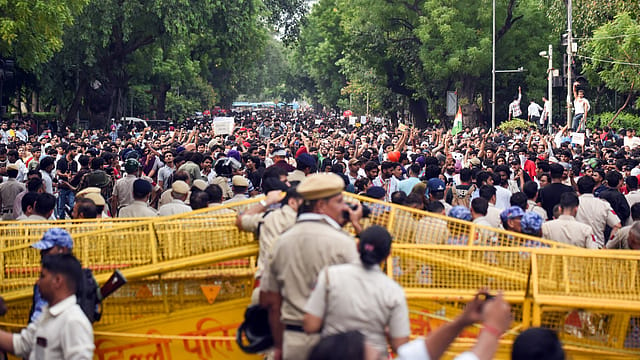
For decades, Jantar Mantar has been where ordinary citizens, activists, farmers, students and political leaders have gathered to make themselves heard. Now, that familiar address is no longer a designated venue for protests, marking a significant change in how demonstrations can be organised in the national capital.
Delhi Police announced the decision on October 12, naming three alternative locations. The move follows recent protests, concerns over public safety and a Supreme Court push to identify better-equipped spaces for peaceful demonstrations.
Why has Delhi Police removed Jantar Mantar as a protest site?
According to Hindustan Times, the decision follows recommendations from a committee constituted by the Union home ministry to examine alternative venues where citizens can exercise their right to protest. The police have designated Ramlila Ground, Burari Ground and CBD Ground in east Delhi as the new venues. Revised standard operating procedures (SOPs), explaining how demonstrations can be organised at these locations, are expected to be issued separately.

Zeroing In on ECI
09 Oct 2026 - Vol 05 | Issue 41
Constitutional legitimacy versus political opportunism
The immediate backdrop includes security concerns surrounding recent demonstrations at Jantar Mantar, including a protest called by the Cockroach Janta Party over alleged electoral roll irregularities and its demand for the resignation of Chief Election Commissioner Gyanesh Kumar.
What did the Supreme Court say about alternative protest venues?
On October 9, the Supreme Court called on Delhi authorities to consider a suitable alternative to Jantar Mantar, emphasising the need for adequate facilities for people holding peaceful demonstrations. As reported by Hindustan Times, the bench led by Chief Justice of India Surya Kant stressed that a protest venue should have basic amenities, including toilets, drinking water, medical assistance and other essential infrastructure.
The concern is not simply where demonstrations take place, but whether people can protest safely without compromising emergency access, traffic movement or the interests of other residents.
Does this mean protests are banned in Delhi?
No. The de-notification of Jantar Mantar as a designated protest venue does not, by itself, amount to a blanket ban on peaceful demonstrations across Delhi. The new arrangements shift the designated locations for protests. Organisers will still need to follow the applicable permission requirements and revised police procedures.
The distinction matters because the right to peaceful assembly is constitutionally protected, although it can be subject to reasonable restrictions in the interests of public order and other legitimate concerns.
In its July 2018 ruling on protests at Jantar Mantar and Boat Club, the Supreme Court set aside a National Green Tribunal order that had prohibited demonstrations at Jantar Mantar Road. The court held that peaceful protests could be regulated, but not prohibited altogether.
Why has Jantar Mantar been important to Indian protests?
Built in 1724 as an astronomical observatory, Jantar Mantar gradually became one of Delhi's best-known protest locations because of its proximity to Parliament and the city's political centre.
Over the years, it has hosted demonstrations on corruption, farmers' demands, veterans' pensions, women's safety and other public issues. The 2011 anti-corruption movement associated with Anna Hazare also brought large crowds to the site and later to Ramlila Maidan.
In an October 11 report, NDTV noted that protests had moved to Jantar Mantar Road after demonstrations were restricted at the Boat Club lawns near India Gate in the 1990s.
What happens next for protesters in Delhi?
The new SOPs will be crucial in determining how organisers apply for permission, what facilities are available and how demonstrations are regulated at the three venues.
For citizens, the key question is whether the new locations can provide adequate space and amenities while preserving the ability to raise public grievances. Delhi's challenge will be to manage crowds and public safety without making peaceful dissent unnecessarily difficult.
(With inputs from agencies)