Mahatma Gandhi Death Anniversary: Seven Moments That Defined the Mahatma’s Legacy
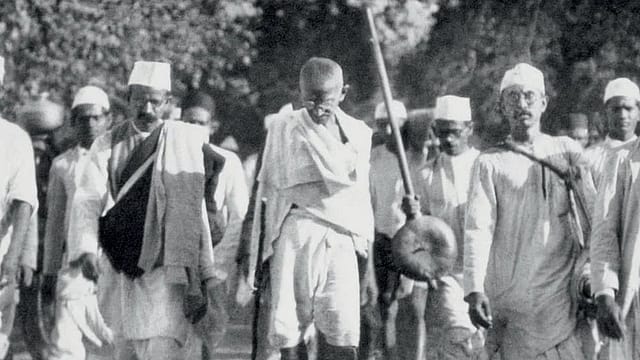
Seventy-eight years after his assassination, Mahatma Gandhi’s life continues to speak powerfully to a divided world. From quiet acts of resistance to mass movements, these moments defined not just a man, but a movement.
Here are seven defining moments from his life:
Why is January 30 significant?
Mohandas Karamchand Gandhi was India’s foremost freedom fighter and the global face of non-violent resistance. Born on October 2, 1869, he developed Satyagraha, or truth-force, as a method of social and political change.
He was assassinated on January 30, 1948, at Birla House in New Delhi. The day is observed as Martyrs’ Day across India in his memory.

Losing Memory
16 Oct 2026 - Vol 05 | Issue 42
The making of a medical and social emergency
What happened on a train in South Africa that transformed Gandhi?
In 1893, Gandhi was forcibly removed from a first-class train compartment at Pietermaritzburg despite holding a valid ticket, solely because of his race.
The humiliation became a turning point. It awakened his resolve to challenge injustice and laid the foundation for his lifelong commitment to non-violent resistance.
How did the Champaran Satyagraha prove the power of peaceful protest?
In 1917, Gandhi led his first major movement in India at Champaran, Bihar, supporting indigo farmers exploited by British planters.
Through detailed surveys and non-violent protest, he exposed their suffering. The movement forced colonial authorities to act and established Gandhi as a mass leader of the oppressed.
Why does the Salt March remain an iconic moment in history?
On March 12, 1930, Gandhi began a 240-mile march from Sabarmati Ashram to Dandi to defy the British monopoly on salt.
The simple act of making salt triggered nationwide civil disobedience, proving how symbolic resistance could unite millions against colonial rule.
What made the Quit India Movement Gandhi’s boldest declaration?
Launched on August 8, 1942, the Quit India Movement was Gandhi’s clearest demand for immediate British withdrawal.
His call of “Do or Die” mobilised the nation despite mass arrests and repression, signalling that freedom was no longer negotiable.
How did Gandhi’s fasts demonstrate moral courage?
Gandhi used fasting as a moral weapon to stop communal violence. His fasts in Calcutta and Delhi during 1947–48 helped quell riots when administrative measures failed.
They showed that self-sacrifice and moral authority could achieve what force could not.
Why was Gandhi’s embrace of khadi a revolutionary act?
By wearing only hand-spun khadi and promoting the spinning wheel, Gandhi turned everyday clothing into a political statement.
The movement encouraged self-reliance, supported local artisans, and linked economic freedom directly to political independence.
What does Gandhi’s stand for religious harmony teach us?
At a time of rising communal divisions, Gandhi remained committed to Hindu-Muslim unity. He believed India’s strength lay in coexistence, not separation.
His assassination was a tragic consequence of this unwavering stand, turning his death into a lasting moral reminder.
Why does Gandhi’s legacy continue to inspire generations today?
Gandhi’s principles of truth, non-violence, and justice remain timeless. From civil rights movements to climate activism, his methods continue shaping struggles across the world.
His life proves that enduring change is born from courage, conscience, and compassion.
(With inputs from yMedia)