Let There Be Light: IIT Delhi Finds New Way to Make Amino Acids Nature Didn’t
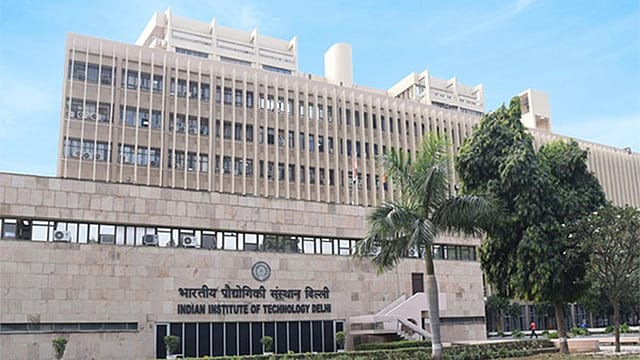
What happens when you take one of life's fundamental building blocks, give chemistry a little twist and then switch on the light? You get something nature didn't quite make. Researchers at IIT Delhi have developed a new technique that uses visible light to synthesise unnatural amino acids, modified versions of the amino acids that form the building blocks of proteins.
Don't let the word “unnatural” scare you. In chemistry, unnatural amino acids, or UAAs, are enormously useful. By tweaking the structure of naturally occurring amino acids, scientists can create molecules with properties nature's original versions may not possess: greater stability, longer activity or the ability to hit a biological target more precisely.

The Identity Project
11 Sep 2026 - Vol 05 | Issue 37
Amit Shah leads the mission for a national demographic correction
That can make them particularly valuable in drug development and biotechnology. And some are already inside medicines. Approved drugs including bortezomib, octreotide and baclofen use modified amino acids to improve their therapeutic properties.
So, what has IIT Delhi done?
The team, led by Prof Ravi P Singh of IIT Delhi's Department of Chemistry, developed a chemical strategy combining light energy with a chiral copper catalyst-ligand system.
The light helps drive the chemical reaction. The clever bit is controlling exactly what comes out at the other end. Molecules can sometimes exist in two forms that contain the same atoms and bonds but are mirror images of each other, rather like your left and right hands. Chemists call this chirality, or molecular “handedness”.
And in medicine, getting the right hand can matter enormously.
Biological systems can respond very differently to the two mirror-image versions of the same molecule. A drug therefore needs not merely the right ingredients but, in some cases, the right three-dimensional arrangement. “The biggest challenge was to generate a single enantiomer of the amino acid in a selective way,” Singh said, explaining that biological systems typically recognise one specific three-dimensional configuration.
How big was the breakthrough?
The researchers began with relatively simple and readily available natural amino-acid building blocks and used their method to introduce new chemical groups with high selectivity.
Then they kept going. One unnatural amino acid. Then another. And another. Eventually, the team demonstrated the technique across 43 unnatural amino acids and peptides. Those molecules can potentially become building blocks for designing proteins with properties and functions that naturally occurring proteins don't possess. Singh describes the possibilities as opening “an entire world of new biological space”. And that is where this becomes bigger than an interesting chemistry experiment.
Why could this matter for medicine?
Think of the 20 standard amino acids commonly used to construct proteins as nature's Lego set. They can build an astonishing variety of things. Unnatural amino acids potentially give scientists new Lego pieces. Change the pieces available and you can begin designing different structures. Researchers could potentially engineer proteins with greater stability, alter how molecules interact with biological targets or develop new therapeutic compounds.
The applications also extend beyond medicines to protein engineering, catalysis, organic synthesis, biological research and advanced biomaterials. The IIT Delhi technique doesn't mean a new wonder drug arrives tomorrow. What it does is expand the chemical toolbox from which tomorrow's molecules could be built.
And the particularly neat part? To venture beyond some of nature's building blocks, the researchers turned to one of nature's most abundant tools: Light.
(With inputs from ANI)