Modi–Xi Talks: China Calls for Long-Term View of Ties, India Thanks Beijing for BRICS Support
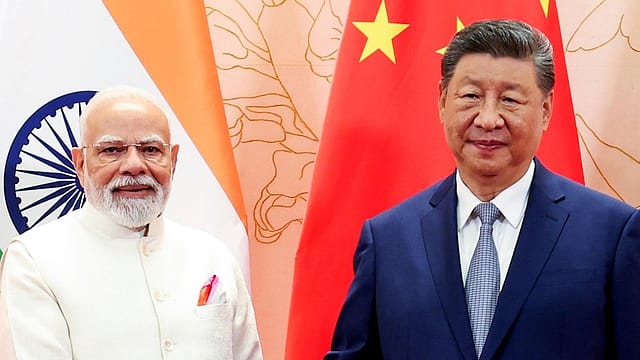
Chinese President Xi Jinping on Saturday called for India and China to take a strategic, long-term view of their relationship, while Prime Minister Narendra Modi thanked Beijing for supporting India’s BRICS chairship as the two leaders held bilateral talks in New Delhi.
Meeting on the sidelines of the 18th BRICS Summit, Xi said the two countries could learn from each other’s strengths and pursue shared development despite their differences.
“China-India relations have developed, with both sides keeping in mind the long-term development of bilateral relations from a strategic perspective,” he said.
Xi described the engagement between the leaders as sustained and consequential. This was his second visit to New Delhi in 12 years, he noted, while their more than 20 meetings during that period had produced “a series of important consensuses”.

Zeroing In on ECI
09 Oct 2026 - Vol 05 | Issue 41
Constitutional legitimacy versus political opportunism
Shared Development, Strategic Responsibilities
Xi congratulated Modi on the summit and urged closer cooperation between the world’s two most populous countries, pointing to their shared position in the Global South.
“Although the two countries are different, we have been able to support and help each other to achieve common development,” he said.
The Chinese president called for cooperation rooted in the interests of their people and directed towards a more equitable, inclusive and economically integrated world. He also urged India and China to work together to strengthen the expanded BRICS grouping.
Modi welcomed Xi and acknowledged China’s contribution to India’s year at the helm.
“Thank you very much for your positive remarks at the BRICS Summit. I express my gratitude for the support and cooperation received from China during India’s BRICS chairmanship,” Modi said.
“We now have the opportunity to discuss bilateral cooperation. Once again, a warm welcome to India,” he added.
West Asia Shapes the Summit Agenda
The bilateral meeting followed the unanimous adoption of the New Delhi Declaration 2026, which expressed deep concern over escalating tensions in West Asia and urged maximum restraint.
The declaration called for civilian protection, respect for sovereignty and territorial integrity, and sustained diplomatic efforts towards lasting regional peace. It also stressed the importance of maintaining global trade, supply chains and energy flows.
Earlier at the summit, Xi had urged parties to the West Asia conflict to pursue a political settlement and a permanent, comprehensive ceasefire.
“China will work with fellow BRICS members to play a due role in bringing peace and tranquillity to the Middle East,” he said, according to Chinese foreign ministry spokesperson Mao Ning.
The declaration also expressed serious concern over attacks on civilian infrastructure and peaceful nuclear facilities under full International Atomic Energy Agency safeguards. It said nuclear safeguards, safety and security must be upheld even during armed conflict.
On Gaza, the grouping called for the maintenance of a ceasefire, full and unhindered humanitarian access, and implementation of relevant UN General Assembly and Security Council resolutions.
From India’s Chairship to China’s
The talks also came as BRICS looked towards its next summit. Xi announced that China would assume the chairship in 2027 and host the grouping’s 19th leaders’ meeting.
According to Mao Ning, he pledged to work with members to build consensus and plan the bloc’s future. “Together, we will usher in the third golden decade of BRICS cooperation,” Xi said.
Modi, meanwhile, proposed 10 measures for global governance reform that members could develop into a BRICS Reform Roadmap by the next summit.
Calling for the Global South to move from a “rule-taker into a rule-shaper”, he argued that developing countries remained at the forefront of global crises while being sidelined in decisions on how to address them.
India is hosting the September 12–13 summit under the theme “Building for Resilience, Innovation, Cooperation and Sustainability”.
With inputs from ANI