India's Rooftop Solar Revolution Hits 50 Lakh Homes. Here's What's Driving the Surge
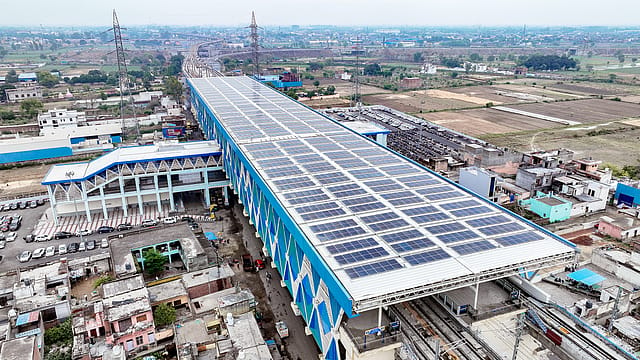
India's rooftop solar push has entered a new phase of explosive growth.
The PM Surya Ghar: Muft Bijli Yojana has crossed the milestone of 50.06 lakh rooftop solar installations, marking one of the country's fastest clean-energy rollouts. According to the Ministry of New and Renewable Energy, the programme is now adding nearly one lakh beneficiary households every six days, with July 2026 emerging as its best-performing month since launch.
The numbers highlight just how rapidly rooftop solar adoption has accelerated. More than 5.06 lakh households installed rooftop solar systems in July alone, while daily installations have more than tripled over the past nine months—from just over 5,000 per day in October 2025 to more than 16,300 per day in July 2026.

Zeroing In on ECI
09 Oct 2026 - Vol 05 | Issue 41
Constitutional legitimacy versus political opportunism
The scale of expansion is even more striking when compared with the past. The scheme achieved over 50 lakh installations in just over two years, while only 7.94 lakh rooftop solar systems had been installed during the preceding decade.
Financial incentives have played a major role in driving adoption. The government has already transferred ₹28,024 crore in subsidies directly to beneficiaries through Direct Benefit Transfer (DBT).
The impact is increasingly visible at the household level. Nearly 19 lakh families now report zero electricity bills, while more than 12 lakh households earned a combined ₹421 crore during FY25 by exporting surplus electricity to the power grid—an average additional annual income of about ₹3,500 per household.
The programme has also focused on expanding access among lower-income families. Through the Utility-Led Aggregation model, 1.6 lakh rooftop solar systems have been installed for PMAY beneficiaries, BPL families and SC/ST households across four states. Meanwhile, concessional loans at 5.75% have been sanctioned for nearly 22 lakh applicants.
So far, the scheme has commissioned 14.8 GW of rooftop solar capacity and helped create a nationwide ecosystem of more than 34,000 registered vendors, alongside training over 2.3 lakh people to support the growing industry.
The government has also streamlined approvals through a fully digital application process, simplified net-metering rules and eased regulatory requirements across most states and Union Territories.
The programme is now expanding beyond households as well, with more than 1.06 lakh government buildings already equipped with rooftop solar systems.
With installations accelerating month after month, the PM Surya Ghar scheme is rapidly becoming one of India's biggest clean-energy success stories—bringing down electricity bills, generating additional household income and pushing the country closer to its renewable energy ambitions.
(With inputs from ANI)