How a ₹50 Lakh Fake Currency Deal Near Akshardham Led Delhi Police to an Alleged Printing Operation
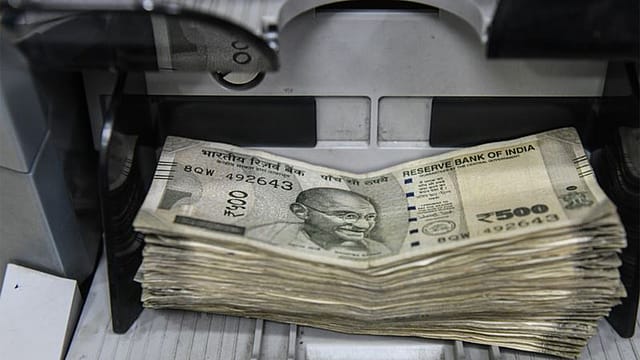
It was supposed to be a sale.
At around 9.55 pm on December 30, 2023, three men were allegedly waiting near Noida Link Road, ahead of Akshardham Metro Station, for someone who wanted to buy fake Indian currency. The buyer arrived. One of the men, Asif Ali, allegedly handed him 100 counterfeit ₹500 notes worth ₹50,000.
The transaction did not go very far.
The buyer was a decoy customer, Head Constable Rakesh of the Delhi Police. Once the exchange was made, the Special Cell moved in.
What the police allegedly found was considerably larger than the ₹50,000 that had just changed hands.

Zeroing In on ECI
09 Oct 2026 - Vol 05 | Issue 41
Constitutional legitimacy versus political opportunism
Two wads containing 100 counterfeit ₹500 notes each were allegedly recovered from Ali. The same quantity was allegedly found on the other two men, Sartaj Khan and Danish Ali. Then came the plastic bag.
It allegedly contained 93 more wads, each holding 100 ₹500 notes.
The total haul: counterfeit currency with a face value of ₹50 lakh.
Nearly two years later, the alleged transaction has moved from an undercover operation to a courtroom. On Thursday, Special Judge Amit Bansal of the Rouse Avenue court framed charges against the three men and ordered them to face trial.
The three have denied the allegations and claimed trial.
The ₹50,000 That Led to ₹50 Lakh
The prosecution's case rests partly on the alleged sequence of the raid.
The first 100 notes were allegedly handed over to the police decoy as part of the proposed sale. The subsequent search, police claim, revealed another ₹3 lakh in counterfeit ₹500 notes distributed among the three accused.
But the bulk of the alleged currency was sitting in a plastic bag in the car.
According to the prosecution, the bag was placed in front of Ali, who was sitting in the front seat. Inside were 93 bands or wads, each containing 100 counterfeit ₹500 notes. That amounted to ₹46.5 lakh.
The arithmetic turned an alleged street-level transaction into a much bigger case.
The police were no longer looking at a handful of forged notes allegedly being sold to a buyer. They were looking at thousands of notes, packaged in bundles, allegedly ready to enter circulation.
And the investigation did not stop with the car.
Then Police Went Looking for the Press
The alleged counterfeit notes raised a more important question: where had they come from?
Two days after the alleged recovery, on January 1, 2024, investigators went to a hideout in Sahaswan in Uttar Pradesh.
According to the prosecution, the accused led police to a room on the second floor of Max Hospital, near Mohalla Pathan Tola.
There, investigators allegedly found what they described as a complete set for printing fake Indian currency.
The alleged recovery included printing equipment, tools, materials and other items required to produce the counterfeit notes.
That discovery is central to the more serious allegations in the case. The three men are not facing charges merely for possessing fake currency. The prosecution has also alleged manufacture and criminal conspiracy.
If proved, the alleged sequence presents a more elaborate picture: counterfeit notes allegedly being produced, bundled, transported and then offered to a buyer.
The court will now have to decide whether the evidence establishes that chain.
The Charges Go Beyond Fake Currency
The counterfeit notes are only part of the case.
Police also allege that the three men tried to escape after their arrest and scuffled with the police team, causing injuries.
The court has consequently framed charges under provisions relating to assaulting and obstructing public servants, voluntarily causing hurt, criminal conspiracy, possession and use of counterfeit currency, and the alleged manufacture of fake currency.
The accused have denied these allegations.
The court's decision to frame charges is not a finding of guilt. It means the prosecution has crossed the threshold required for the case to proceed to trial.
The next stage is evidence.
What the Court Will Have to Establish
The prosecution has a dramatic sequence to present: an alleged midnight meeting near Akshardham, a police officer posing as a buyer, a transaction involving counterfeit ₹500 notes, a car allegedly containing ₹50 lakh in fake currency and, days later, a printing setup allegedly recovered from a hideout in Uttar Pradesh.
But a courtroom is where that sequence has to be tested.
The prosecution will have to establish the evidence linking the three accused to the counterfeit currency, the alleged transaction, the printing equipment and the conspiracy. The defence has rejected the charges and chosen to face trial.
Prosecution evidence is scheduled for September 30, October 3 and October 8.
For now, the most striking detail in the case remains the one that began the entire operation.
The men were allegedly waiting for a buyer.
The buyer was already working for the police.
And what they allegedly brought to the meeting was not ₹50,000 worth of fake currency, as the first exchange suggested, but ₹50 lakh.
The question before the court now is how much of that story can be proved.
(With inputs from ANI)