BRICS Summit 2026: Why S Jaishankar says Modi’s India proved it can bring a divided world to one table
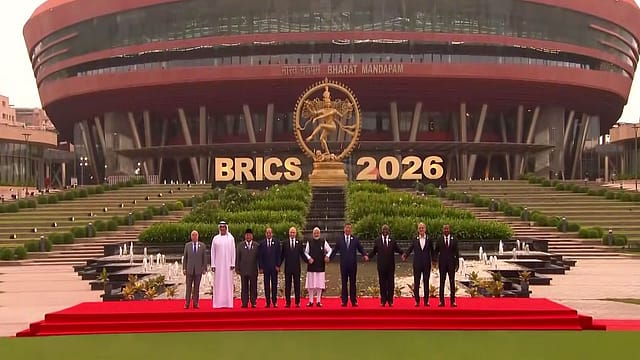
What does it take to get rivals, partners, emerging powers and global institutions into the same room—and get them to agree on anything?
That was the challenge facing India as it hosted the BRICS Summit 2026 in New Delhi. The backdrop was hardly ideal: wars in West Asia, geopolitical tensions between major powers, economic uncertainty, and growing divisions over trade, technology and security.
Yet when the summit concluded, External Affairs Minister S Jaishankar argued that India had achieved something increasingly rare in global diplomacy: bringing together countries with very different interests and finding common ground.
Addressing the media after the summit, Jaishankar described the gathering as evidence of the "strong convening power" of Prime Minister Narendra Modi's India, pointing to the scale of participation and the consensus reflected in the New Delhi Declaration.

Losing Memory
16 Oct 2026 - Vol 05 | Issue 42
The making of a medical and social emergency
Why the BRICS Summit became one of India's biggest diplomatic showcases
The numbers alone tell part of the story.
According to Jaishankar, the summit brought together 32 delegations, including leaders and representatives from 11 BRICS member states, 10 partner countries, four regional organisations and seven international organisations.
The guest list featured some of the most influential leaders in global politics, including Russian President Vladimir Putin, Chinese President Xi Jinping, South African President Cyril Ramaphosa, Indonesian President Prabowo Subianto, Iranian President Masoud Pezeshkian, Egyptian President Abdel Fattah El-Sisi and Ethiopian Prime Minister Abiy Ahmed.
The presence of United Nations Secretary-General António Guterres added further weight to the gathering.
"The first point to note is really the strong convening power of Modi's India," Jaishankar said, noting that many countries were represented at the head-of-state or head-of-government level.
How India positioned itself as a bridge in a polarised world
One of the most striking themes of Jaishankar's remarks was not who attended the summit, but what the summit represented.
The minister repeatedly described today's international environment as deeply polarised, with conflicts and strategic rivalries shaping global decision-making.
Against that backdrop, India presented itself as a country capable of engaging multiple power centres simultaneously.
"What we did was, even in the midst of this polarisation, we actually forged a consensus," Jaishankar said.
That message aligns closely with India's broader foreign policy approach in recent years—maintaining relationships across competing blocs while projecting itself as a voice for the Global South.
Why the BRICS consensus on West Asia drew attention
The summit's most closely watched discussions centred on ongoing tensions in West Asia.
According to Jaishankar, BRICS leaders were able to agree on principles that included peace, security, stability and the protection of civilians, while also stressing the importance of uninterrupted trade routes, energy supplies and global supply chains.
In a period when international forums have often struggled to produce unified positions on major conflicts, India has framed the BRICS declaration as evidence that dialogue remains possible.
For New Delhi, that consensus was as important as any specific policy outcome.
How the Global South became the central message of the summit
While security issues dominated headlines, Jaishankar emphasised that the summit's core agenda remained economic development, technology cooperation and reforms in global governance.
"The agenda was focused on the economy, on development, on technology, for the Global South, standing up for the Global South," he said.
The phrase "Global South" has become increasingly central to India's diplomatic messaging. From its G20 presidency to BRICS, New Delhi has sought to position itself as a leading advocate for developing nations seeking greater representation in international institutions.
The themes of reform and resilience, Jaishankar said, helped create common ground among countries with different political systems and strategic priorities.
Why terrorism emerged as another key BRICS talking point
Jaishankar also highlighted the summit's position on terrorism, describing it as one of the clearest areas of agreement among member states.
According to the External Affairs Minister, the New Delhi Declaration strongly condemned the April 22, 2025, Pahalgam terror attack and reiterated a commitment to "zero tolerance" for terrorism.
"BRICS was very clear that any act of terrorism is criminal," Jaishankar said.
He added that the declaration called for accountability for those involved in terrorist activities and rejected double standards in addressing terrorism, including cross-border terrorism.
What India wants the world to remember about BRICS 2026
Every summit produces a declaration. Few produce a narrative.
India's narrative is that BRICS 2026 was proof that diplomacy still works when the world appears increasingly divided.
Jaishankar ended his remarks by invoking Prime Minister Modi's long-standing emphasis on dialogue, diplomacy and development.
"Many people said it won't happen. It did happen. It did happen. It happened in New Delhi, and it happened under Prime Minister Modi's leadership," he said.
Whether BRICS can translate that consensus into concrete action remains to be seen. But for India, the immediate diplomatic takeaway is already clear: in a world where countries increasingly speak past one another, New Delhi wants to be seen as the place where they still come together.
(With inputs from ANI)