Air India Orders Mandatory Pilot Drug Screening After Phuket-Delhi Flight’s 300-Foot Plunge
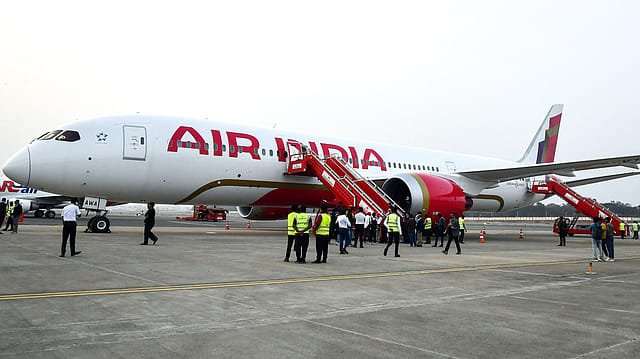
Air India has ordered mandatory screening of all its group pilots for prohibited substances and unauthorised medications, days after a Phuket-Delhi flight suddenly lost 300 feet in altitude and left 24 people injured.
The screening began Thursday as regulatory scrutiny intensifies around the August 4 incident involving Air India flight AI2379. The Aircraft Accident Investigation Bureau (AAIB), which has classified the episode as a serious incident, is investigating alongside the Directorate General of Civil Aviation (DGCA).
According to sources, the AAIB is expected to submit its preliminary report to the International Civil Aviation Organisation before the second week of September, with the government seeking to expedite the investigation.
What happened aboard AI2379?
The Airbus A320, flying from Phuket to Delhi with 137 passengers and eight crew members, suffered a sudden 300-foot altitude drop over Odisha. Twenty passengers and four cabin crew members were injured. The aircraft subsequently stabilised and landed safely in Delhi. Air India initially attributed the incident to turbulence. Investigators are now examining aircraft systems, flight data and crew actions to determine precisely what happened.

The Health and Wellness Issue
25 Sep 2026 - Vol 05 | Issue 39
What have the aircraft's maintenance records revealed?
A purported post-flight maintenance report has raised further questions. It records a series of warnings involving the aircraft's hydraulic systems, flight controls and autopilot, including repeated low-pressure alerts across its green, blue and yellow hydraulic systems. Low fluid levels were also recorded in two hydraulic reservoirs, while the autopilot reportedly disconnected twice. Other messages involved the left and right elevator flight controls, an elevator computer, engine anti-ice systems and emergency exit doors. Crucially, however, the maintenance report does not establish that these warnings caused the altitude loss, nor does it confirm that the aircraft actually suffered a loss of hydraulic pressure or fluid. That is now part of what investigators must establish.
Why are pilots being screened?
Air India's decision adds another line of scrutiny to an investigation already examining technical systems and crew actions. Starting Thursday, all group pilots will undergo mandatory screening for prohibited substances and unauthorised medications, according to sources. There is currently no finding linking prohibited substances or medication to the August 4 incident. Air India has said passenger and crew safety remains its highest priority and that it is cooperating with authorities. For now, the warnings, the sudden drop and the crew's actions remain pieces of an unfinished puzzle. The first authoritative clues could arrive with the AAIB's preliminary report next month.
(With inputs from ANI)