99% Arsenic Removal at Rs 8 Per 1,000 Litres: Can IIT Guwahati Address Groundwater Contamination Crisis?
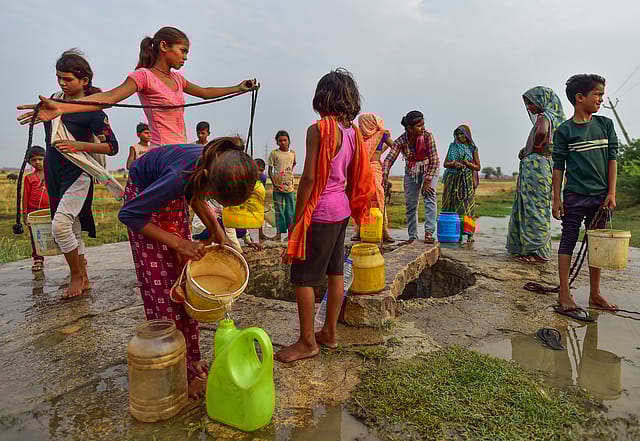
The Indian Institute of Technology Guwahati has developed a new electrocoagulation system that can remove 99 per cent of arsenic from contaminated water at a low cost, offering a potential solution for regions struggling with groundwater pollution.
Developed under the guidance of Prof. Mihir Kumar Purkait of the Department of Chemical Engineering, the system has demonstrated the ability to remove contaminants within a few minutes, making it suitable for use in areas with limited access to complex water treatment infrastructure.
With rapid industrialisation and urban growth, global reliance on groundwater has increased significantly.
In many regions, groundwater contains arsenic released from natural rock formations or human activities such as mining and agriculture.
According to IIT Guwahati, long-term exposure to arsenic can cause serious health problems, including organ damage and cancer.
“Around 140 million people globally are exposed to unsafe arsenic levels, with India, Bangladesh, and parts of South America among the worst affected. To address this, many conventional methods have been developed, and while some have been successful, these are difficult to implement in uncontrolled environments. Most methods rely on the addition of chemicals, extensive treatment periods, and sophisticated equipment. Moreover, the methods need to be performed on site and have the potential to create surplus sludge, increasing the time and energy costs to disposal,” the institute said in a press release.

Travel Issue 2026
15 May 2026 - Vol 04 | Issue 71
The Cultural Traveller
How Does IIT Guwahati’s Electrocoagulation System Remove Arsenic Without Chemicals?
It also stated that electrocoagulation offers a different approach. Instead of adding external chemicals, it uses an electric current to release metal ions from electrodes immersed in the water.
These ions attach to arsenic and other contaminants, allowing them to clump together and be removed through settling or flotation. The process reduces the need for chemical handling.
Traditional electrocoagulation systems use stationary electrodes, which can slow the process and lead to deposits forming on the electrode surface, reducing efficiency over time.
To address these inefficiencies, the IIT Guwahati team configured a system with a rotating anode and a stationary cathode.
Explaining the application of the technology, Prof. Purkait said, “Electrocoagulation, combined with a rotating electrode system, offers an efficient solution for arsenic-contaminated water. In this process, a controlled electric current dissolves a sacrificial iron electrode while its rotation enhances mixing and mass transfer, leading to uniform generation of iron coagulant species that effectively bind arsenic present in the water.”
Fine gas bubbles formed during the process attach to the arsenic-laden flocs and lift them to the surface for easy separation.
According to Prof. Purkait, the rotating iron electrodes significantly improve removal efficiency while maintaining low operational cost under optimised conditions.
How Efficient and Low-Cost Is IIT Guwahati’s 99% Arsenic Removal Technology?
Laboratory tests using synthetic water and real groundwater samples showed that the system could treat one cubic metre of contaminated water using approximately 0.36 units of electricity.
At prevailing tariffs, this translates to a treatment cost of about Rs. 8 to 9 per 1,000 litres. Under optimised conditions, arsenic concentrations were reduced to well below the World Health Organisation guideline of 10 micrograms per litre within two to three minutes.
The rotating anode system also produced significantly less sludge than conventional electrocoagulation setups, with faster settling and easier handling.
The institute said the technology offers a cost-effective alternative to conventional membrane and adsorption systems.
For a small community-scale plant with a capacity of 10 to 50 kilolitres per day, an electrocoagulation system typically costs between Rs. 8 lakh and Rs. 15 lakh, compared to Rs. 12 lakh to Rs. 20 lakh for conventional systems.
At medium-scale capacities of 100 to 500 kilolitres per day, the electrocoagulation system costs Rs. 30 lakh to Rs. 80 lakh, while reverse osmosis-based systems often exceed Rs. 1 crore to Rs. 2 crore.
Operationally, the system does not require expensive membranes or frequent chemical dosing, and maintenance is largely limited to electrode replacement.
In contrast, membrane systems face high operating costs due to membrane fouling, replacement, and energy-intensive operations.
Can IIT Guwahati’s 99% Arsenic Removal Technology Transform Water Access in Rural and Semi-Urban Areas?
The technology is particularly suited for rural and semi-urban areas, where affordability, robustness, and ease of operation are critical.
The findings have been published in the journal Separation and Purification Technology in a paper co-authored by Prof. Purkait and research scholar Mukesh Bharti.
The team plans to test the system under real-field conditions and assess its long-term performance in groundwater containing multiple contaminants such as fluoride and iron. Discussions are underway with M/S Kakati Engineering Pvt. Ltd., Sivasagar, Assam, for fabrication and installation, with commercialisation to follow once appropriate funding is secured.
The development comes at a time when concerns over groundwater contamination are mounting in coal-rich regions such as Umaria district in Madhya Pradesh.
A study published in Nature, Scientific Reports, titled “Anthropogenic influence on groundwater metal toxicity and risk to human health assessment in Umaria coalfield of Madhya Pradesh, India”, found that coal mining activities have led to heavy metal contamination of groundwater, a primary source of drinking water in the region.
How Does Coal Mining Trigger Arsenic and Heavy Metal Contamination in Groundwater?
Coal mining and processing release toxic heavy metals such as arsenic, lead, mercury, and cadmium into the environment.
These metals seep into groundwater and can persist for years. For communities in mining areas, groundwater is essential for drinking, irrigation, and daily needs.
Once contaminated, it poses serious health risks. Arsenic exposure can cause skin problems, developmental delays, and cancer.
Similar studies from coal-rich regions such as Wardha Valley and Jharia coalfield have reported high levels of metals including iron, nickel, cadmium, and lead in drinking water.
Seasonal variations influence their concentration, with pollutant levels shifting due to rainfall and groundwater flow.
Despite these warning signs, data on the full extent of groundwater pollution in India’s coal belts remain limited, and long-term health impacts are poorly studied.
Researchers identified coal mining and processing activities, industrial effluents, and thermal power plant emissions as major sources of contamination, along with natural rock composition and vehicular emissions.
How Is Contaminated Groundwater in Coal Mining Regions Putting Children at Higher Health Risk?
Drinking water was found to be the primary pathway of exposure, with children the most vulnerable.
Health risk from groundwater intake among children was very high in more than three-quarters of samples before the monsoon and 60 per cent after.
The study points to potential non-carcinogenic health risks due to groundwater intake and calls for routine groundwater quality monitoring.
It also underscores the need for public health management, zero discharge policies for industrial effluents, community-based water surveillance networks, low-cost filtration, safe water alternatives, stricter enforcement of Bureau of Indian Standards norms, rainwater harvesting, restoration of ponds and tanks, and cleaner industrial technologies.
As coal continues to power much of India, the challenge remains balancing energy needs with environmental and public health.
Against this backdrop, IIT Guwahati’s low-cost arsenic removal system may offer a timely intervention in regions where groundwater contamination threatens lives and livelihoods.
(With inputs from ANI)