Tupac Shakur Murder Trial: Why Duane ‘Keffe D’ Davis is in Court 30 Years Later
Tupac Shakur would not name his killer.
As the 25-year-old rapper lay critically wounded inside an ambulance on September 7, 1996, a Las Vegas police officer asked who had shot him. “No, we’ll take care of it,” Shakur reportedly replied. He died six days later. The silence surrounding the shooting endured for almost three decades.
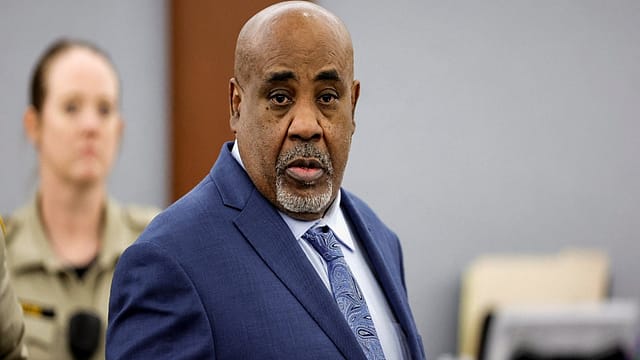
Now, the first man ever charged over Shakur’s murder is on trial, largely because prosecutors say he could not stop talking about it. Duane “Keffe D” Davis has described the fatal night to investigators, interviewers and readers of his memoir. Prosecutors call those accounts admissions. His lawyer calls them profitable fiction. The trial that opened in Las Vegas on Monday will attempt to decide which one they are.

Losing Memory
16 Oct 2026 - Vol 05 | Issue 42
The making of a medical and social emergency
Who is Duane ‘Keffe D’ Davis?
Davis, 63, is a former leader of the South Side Compton Crips, a Los Angeles-area street gang. He has pleaded not guilty to murder with a deadly weapon with the intent to promote, further or assist a criminal gang. He is the first and only person charged in connection with Shakur’s killing. According to Reuters, Davis has acknowledged that he was sitting in the front passenger seat of the white Cadillac from which the fatal shots were fired. The prosecution does not claim that he was the gunman. It accuses him of assembling the group, obtaining the weapon and setting the attack in motion.
What happened to Tupac Shakur on September 7, 1996?
Shakur was in Las Vegas with Marion “Suge” Knight, the powerful co-founder of Death Row Records, to watch Mike Tyson fight Bruce Seldon at the MGM Grand. After the bout, surveillance cameras recorded Shakur, Knight and members of their entourage attacking Orlando “Baby Lane” Anderson inside the casino. Anderson was Davis’s nephew and a member of the South Side Compton Crips. Prosecutors say that beating supplied the motive. Later that night, Shakur rode in the passenger seat of Knight’s black BMW. At a red light near the Las Vegas Strip, a white Cadillac pulled alongside it and someone opened fire. Shakur was struck four times. Knight suffered a minor injury when a bullet fragment grazed his head. Shakur died in hospital on September 13, 1996.
What do prosecutors say Davis did?
Chief Deputy District Attorney Binu Palal described the killing as an “act of revenge”. The state’s case is that Davis spent roughly two hours plotting retaliation after his nephew was beaten. He allegedly obtained a handgun and passed it to the men sitting behind him in the Cadillac. “Duane Davis did not pull the trigger,” Palal told jurors, according to The Associated Press. “But he did plan the shooting.” Prosecutors have characterised Davis as the “shot caller” who ensured the group was armed when it found Shakur and Knight. Their central argument is strikingly simple: the man who helped them reconstruct the murder was Davis himself.
How can Davis be convicted if he was not the shooter?
Nevada law does not require prosecutors to prove that Davis personally fired the bullets. A person who plans, facilitates, commands or supplies the means for a murder can be prosecuted as a principal participant in the crime. Prosecutors must therefore convince the jury that Davis intentionally helped organise the attack, even if another man pulled the trigger. The trial may never establish beyond dispute who fired the gun. Its immediate legal question is whether Davis enabled the person who did.
What evidence does the prosecution have?
The case rests heavily on Davis’s own words. In a 2008 interview with a federal task force investigating the murder of Christopher Wallace, better known as The Notorious B.I.G., Davis began discussing Shakur’s shooting. He described being inside the Cadillac and handing a gun towards its back seat. Portions of that recorded interview were played to jurors on the opening day. Davis subsequently discussed the killing in media interviews and in his 2019 memoir, Compton Street Legend. In the book, he wrote that he obtained a handgun and tossed it into the back seat, without definitively identifying the shooter. Reuters reported that police had long regarded Davis as a suspect but lacked enough admissible evidence to charge him until his public accounts revived the investigation. The prosecution will also use casino surveillance footage, witness testimony and historical police records to reconstruct the hours before and after the shooting.
Wasn’t the 2008 interview protected by immunity?
That is one of the case’s most contested issues. Davis’s lawyers argued that he spoke to investigators under a confidential proffer agreement that protected his statements from being used against him. A Nevada judge nevertheless ruled that the recording could be admitted at trial. AP reported that prosecutors argued Davis lost any claim to secrecy when he later repeated the story publicly, promoted it through interviews and published it in a memoir. Judge Carli Kierny also allowed the book into evidence after concluding that Davis had adopted it as his account, including describing it during an interview as the “real truth”. The defence can still challenge the reliability and context of the statements before the jury.
What is Davis’s defence?
His lawyer, Michael Sanft, says prosecutors are dressing fiction up as fact. Davis has claimed that he embellished stories about Shakur’s killing to attract attention and make money. In a later interview, he denied involvement and said he had not even been in Nevada. The defence has seized upon an uncomfortable question for prosecutors: if Davis had confessed so often and so publicly, why was he not charged earlier? Sanft told jurors that investigators did not act because they knew Davis was “full of crap”. He attacked the earlier investigation as biased, sloppy and incomplete and argued that the state cannot independently corroborate his client’s boasts. The defence will also point to missing records, conflicting accounts, dead witnesses and the damage that 30 years can inflict on memory.
Who testified on the first day?
Retired Las Vegas police officer Garry Dale told the court that he stopped Knight and Shakur’s BMW shortly before the shooting because it did not display a licence plate. About ten minutes after letting them leave with a warning, he responded to the shooting. Dale rode in the ambulance with Shakur and asked him to identify the attacker. Shakur’s reported response was: “No, we’ll take care of it.” Ingrid Stokes, who was travelling in a nearby vehicle, described hearing the gunfire. Her testimony also captured the culture of silence that frustrated the investigation: “Snitches get stitches.” Retired homicide detective Brent Becker described the difficulty of persuading witnesses to cooperate. He said Knight arrived for a police interview with lawyers, appeared rehearsed and claimed to know nothing. “I thought he lied to us,” Becker testified, according to AP. Former Los Angeles police detective Fred Miller also discussed Davis’s brief emergence as a suspect in the Notorious B.I.G. investigation. The judge instructed jurors that police do not believe Davis was involved in Wallace’s killing.
Who do authorities believe was inside the Cadillac?
Investigators have linked four men to the car: Davis, Orlando Anderson, Deandrae “Freaky” Smith and Terrence “T-Brown” Brown. Davis is the only one still alive. Anderson was widely suspected of firing the shots and Davis reportedly identified him as the gunman during his 2008 account. Anderson denied involvement and died in an unrelated gang shooting in 1998. Another witness previously claimed that Anderson lacked a clear shot and that Smith fired instead. Smith and Brown are also dead. No occupant of the Cadillac was charged before Davis’s indictment in 2023.
Why did it take nearly 30 years to reach trial?
The investigation collided with silence from the beginning. Witnesses refused to cooperate. The surviving victim, Suge Knight, told investigators he could not identify the attackers. Physical evidence did not establish who occupied the Cadillac, and the men suspected of being inside it died over the following years. Then Davis began talking publicly. His interviews and memoir supplied investigators with material they believed could be placed alongside the surveillance footage, gang associations and known sequence of events. The Nevada Supreme Court rejected his attempt to stop the case before trial in November 2025. The court did not decide whether the evidence proved guilt; it ruled that his challenge did not justify extraordinary intervention at that stage, according to the published order.
What does Davis face if convicted?
Davis faces life imprisonment if the jury convicts him. AP has reported that the potential sentence could be life without parole. Prosecutors expect to call between 35 and 45 witnesses, and the proceedings could last four to six weeks. Suge Knight, who is serving a 28-year sentence in an unrelated voluntary manslaughter case, may also testify, Reuters reported.
Will the trial finally reveal who killed Tupac?
It may deliver a verdict without delivering that answer. The jury does not have to identify the gunman to convict Davis. It must decide whether he knowingly organised or facilitated the murder. The larger mystery may therefore survive even after the courtroom reaches its conclusion. But three decades after Shakur refused to name the person who shot him, prosecutors finally have someone before a jury. Their case depends on proving that the silence was eventually broken by the one man who had the most reason to maintain it.
(With inputs from ANI)