Taylor Swift breaks MTV VMA record as Madonna stages a comeback for the ages
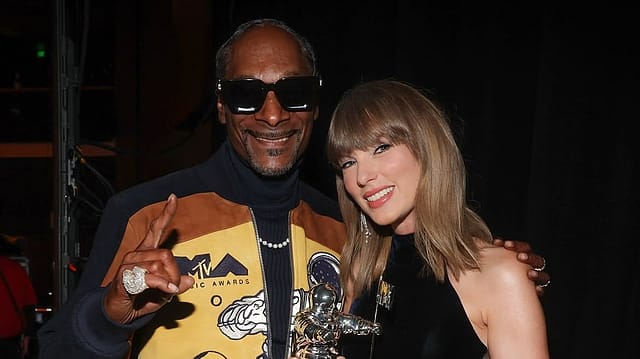
There are award-show victories, and then there are history-making moments.
The 2026 MTV Video Music Awards delivered both. By the end of the night in Los Angeles, Taylor Swift had become the most-awarded artist in VMA history, while Madonna, the woman who helped define MTV's golden age, walked away as the ceremony's biggest winner and reminded audiences why she remains one of pop music's most influential figures.
The result was a fascinating collision of eras. One artist extended her dominance over contemporary pop culture. The other proved that reinvention remains her greatest superpower.
So what exactly happened at the 2026 VMAs, and why is everyone talking about Taylor Swift and Madonna?
How did Taylor Swift break the MTV VMA record?
Taylor Swift entered the ceremony tied with Beyoncé at 30 MTV Video Music Awards. She left it alone at the top. According to Billboard, Swift won three awards during the evening, taking her career tally to 33 VMAs and becoming the most-awarded artist in the history of the event.
Losing Memory
16 Oct 2026 - Vol 05 | Issue 42
The making of a medical and social emergency
The milestone began with the newly created Artist Director Honors award, which MTV introduced to recognise artists who have made a significant impact behind the camera as music video directors. Reuters had reported before the ceremony that Swift would become the inaugural recipient of the honour, recognising her growing body of work as a director and visual storyteller.
She later added more trophies, including Video of the Year, pushing her past Beyoncé's long-standing record.
What is the new Artist Director Honors award?
For years, Swift has steadily expanded her role beyond performer and songwriter. From directing The Man to helming projects such as All Too Well: The Short Film, Anti-Hero and more recent music videos, she has increasingly positioned herself as a creative force behind the camera. MTV created the award to recognise artists with an influential body of directorial work and visual storytelling.
In many ways, the honour reflects a broader shift in pop music, where artists are increasingly expected to be storytellers, directors and brand-builders, not just singers.
Why was Madonna one of the biggest stories of the night?
Because the Queen of Pop was not there merely for nostalgia. Madonna entered the VMAs as the most-nominated artist of the year and emerged as the night's biggest winner, collecting seven awards across multiple categories.
She also opened the ceremony with a major performance—her first VMA performance in more than two decades, alongside Sabrina Carpenter and Charli XCX. It was one of the defining moments of the evening.
For longtime music fans, it felt like a reminder that while today's pop landscape may belong to streaming-era stars, many of its rules were written by Madonna decades ago.
Was this a night dominated by women?
Very much so. Reports from the ceremony noted that female artists controlled much of the evening's biggest categories and performances. Alongside Swift and Madonna, artists such as Lisa and Sienna Spiro also emerged among the night's major winners. The result was a ceremony that felt less like a competition between generations and more like a showcase of how women continue to shape global pop music.
Why does this VMA record matter?
The VMAs have never simply been another awards show. Since the 1980s, they have served as a cultural scoreboard for music-video influence and pop-cultural impact. Madonna helped build that legacy. Beyoncé transformed it. And now Taylor Swift sits alone at the top of it. The significance of Swift's achievement is not just the number 33. It is what that number represents: nearly two decades of staying relevant in an industry that constantly reinvents itself. That is also why Madonna's success on the same night felt so symbolic.
One artist is defining the present. The other helped define the past. At the 2026 MTV VMAs, both managed to own the moment. And perhaps that was the real story of the night: not a battle between generations, but proof that pop music's biggest stars can still make history together.
(With inputs from agencies)