Lord of War: Why Some Films Have Unforgettable Openings
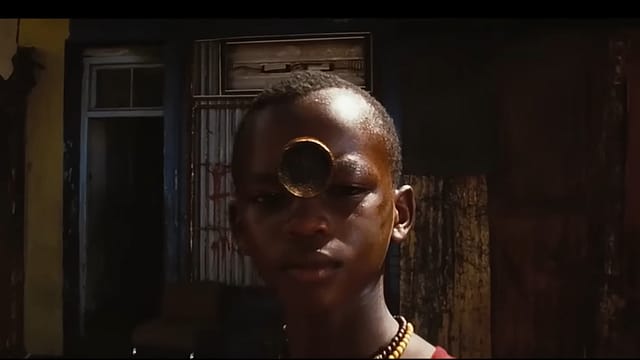
There are 550 million firearms in circulation around the world, roughly one for every 12 people. The question, Yuri Orlov (Nicolas Cage) asks, is how do we arm the other 11? It is a rather unusual way to begin a film, but then Lord of War (2005) is hardly an ordinary one.
The opening sequence follows a bullet from the moment it is manufactured. We watch it being shaped, polished, packed, shipped, and eventually loaded into a gun. The camera follows this journey—from the production line to a battlefield, where it is fired into the head of an African child soldier. All this happens accompanied by Buffalo Springfield’s ‘For What It’s Worth’.

The Wealth Issue 2026
06 Nov 2026 - Vol 05 | Issue 45
Portraits of Dreamers and Doers under 35
It is an extraordinary introduction to the business of selling weapons. The bullet changes hands, travels thousands of kilometres and passes through an elaborate commercial network. None of the workers, who could be deemed accomplices, seems interested in what it will eventually be used for. By the time it reaches its destination, the film has already made its point. War is a business, and business is booming. Or as the dystopian game Fallout 4 puts it: “War. War never changes”.
Now, Lords of War, the sequel to Andrew Niccol’s film, is on its way, with Cage returning as the arms dealer and Bill Skarsgård joining him as Anton, his previously unknown son. The second teaser arrived on November 11, ahead of its scheduled US theatrical release on January 22, 2027. One hopes the sequel has an opening that is at least half as inventive as the original.
After all, Cinema has tried to open up the theme before even the story begins. Here is a lowdown:
The Godfather

Take Francis Ford Coppola’s The Godfather (1972). It begins with an undertaker, Amerigo Bonasera, explaining to Don Vito Corleone how two men assaulted his daughter and escaped punishment. “I believe in America,” he says, as the camera slowly pulls back to reveal Vito Corleone (Marlon Brando) sitting in a darkened office, silently and respectfully listening. It is a brilliant introduction to the Don’s business. People come to him when the law fails them, and all he expects is loyalty in return. Before we have met the Corleone family or witnessed a single act of organised crime, we have already been given a lesson in how its world works. It also takes some confidence to keep your leading man off-screen while another character does all the talking.
City of God
A chicken is about to be slaughtered (It ends up watching its brethren die) when it makes a daring escape. A group of armed men chase it through the streets of Rio de Janeiro. The chase eventually brings the gang face to face with the police with the young photographer Rocket caught in the middle. It is an extraordinary way to introduce a film about organised crime. The chicken may only have had a small role, but its escape shows the goings-on about the neighbourhood’s gangsters and the police. Doubt that any film has made poultry look quite so endangered.
There Will Be Blood
This Paul Thomas Anderson’s movie takes its time introducing its protagonist. For nearly 15 minutes, we watch Daniel Plainview (Daniel Day-Lewis) prospect for silver and then oil, suffering a fall, breaking his leg and dragging himself out of a mine. There is almost no dialogue. Plainview’s obsession with making money is evident way too long before he becomes an oil tycoon. This is to the point that even an injury that would send anyone asking for a doctor ends up for him barely interrupting his work. It is a fascinating introduction to a man whose ambition will eventually consume everything around him.
Up
Pixar’s Up (2009) manages to tell an entire love story before its adventure has properly begun. A montage follows Carl and Ellie from childhood through marriage, their dreams of travelling, financial troubles and the disappointments of growing old. Eventually, Ellie dies, leaving Carl alone with the house they had built their lives around. It takes only a few minutes to establish the emotional heart of what the movie is going to be about. It is also a sneaky way to try to make the audience cry before it has even met the talking dog.
Perhaps the most unusual thing about these openings is how little they need to get started. A bullet, an undertaker, a chicken and an old married couple are enough to introduce entire worlds.
The opening of Lord of War remains particularly difficult to beat. It takes an object and makes it an appealing story.