How much will Gen Z and Gen Alpha connect with Ranbir Kapoor-starrer Ramayana?
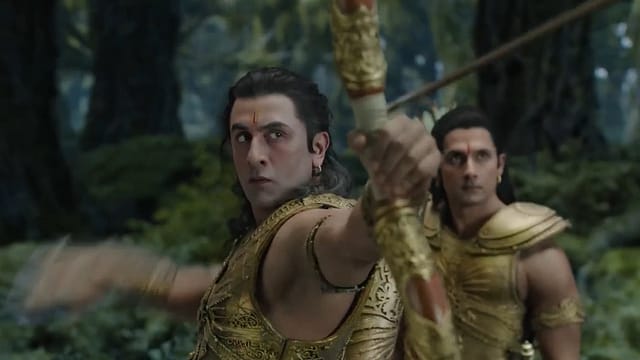
I grew up reading various translations of the Ramayana and the Mahabharata in Malayalam, first by Mali (nom de plume of the late V Madhavan Nair) who wrote children-friendly versions of the epics. Later, I read works by scholars who wrote for adults, weaving in myriad sub-stories from various sub-branches and intricate rhizomes of our epics, not to talk of the Dasaratha Jataka where, in sharp contrast to Valmiki’s Ramayana, Ram is not the husband of Sita, the adopted daughter of Janaka, the king of Mithila. Ram, contrary to the widely popular version, has an older sister called Shanta as one of the epics asserts, a sister who loses her cool when Ram abandons Sita over an innuendo.
Now, the 2026 film, which I happened to watch because the extended family had one extra ticket in an IMAX cinema, claims at the outset that it is influenced by various stands of the Ramayana. Not quite.
I have read a few reviewers expressing shock at Ramayana Part 1 (or Ramayana: Rise of a Legend) over the Nitesh Tiwari-directed film starting off with a war between devas and asuras in which the latter were on the verge of a surprise win – before Indra, the king of the devas, descended from somewhere up in the skies (yes, devas always came in from the skies while the asuras stay rooted to the ground and are therefore lower in stature!) and battered them using a "divine" weapon of mass destruction. I wasn’t surprised by this narrative because the whole thing about the epics was the contrast between the "good" and "bad", the devas and the asuras. Perhaps the critics wanted the film to start with the birth of Ram, maybe in the newly constructed temple built in his name in Ayodhya – which is currently embroiled in a controversy over misappropriation of temple funds.

The Wealth Issue 2026
06 Nov 2026 - Vol 05 | Issue 45
Portraits of Dreamers and Doers under 35
But the director deserves some credit for putting the spotlight on Kaikasi, the warrior mother of Ravan (Ravanan as we call in Malayalam). Her father, asura lord Sumali, married her off to saint (or sage) Vishravas so that she may beget children who, Kaikasi says in the film, had the power of the asuras and the brilliance of the devas. A close reading of our epics shows that asuras were no less brilliant than the devas, but the devas always won – with a little help from the obliging trinity of Brahma, Vishnu and Shiva. How can the asura disciples of Guru Shukracharya, who knew how to resurrect the dead according to mythology, be any less intelligent than their archenemies, the devas?
The filmmaker rightly portrays asuras as tireless warriors and scholars and people who can acquire incredible skills due to hard work. It is here that Nitish Bharadwaj, who had played the role of Krishna in the Mahabharata series of the late 1980s, has a grouse: in a public statement, he disapproved of Ravan being portrayed as a liberal person.
The Ramayana itself talks about such traits of Ravan, including his astute scholarship, skills as a dancer, mastery over military tactics and several others. Bharadwaj had better re-read the epic to realise as much. The following is what Ram himself told Vibhishana (Ravan’s brother who had defected to Ram’s side and was later named king of Lanka) ahead of the funeral rites after slaying Ravan:
“Let him who ne'er had brooked defeat,
The chief whom Indra feared to meet,
The ever-conquering lord, obtain The honours that should grace the slain.”
(From Ralph TH Griffith’s English translation of Valmiki Ramayana). Well, notwithstanding arguments and counterarguments from scholars of tribal India and others that Ravan’s original identity has been systematically erased by various scholars to suit their purpose over centuries, he was, in the mainstream version, chased to death with the help of the vanara (monkey) army – actually who do they represent? – for abducting Ram’s wife Sita.
Regardless of the film’s ₹2000-crore budget, India’s urban, tech-savvy Gen Z may find the whole plot obnoxious and regressive. Why must violence always be the first recourse? Why is deceit forgivable if you are a deva? Why do the indigenous peoples have their lands appropriated and then are killed if they fight back – isn’t this called settler colonialism?
The more erudite of the Gen Zs would know Dr BR Ambedkar and his writing only too well, especially his notes about the Brahminical and gender bias in ancient Hindu scriptures. In a government-published collection named Dr. Babasaheb Ambedkar: Writings and Speeches, he wrote, "The description of Asura given in the Mahabharata and Ramayana make out as though they belonged to non-human world... The Asuras again are not monsters. They too are Jan-Vishesh human beings. According to Shatapatha Brahmana, the Asuras are the descendants of Prajapati the Lord of the creation. How they became evil spirits is not known. But the fact is recorded that they fought against the Devas for the possession of the earth and that they were overcome by the Devas and that they finally succumbed. The point is clear that the Asuras were members of the human family and not monsters.
"Further, today’s irreverent youth would probably feel their skin crawl watching grown-up adults grovelling and shrinking and using the most bootlicking language before their parents, aunts, and even older siblings to please them – which is what Ram (played by Ranbir Kapoor) consistently does before his tutors, parents, the aunt who wronged him, and what his brother Lakshman, Bharat, Shatrughan and others do to him.
While terms like glazer and “simp” are yet to become very popular in India, there are desi and Hingish terms across India, particularly in Hindi-speaking areas, including the old chamcha/chamchi to chaatna/chatu to maska to jalra (in Tamil) to telbaaz in eastern India. Words like puchchal are also not uncommon to suggest someone who behaves like a puppy before a teacher. Pick-me and try-hard are common in some urban schools.
Some school-goers and freshers in colleges tell me they use expressions like Sharma ji ka beta (son of Sharma) for such fawning behaviour of kids who wear the idea of being sanskari (virtuous) on their sleeve. Mummy ka raja beta (mama’s boy) and papa ki pari (daddy’s girl) are a few others. Millennials who grew up in urban centres would find the terms ‘people pleaser’ and ‘goody-two-shoes’ familiar.
Siblings taunt aggressively the one who is excessively obedient to parents as "adopted from a garbage can" (kachre ke dabbe se uthaya hua), narad muni (sage Narad) and ghar ka chiraag (light of the home) and so on. Regional variants are endless.
The devotional tone and effervescence of loyalty to please a father or to keep his word to one of his wives long after he is dead, etcetera, are lapped up as height of virtue in the film.
What was all that about? Gen Z and Gen Alpha, who are friendlier and closer to their parents than previous generations according to research, may wonder why this extreme posturing of loyalty during scenes when elders meet younger ones? Why is there a constant fear of the elderly person or a so-called sage cursing you bringing back luck? Why is there parading 24x7 loyalty to people in your family and to the priestly classes and teachers and a craving to seek their blessing? Why are there such cringe-worthy and seemingly hypocritical acts of respect and umpteen phrases of pseudo-reverence? Finally, would our young and restless Indians – who do not have much idea about our epics – even care?
Those of us who grew up in the pre-liberalisation era would remember Ramanand Sagar’s Ramayan series (1987–1988), which went on to become one of the biggest runaway hits in TV history and influencing north Indian political priorities and public life besides TV broadcasting. But would Ramayana 2026 – which is essentially new wine in the same ancient bottle – appeal to today’s young brought up with awareness of human rights, social injustice and extreme wealth accumulation by a minority? If the Flynn effect of generational intelligence is correct, they could well be far less gullible than we were.