Lata Mangeshkar birthday: 7 times one voice became the voice of an entire generation
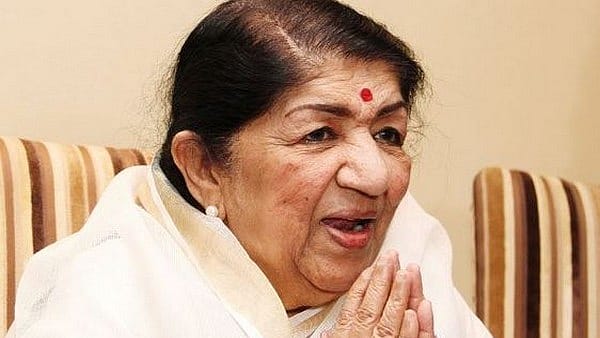
What does a generation sound like? Sometimes, it sounds like a crackling radio in a living room. Other times it is a song playing at a wedding or a melody coming from a neighbour’s window, a school prayer, a patriotic programme or a film watched decades ago.
For millions of Indians, there is a good chance that voice was Lata Mangeshkar. Across a career spanning more than seven decades, Mangeshkar recorded thousands of songs in multiple Indian languages. But her extraordinary legacy isn't just about numbers. It is about how her voice kept finding new meanings as India changed around it.
On Lata Mangeshkar's birth anniversary today, here are seven moments when one voice became something much bigger than a playback singer.
1. ‘Aayega Aanewala’: When Lata Mangeshkar announced herself to India
In 1949, a 20-year-old Lata Mangeshkar sang Aayega Aanewala for Mahal, and the effect was immediate. The song was mysterious, haunting and unlike anything listeners had heard from the young singer. Listeners reportedly flooded Radio Ceylon asking who had actually sung the song because the record initially identified only the character's name, Kamini. That detail tells you something about the world Lata was entering.

Losing Memory
16 Oct 2026 - Vol 05 | Issue 42
The making of a medical and social emergency
2. ‘Lag Jaa Gale’: When Lata became the voice of love
Some love songs age, whereas others seem to wait for new generations to discover them. Lag Jaa Gale from Woh Kaun Thi? belongs firmly in the second category. Composed by Madan Mohan, the 1964 song gave Lata's voice a delicate, almost fragile quality even as it reached those soaring notes. Decades later, it remains instantly recognisable, proof that a song does not need a new arrangement or a new generation of listeners to stay alive. Sometimes the voice is enough.
3. ‘Allah Tero Naam’: When Lata's voice carried a message of harmony
Lata Mangeshkar's repertoire was never confined to romance. Allah Tero Naam, Ishwar Tero Naam from Hum Dono (1961), composed by Jaidev and written by Sahir Ludhianvi, became much more than a film song. Its invocation of Allah and Ishwar gave it a place in India's wider cultural memory. Lata's voice could make the song feel intimate and universal at the same time.
4. ‘Aye Mere Watan Ke Logon’: When Lata became the voice of national grief
Then came January 27, 1963. At a public function in New Delhi, Lata sang Aye mere watan ke logon, written by Kavi Pradeep and composed by C Ramchandra, in memory of Indian soldiers who had died in the 1962 India-China war. The performance became legendary. So much so that Jawaharlal Nehru was visibly moved by the song and later told Lata that she had made him cry. But its staying power went far beyond that one evening. The song became part of India's patriotic musical memory — returning year after year at national occasions.
5. ‘Aaj Phir Jeene Ki Tamanna Hai’: When Lata gave freedom a female voice
What does freedom sound like? In Guide (1965), it sounds remarkably joyful. Aaj Phir Jeene Ki Tamanna Hai captures Rosie, played by Waheeda Rehman, embracing the possibility of a new life. There is no grand declaration here, just exhilaration. That is part of Lata's genius: she could make a character's internal transformation feel like something the listener was experiencing too.
6. ‘Luka Chuppi’: When Lata gave grief a mother's voice
More than four decades after Mahal, Lata was still finding new emotional territory. In Rang De Basanti (2006), she sang Luka Chuppi with AR Rahman. The song became a haunting conversation between a mother and her lost son. It was a very different Lata from the one who had sung romantic classics in the 1960s. Yet the voice still carried the same extraordinary ability to make private emotion feel collective.
Mangeshkar stood for hours during the recording, a reminder that even this late-career performance received the same meticulous attention she had brought to her earliest recordings. The result was not nostalgia for Lata's old voice. It was Lata creating another memory for a new generation.
7. ‘Naam Gum Jayega’: When Lata's voice became a metaphor for memory itself
Perhaps the most fitting song to end with is Naam Gum Jayega from Kinara (1977). Its famous idea, that a name may disappear but a voice can remain, now feels almost prophetic when applied to Lata herself. Her career stretched across changing technologies, musical fashions, generations of actors and radically different eras of Hindi cinema. Yet the voice kept returning. That is why Lata Mangeshkar's legacy is difficult to contain in a list of “greatest songs”.
For one generation, she was the sound of young love. For another, a prayer. For another, patriotism. For another, heartbreak. And for many families, she was simply part of the background music of growing up.
Maybe that is the real Lata Mangeshkar phenomenon. You didn't have to belong to her generation to have a Lata song belong to yours.