World Photography Day: The World Through a Lens, and Beyond It
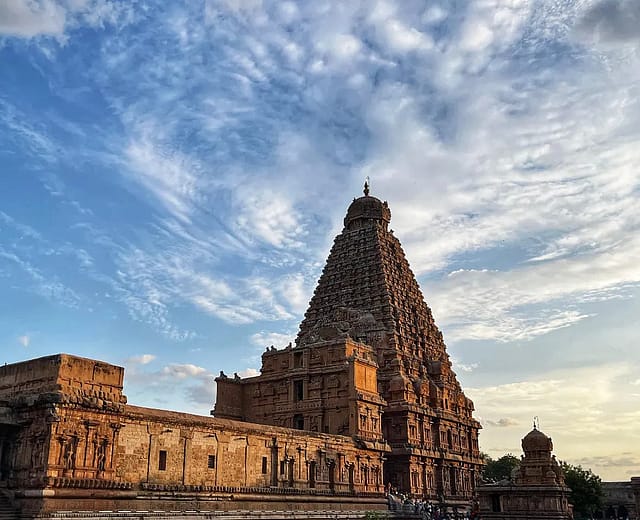
Writing and photography have always been equal passions for me, though they demand different kinds of attention. Writing requires words, references, arguments, and often a desk; photography asks for something more elemental—the willingness to observe, notice, and linger before the world moves on. One helps me make sense of what I see; the other teaches me to see it in the first place. Much of my amateur clicking happens while travelling: a road bending around a hill, a village scene, an old street, striking architecture, winding valleys, rivers, lakes and seas, lush green landscapes, the vivid contrasts of a marketplace, the quiet light of dawn or dusk, a fleeting moment, or perhaps a face. Such scenes have taught me that sometimes the most meaningful way to experience a place is simply to stop, live, and take them in.
On World Photography Day, the medium deserves interrogation beyond celebration. It has travelled from chemical plates and glass negatives to digital and computational cameras, from precious images preserved in albums to billions of snaps created and circulated each day. In that remarkable evolution, it has transformed not merely how we remember the world, but how we see, enjoy, interpret, and ultimately understand the world around us.
The Modi Years
02 Oct 2026 - Vol 05 | Issue 40
A Nation Rebuilt
August 19 commemorates the day in 1839 when the French government made the details of Louis Daguerre’s daguerreotype publicly available. The announcement before the French Academy of Sciences and Academy of Fine Arts transformed photography from an experimental possibility into a practical medium. Yet photography had no single inventor. Nicéphore Niépce had produced an early permanent camera image in the 1820s; William Henry Fox Talbot was developing a paper negative process; Hippolyte Bayard produced direct-positive photographs. Like most consequential technologies, it was the product of accumulated experiments rather than a solitary flash of genius.
Its earliest promise was extraordinary: to preserve appearances with an apparent fidelity that painting could not match. By 1850, New York alone had more than 70 daguerreotype studios. Portraiture, once an expensive privilege, became progressively accessible. Photography also acquired a political and scientific significance almost immediately. It documented architecture, landscapes, archaeological sites, wars, people and institutions. In India, the camera arrived during the colonial period and quickly became an instrument of both documentation and power. Photographers such as Raja Deen Dayal produced remarkable records of Indian architecture, landscapes, courts and public life, while much colonial photography also embodied what museums today appropriately describe as the “colonial gaze”.

That duality has never disappeared, and a photograph can reveal and conceal at the same time. It records what stood before the lens, but it also records the photographer’s decision about what deserved to stand before the lens. Susan Sontag put the problem sharply: “To photograph is to appropriate the thing photographed.” The camera is never a passive observer; it selects a fragment of it and presents that fragment as significant.
This is why photography has always been more complicated than its reputation for objectivity. A camera has never been a neutral witness. Choice of subject, distance, angle, exposure, timing, and later editing all intervene between what is seen and how it is represented. A photograph may be factually authentic yet profoundly misleading: a crowd can appear threatening or festive, a political gathering enormous or insignificant, and a landscape sublime or desolate, all depending on where the photographer points the lens, the light, what the frame includes, and what it leaves unseen.
Roland Barthes captured another dimension of photography when he wrote that what a photograph reproduces “has occurred only once”. Its peculiar power lies in this encounter with an irretrievable past. The photograph says, in effect, that something was there. A childhood face, a demolished structure, a vanished street, a deceased parent: photography converts absence into presence. It is therefore both an archive of life and an archive of loss.
The technological evolution of photography has steadily weakened the barriers to participation. George Eastman’s Kodak camera and its famous promise that the company would do the processing helped move photography from specialist practice towards mass culture. Digital photography subsequently eliminated film, chemical processing and the cost of individual exposures. The smartphone completed the transformation. The camera ceased to be a separate object that one remembered to carry and became part of the object one carried everywhere.
The results are immense. The International Telecommunication Union estimates that 82% of people aged 10 and above worldwide now own a mobile phone, while nearly three-quarters of the world’s population—about six billion people—are online. Mobile broadband subscriptions have reached roughly 99 per 100 inhabitants, although this figure disguises multiple subscriptions and substantial inequalities in access. Photography has consequently become almost ambient. We do not just take photographs on special occasions; we photograph meals, journeys, documents, pets, sunsets, receipts, protests, accidents, speeches and ourselves.
The smartphone has transformed photography from preserving events to participating in them: images are now made not only to remember, but to communicate, signal identity, seek recognition and join social conversations, with Instagram, Facebook, X, WhatsApp and other platforms turning photographs from albumed memories into social acts measured in views, likes, shares and comments.
There is something liberating about this democratisation. Anyone with a smartphone can now document police violence, environmental destruction, natural disasters or acts of kindness, while citizen photography can bring evidence to light that institutions might prefer unseen. Yet abundance has its own paradox: we possess more visual records than any previous civilisation, but the sheer volume of images risks making each one less memorable and less noticed.
The professional camera, meanwhile, has not disappeared. The Camera and Imaging Products Association recorded more than 10.6 million interchangeable lenses shipped worldwide in 2025, up 2.8% from the previous year. This is instructive. The smartphone did not kill photography; it divided it. The phone democratised everyday image-making while dedicated cameras increasingly serve those seeking greater control, precision and craft.
The newest revolution is more unsettling. Computational photography already means that the picture produced by a phone is not simply what its sensor saw. Software combines exposures, reconstructs detail, balances light and colour, reduces noise and increasingly uses machine learning to decide what an image should look like. The boundary between photographing and processing has therefore been porous for years. Generative artificial intelligence takes the problem much further: an image can now depict an event that never happened, a person who never existed, or a landscape that was never photographed.
This forces photography to confront its oldest claim: its relationship with reality. If an AI-generated picture can look more convincing than a genuine photograph, visual plausibility is no longer evidence of truth. Even technologies designed to establish provenance have limits. Content credentials can establish an image’s provenance and editing history, but they cannot certify the truth of what it depicts. That distinction matters mainly in journalism: Reuters, whose photographers contribute to what is often called the “first draft of history”, prohibits generative AI from creating or materially altering news images, while allowing limited AI assistance that leaves the underlying photograph unchanged.
The implication is larger than photography. Democracies depend upon citizens being able to distinguish evidence from fabrication. For generations, “I saw a photograph of it” carried an almost instinctive authority. That authority is now inadequate. We need to ask who made the image, when, where, under what circumstances, whether it has been edited, what has been cropped out, and whether the accompanying claim is independently corroborated. The critical viewer must become almost as important as the photographer.
This is not an argument for nostalgia. The medium has never been immune to manipulation. Darkrooms permitted cropping, retouching, and alteration long before Photoshop. Propaganda has always understood the political power of the frame. What has changed is the scale, speed, and sophistication of distortion. The difference between an altered photograph and a synthetic image is no longer just technical; it is epistemological.
And yet, for all this anxiety, I remain drawn to photography for a simple reason: it teaches attention. I often find myself looking at places differently because I am wondering how they might appear through a lens. That act of looking is itself valuable. It slows us down, teaching us to notice the architecture, the play of light, ordinary people, and fleeting moments that an impatient eye would otherwise overlook. Perhaps that is photography’s enduring gift. It freezes an instant while reminding us that the instant is already gone. Barthes understood the photograph as an encounter with what has been. In an age when artificial intelligence can manufacture almost any appearance, that encounter becomes more precious, not less.
The future of photography may therefore depend less on better cameras than on better judgment. We will possess unprecedented power to create images, but the harder task will be deciding which ones deserve our belief. The photograph once asked us to see; the photograph of the future must also ask us to think. Perhaps that is the most fitting way to mark its 187-year journey—not by celebrating the camera alone, but by defending our capacity to look carefully, question appearances, and distinguish an image of ‘reality’ from reality itself.