The Gospel According to Deng and Gordon Gekko
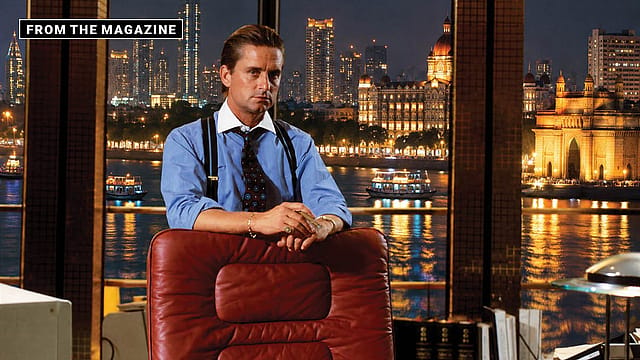
"Greed, for the lack of a better word, is good.” One of the most iconic lines from Hollywood. In the 1987 cult classic Wall Street. Said by Gordon Gekko, a ruthless Wall Street financier, played by Michael Douglas. Gekko was the antihero in what was a critique of the apparent moral emptiness of capitalism. But almost 40 years on, one thing remains true. To paraphrase Gekko, wealth creation, for the lack of a better word, is good.
Why not simply say wealth rather than adding creation? Because there is an important difference. Wealth creation is unique to capitalism as it evolved after the Industrial Revolution in the 19th century. Pre-capitalist systems, in the West and East, also had wealth. Take feudalism. Feudal lords were wealthy but they did not create it or earn it. They simply inherited it, usually land but also precious metals. In almost every case, some ancestor acquired it through the exercise of power or force. Colonialism was another system which pre-dated capitalism in which some people acquired great wealth by subjugating other people and taking control of their resources. These were essentially extractive systems, not creative ones. Needless to say, neither of those systems created mass prosperity. Only capitalism did. If one normalises global GDP for the last 600 years, it was largely flat for the 500 years until the early 20th century, when it began to grow exponentially.
This was the period in which the pioneer country in wealth creation began to rise—the United States of America. Over 100 years later it is still perhaps the only country in the world which embraces the maxim that wealth creation is unambiguously good. On balance, Gekko’s ambition was never the problem, his methods may have been. That is why he isn’t the archetypical villain. More an antihero.
Four years after the movie Wall Street was released, the Soviet Union collapsed because it was bankrupt. For all its advances and apparent power over the course of six decades, the failure to create wealth ultimately made the communist system unviable. At least one communist had foreseen that unpleasant fate a decade-and-a-half earlier. In China, Deng Xiaoping, who succeeded Mao Zedong to the leadership of his country, quickly changed course. He was acutely aware of what was needed when he famously stated, “To be rich is glorious.” If China is the only country challenging the US for supremacy in the 21st century, it is because Deng understood the importance of wealth creation. And ensured that his country embraced it. “It doesn’t matter if the cat is black or white as long as it catches mice,” said Deng, seemingly as bereft of morals as Gordon Gekko.
Who creates wealth? Entrepreneurs do. Again, there is a difference between entrepreneurs and rentiers, who are dressed as entrepreneurs but whose method is to win favours or concessions from the state and extract rents from their ability to game the system. They are the bane of many emerging/developing economies, just like feudalists and colonialists were. Unproductive. Wealthy but not creating. Entrepreneurs, on the other hand, use their risk-taking capabilities to push technological frontiers, innovate new products and services, and tap new markets while being subject to competition from others at all times. Unlike rentiers, feudalists and colonialists, they cannot stand still because that would ensure the destruction of their business. It is in the “creative destruction” of capitalism that successive entrepreneurs engage in the “creation of wealth”.
Churn in the order of entrepreneurs and business is a good way to judge the vitality of a wealth-creating system. Compare the top 20 companies in the US by market capitalisation in 2026 with 2000. Today, the top five companies by market capitalisation (a good proxy for wealth creation) are Nvidia, Apple, Microsoft, Alphabet, and Amazon. Of these, only one was in the top five in 2000, Microsoft. In the top 20, apart from Microsoft, only ExxonMobil, Walmart and Johnson & Johnson feature on the list 26 years later. And they have grown sizeably to stay in the top rung. Nobody had heard of Elon Musk or Jensen Huang two decades ago. Today, they are arguably the most influential entrepreneurs in the world. In China as well, companies which are in the global big league like electric vehicle (EV) maker BYD or technology company Tencent are relatively new. This isn’t only about big market cap numbers. It is about massive jobs, increasingly higher paid jobs. It is about more advanced, better and cheaper products and services. It is about generating more taxes for governments which they can spend on better infrastructure and welfare for those at the margins. It is about changing lives, improving livelihoods and raising standards of living for hundreds of millions of people. For those who say wealth doesn’t trickle down, they need only look at China’s phenomenal rise and America’s continued supremacy.
Wealth doesn’t trickle down in the absence of dynamic capitalism. Western Europe has largely stagnated because those countries became wealthy because of colonialism, not capitalism in the first instance. They then spent their wealth on welfare. And a massive bureaucracy ensured lack of entrepreneurial dynamism and wealth creation.
India has an ambivalent relationship with wealth creation primarily because of its long and tortured history of feudalism and colonialism. Too much focus of both government and society is on keeping a check on the wealthy. While it is true that there are remnants of the feudal rich and rentiers in India, the best check and balance on them is to unleash the latent entrepreneurship talent of millions of Indians. Let there be creative destruction. That will lead to the wealth creation which will trickle down and make the lives of the masses much better. That is only one route to a Viksit Bharat. And only entrepreneurs can take us there. There is no need to favour them. Just empower. There is great patriotism in embracing wealth creators. For a prosperous future, the nationalist spirit must co-opt wealth creation unambiguously.
(Dhiraj Nayyar is Director, Economics & Policy, Vedanta)