The Tribe Is in the Eye of the Beholder
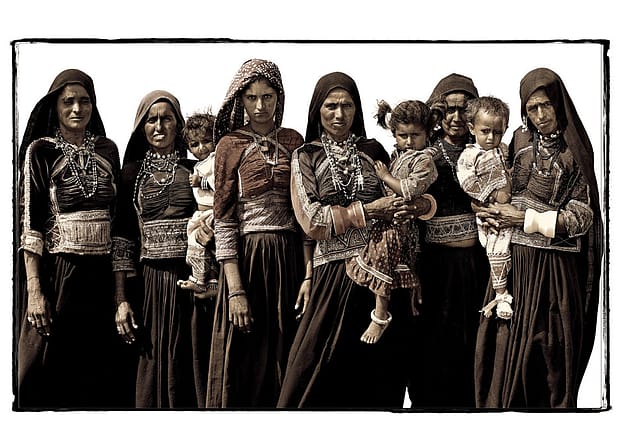
There are now so many international days that one begins to wonder whether the United Nations has a calendar or a large pool of contractors, each of whom needs to be gainfully employed churning out the posters, car stickers, coffee mugs and T-shirts. Forests have a day, wetlands have a day, oceans have a day, and there is even a World Vasectomy Day, always held on a Friday in November and never on a Monday—perhaps to take the romance out of many young bureaucrats’ weekend plans. And earlier this month, we were invited to celebrate the International Day of the World’s Indigenous Peoples.
And interchangeable with indigenous—as well as being a relief to the spelling-challenged—is the older label ‘tribal.’ It has a long and somewhat dubious history, not least because it was once used quite happily for Europeans. The Romans had tribes, as did the Gauls, Germans, Celts and various others whom Europeans now prefer to describe as founders of nations. Something rather interesting happened afterwards. Europe gradually stopped being tribal. Or, more precisely, its tribes acquired better public relations. Chiefs became kings, kingdoms became nations, customs became culture and barbarians became ancestors. Inconvenient facts that might have been completely forgotten if not for two men with mighty moustachios, magic potions and a stubborn refusal to submit to imperial Roman authority. Asterix and his portly companion Obelix have probably done more to preserve the memory of European tribalism than generations of anthropologists.
The Modi Years
02 Oct 2026 - Vol 05 | Issue 40
A Nation Rebuilt
Then Columbus sailed west, took the wrong turn, and Europe encountered a very large number of people who had not received the memo about European civilisation. “Tribal” became a convenient word for people who were not European. Europe had power, guns, smallpox and above all a wonderfully efficient filing system. Until men and women in dull cardigans inhabiting the ivory towers began hurling fat and impossible-to-read tomes at the rest of mankind, the practical rule of thumb was—and sadly remains for many planners and politicians—that a tribal was simply the fella not wearing pants. Thus the gent—or lady—in the straw skirt, or a sari, sarong, sherwani, dhoti or mundu was, technically speaking, a tribal.
India is where the whole business begins to wobble rather badly. Here, the neat distinction between tribe and non-tribe collides with a society that has spent several thousand years producing many distinct and quite proud groupings, each with its own diet, rituals, cultural habits and markers, making it impossible to sit obediently in somebody else’s filing cabinet. Take the Banjaras. Few would realise that, roughly at the same time that Europeans were sailing into the New World, caravans bearing Banjaras were making their way from Rajasthan towards Hyderabad. Maybe it was the vibrant mirror-work dresses or the heavy silver jewellery dangling from their hair that would beat those dull European pants any day of the week, but the Banjaras got the indigenous label and Scheduled Tribe status, while the Europeans got neither and settled for spewing anthropological tomes about the indigenous.
Meanwhile, the real McCoys who stayed put in Rajasthan, such as the Bhatis of Jaisalmer, have a rather different problem. Their history runs back well over a thousand years, including to Rawal Jaisal, who founded Jaisalmer in 1156 and gave his name to what is the world’s largest living fort, with resident families going back several generations. Yet the Bhatis are not deemed indigenous.
Away from India’s western edge and the Thar, the country’s other end offers a similar anomaly. Kuki and Naga hill communities have faith systems, and much that flows from them, that are barely a century old and, as it happens, a colonial-era import from the Middle East; yet they are deemed to have an indigenous culture and are Scheduled Tribes. The Meiteis in the same region, meanwhile, have an extraordinarily deep history in the valley of Manipur, their own kingdom, language and a unique, endangered culture that predates the modern Indian state by several centuries, yet are strangely not classified as a Scheduled Tribe. If there is a universal anthropological principle—or even a particularly lame Indian version of one—at play here, it has so far managed to keep itself remarkably well hidden.
All these strange boxes would be funny if they were not so divisive. The violence in Manipur over the past couple of years, including ethnic cleansing, has much to do with such lazy labelling and the benefits that flow from it. Some communities, meanwhile, have tried to change boxes altogether. The decade-long Gujjar agitation in Rajasthan was essentially a demand to move out of Scheduled Caste and into Scheduled Tribe status.
Then there is the curious desire that a tribe should retain its “unique character”. Yet when a collective actually manages to achieve that impossible task across centuries and thousands of miles of territory, it can end up receiving brickbats rather than bouquets. The case in point is the tiny mercantile communities from Rajasthan’s Shekhawati and Marwar regions. Ignored by the UN, castigated by communists and demonised by parochial politicians, the Marwari community is unlikely to be getting an indigenous label, a UN invitation, a car sticker or a coffee mug anytime soon. A threatening visit from some son-of-the-soil lumpen, however, is always on the cards—not only in India but on many distant shores where the community has put down roots.
Perhaps the funniest part is that Westerners themselves have never quite stopped being tribal, even if the tribalism now runs along commercial merchandise such as sneaker brands or football clubs. In 1983, Time magazine ran a cover story called “The Tribes of Britain”. One might have expected forgotten elderly members of the tiny isle’s oldest groupings in quaint traditional attire. Instead, the magazine served up British skinheads, Teddy boys, mods, trendies, rockabillies and other assorted youngsters, united by shared demography, an anti-establishment sneer and a love for hair gel and dye.
With oodles of media ink, recycled tree carcasses and UN conference invites at stake—not to mention elite education, job preferences and state benevolence—the indigenous label is hardly an innocent piece of vocabulary. But nowhere are the absurdities, and the inherent injustice flowing from them, more obvious than in the nation’s capital. The indigenous label is almost never associated with Delhi, though archaeological excavations point to habitation here going back to the first millennium BC—considerably older than the territorial claims of many communities currently described as indigenous. And that is precisely what makes Delhi rather wonderful: a genuinely old city whose idea of belonging has never required a son-of-the-soil certificate. Almost everyone, save a few pockets such as Punjabi Bagh and Chittaranjan Park, can cheerfully claim to be indigenous. Those two exceptions are not so by choice, but as survivors of ethnic cleansing in East and West Pakistan during the Partition of India.
And that is where the tribal-versus-non-tribal debate finally collapses. Lazy labels can restore or rob dignity, promise serious benevolence, spew new tribes of haves and have-nots, create permanent villains and eternal victimhood, unleash destructive street violence or birth a thousand committees. A more important question may not be who is or isn’t tribal, but who knowingly persists with a Eurocentric, perpetually inadequate, hopelessly vague, often racist and ultimately politically loaded label born of a colonial agenda and still useful for fuelling post-colonial divisiveness. Playing Pavlov’s dogs may well be the bigger issue.