Tata Sons Listing: RBI Proposes, Tata Opposes
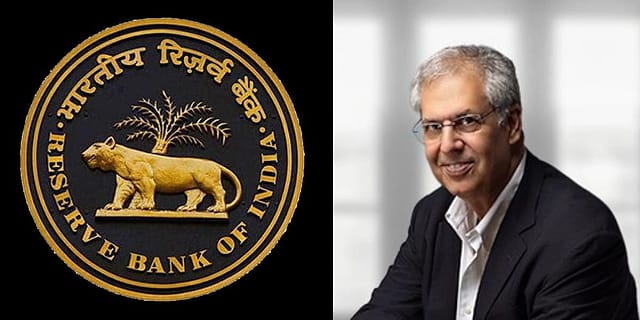
He may appear soft-spoken, but he is very firm and exacting. Sixty-eight-year-old Noel Tata, Chairman of Tata Trusts, is vehemently opposing the Reserve Bank of India's proposal to list Tata Sons, the holding company of the $180-billion Tata Group.
It may be recalled that some trustees, such as Venu Srinivasan and Vijay Singh, along with stakeholders like the Shapoorji Pallonji Group, are in favour of listing, as it would unlock huge value for investors. To find a way out, Noel Tata has asked Tata Group Chairman N. Chandrasekaran to explore alternative routes to buy out the SP Group's stake without listing Tata Sons.
The Reserve Bank of India (RBI) classifies Tata Sons as an upper-layer Non-Banking Financial Company (NBFC), which mandates a public listing. While Tata Sons has sought regulatory exemption and repaid over Rs 20,000 crore in debt to avoid this classification, the decision remains pending, sparking an intense internal debate over a potential Initial Public Offering (IPO).
The Modi Years
02 Oct 2026 - Vol 05 | Issue 40
A Nation Rebuilt
Reportedly, Noel Tata has written to the RBI, making a strong case against listing Tata Sons. He argues that market pressures could compromise the group's long-term investment approach and philanthropic mission.
To drum up public support, the group has taken the advocacy route to amplify its stand. It has asked some of its former board members to write signed columns in national dailies. N A Soonawala, former Vice Chairman of Tata Sons, wrote a column in The Times of India titled, "Why Tata Sons Should Not Be Listed." He argued that a forced IPO could undermine the company's special role within the group and may not unlock significant value.
Likewise, Ishaat Hussain and R Gopalakrishnan, both former Tata board members, wrote an article in The Indian Express titled, "To List, or Not to List Tata Sons, That Is Our Question." In an interview with Mint, Farokh Subedar, who has worked closely with four Tata Sons chairmen—JRD Tata, Ratan Tata, Cyrus Mistry and N Chandrasekaran—warned that listing could fundamentally alter the group's freedom to invest in long-gestation projects.
If I were to summarise the arguments put forward by these eminent Tata Group leaders, they essentially boil down to this: an IPO would compromise the group's century-old philanthropic structure, dilute its social mission and subject it to short-term profit pressures. The philanthropic trusts established under Jamsetji Tata's legacy—principally the Sir Dorabji Tata Trust and the Sir Ratan Tata Trust—collectively hold about 66% of Tata Sons. This is one reason the Tata Group is often viewed differently from most conglomerates: the majority economic interest ultimately supports charitable and social causes.
The moot point is: does listing automatically lead to better governance? Not really.
Just go back in time and you will realise that, despite being listed, some of the biggest names in the corporate world ended up facing serious legal troubles. Two names immediately come to mind: Venugopal Dhoot and the troubles surrounding the Videocon Group and Rana Kapoor and the crisis at Yes Bank. Who can forget B Ramalinga Raju and the Satyam scandal? It’s considered India's biggest corporate governance failure.
These high-profile groups operated within listed structures. Investors, auditors, analysts and regulators were all present. Yet governance failures still occurred, leaving investors high and dry.
Sure, listing improves disclosure, but it does not guarantee integrity. As I read somewhere, listing is not a governance vaccine.
So, what is the RBI's argument for listing? To begin with, Tata Sons has been classified as an upper-layer NBFC because its assets exceed Rs 1.75 lakh crore as of March 2025.
Clearly, the RBI appears promoter-agnostic and is simply going by the rule book. Listing enables better regulatory oversight because companies are required to publish quarterly results, disclose material developments to stock exchanges, face scrutiny from analysts, investors and minority shareholders, and comply with stricter governance standards. Being an NBFC, the regulator believes Tata Sons should operate under maximum transparency.
Another argument, widely reported in the media, is that Tata Sons, as the holding company of the Tata Group, exercises significant influence over companies such as TCS, Tata Steel, Tata Motors and Titan. The RBI's thinking may be that institutions of such scale should be subject to public market scrutiny. Moreover, if the regulator makes an exception for Tata Sons, other business houses may demand similar exemptions.
Let us now understand Noel Tata's counter-argument. He believes companies generally list to raise money from capital markets from time to time. Tata Sons does not require fresh capital because its listed subsidiaries already have access to both debt and equity markets. Why list if no capital is required?
The Tata Group has historically thought in decades rather than quarters. It takes time to build businesses before profits arrive. Whether it was Tata Steel, Tata Motors or Titan, none of them became success stories overnight.
Also, by its very nature, a listed company must respond to shareholder expectations. If Tata Sons gets listed, investors may push for bonus issues, higher dividends and quicker returns. A listed Tata Sons could face investor activism and pressure for immediate gains. There may even be pressure on management to curtail philanthropic activities in order to improve profitability metrics and market valuations
Already, 26 Tata Group companies are listed, commanding a combined market valuation of about $328 bn. With all the major operating companies already listed and heavily scrutinised, why list Tata Sons? That seems to be the group's central argument.
If Tata Sons is eventually listed, what exactly will investors be buying? In a way, it would be like buying a Tata mutual fund comprising TCS, Tata Motors, Titan, Tata Steel, Trent and several unlisted businesses, including airlines, electronics, retail and digital ventures.
Essentially, what the Tata Group is saying is:
• Tata Sons is not a conventional operating company.
• About 66% of Tata Sons is owned by philanthropic trusts.
• The company has a long record of governance and disclosures.
• Listing could create pressures that are inconsistent with the group's long-term philosophy.
• Noel Tata therefore appears to be arguing that Tata Sons should remain privately held.
However, the counter-argument is that good governance today cannot become the basis for regulatory exemptions tomorrow. Regulations are generally framed for institutions, not personalities. Yes, some listed companies failed. But those failures were detected because disclosure mechanisms existed. Without listing, regulators and investors may have even less visibility.
The debate over Tata Sons is not really about Tata. It is about whether regulation should be principle-based or reputation-based. The Tata Group's governance record may justify confidence, but regulators cannot write rules around confidence alone. Equally, listing should not be mistaken for a magic wand. India's corporate history is replete with examples of powerful business houses whose promoters gamed the system and landed in jail despite operating under the glare of public scrutiny.
The real question is whether forcing Tata Sons to list will create meaningful transparency that does not already exist, or merely add another layer of compliance to one of India's most scrutinised business houses.
Finally, it remains to be seen whether listing would genuinely create value or simply satisfy a regulatory requirement.