Predicting the deluge: the science behind modern flood warning systems
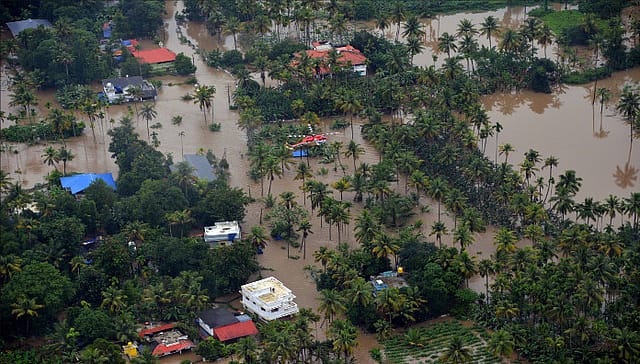
Floods are among the most destructive natural disasters affecting human societies across the world. With increasing rainfall variability and climate change, the frequency and intensity of floods are rising in many regions. In places with heavy monsoon rainfall, such as Kerala, early detection and timely warning are essential to reduce the loss of life and property. This is where flood warning systems play a crucial role. By combining modern science, environmental monitoring, and advanced technology, these systems help communities prepare for potential floods before they occur.
1) Monitoring Nature: The First Line of Detection
The first component of a flood warning system is hydro-meteorological monitoring, which involves collecting environmental data from river basins and catchment areas. Scientists continuously measure parameters such as rainfall intensity, river water level, river discharge, soil moisture, and reservoir storage levels. Various instruments are used for this purpose, including rain gauges, river gauge stations, weather radars, and satellite-based remote sensing systems. These devices provide real-time information about weather conditions and river behaviour, helping experts identify the early signs of possible flooding.

Losing Memory
16 Oct 2026 - Vol 05 | Issue 42
The making of a medical and social emergency
2) Rapid Data Transmission
Collecting data alone is not sufficient; it must be transmitted quickly to forecasting centres. Flood conditions can change rapidly, so real-time data transmission is critical. Modern flood monitoring networks rely on technologies such as telemetry systems, satellite communication, wireless sensor networks, and internet-based communication systems to send information instantly from monitoring stations to analysis centres.
3) Processing and Analysing the Data
Once the data reaches the forecasting centre, it undergoes careful processing and analysis. Scientists verify the accuracy of the measurements, remove errors, and store the information in digital databases. Using statistical and hydrological analysis techniques, they interpret the data to understand the evolving conditions within the river basin. This step ensures that only reliable and accurate data are used for flood prediction.
4) Flood Forecasting Models
One of the most important elements of a flood warning system is the use of mathematical and computer-based forecasting models. These models simulate the movement of water through rivers and drainage systems to predict future flood conditions.
Several types of models are commonly used, including rainfall–runoff models, which estimate how rainfall in a catchment area converts into river flow; hydrodynamic models, which simulate the movement of water in rivers; and numerical flood simulation models. Recently, artificial intelligence and machine learning models have also been introduced to improve the accuracy of flood predictions. Through these models, scientists can estimate how high the river level will rise, when the flood may occur, and which areas are likely to be affected.
5) Decision Support and Risk Assessment
The results generated by forecasting models are analysed by experts and disaster management authorities. Based on the predicted river levels, the vulnerability of nearby communities, and the potential risk to infrastructure, officials decide whether a flood warning should be issued. This decision-making process forms an essential part of the flood warning system, ensuring that warnings are issued responsibly and at the right time.
6) Communicating the Warning
A warning is only effective if it reaches people quickly. Therefore, the warning dissemination system is a crucial component. Authorities use multiple communication channels such as SMS alerts, mobile applications, radio and television broadcasts, siren systems, public announcement systems, and social media platforms to inform the public about impending floods. These early warnings provide valuable time for residents to move to safer locations, protect their belongings, and prepare for the disaster.
7) Community Preparedness and Response
Even the most advanced warning system cannot save lives unless communities know how to respond. Public awareness programmes, evacuation plans, emergency shelters, and coordination between local authorities and disaster management agencies are vital elements of an effective flood preparedness strategy. When communities are trained and informed, they can react quickly and efficiently to flood warnings.
Technology Shaping the Future of Flood Prediction
Modern flood warning systems are becoming increasingly sophisticated with the integration of satellite monitoring, sensor networks, artificial intelligence, and digital simulation models. These technological advances are making flood prediction more accurate and timely than ever before. While disasters cannot always be prevented, science and technology make it possible to anticipate them and reduce their impact. Flood warning systems represent a powerful example of how scientific knowledge can protect communities and save lives in an increasingly unpredictable natural environment.
In recent years, flood monitoring has entered a new technological era with the integration of satellite remote sensing, real-time sensor networks, artificial intelligence, and advanced computational systems. Modern flood monitoring systems use dense networks of automated rain gauges, river level sensors, weather radars, and satellite observations that continuously transmit data to centralised control centres. These large volumes of data are analysed using high-performance computing and increasingly with emerging technologies such as quantum computing, which has the potential to process extremely complex hydrological models and climate datasets much faster than classical computers. Such capabilities can significantly improve the accuracy and speed of flood forecasting by simulating rainfall–runoff processes, river flow dynamics, and floodplain inundation in near real time.
For a state like Kerala, which experiences intense monsoon rainfall and has many short, fast-flowing rivers, it is crucial to establish a dedicated flood monitoring and warning system operating 24×7×365. Continuous monitoring, rapid data analysis, and timely dissemination of warnings can provide precious hours of advance notice, enabling authorities and communities to take preventive measures and reduce the devastating impacts of floods on lives, infrastructure, and the environment.