Can AI make renewable energy more efficient?
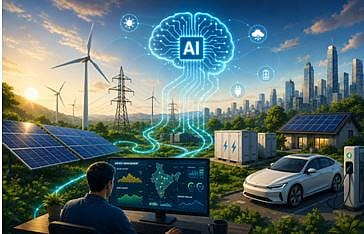
AI was once imagined as a future technology for laboratories and surveillance systems and the Silicon Valley boardroom. It now plays an increasingly critical role in one of the world’s most pressing transitions: renewable energy. Artificial intelligence is quietly changing how renewable energy systems work, from forecasting electricity demand to managing solar grids and reducing power loss. But can AI really improve renewable energy, or is the hype just the latest example of tech optimism outstripping reality?
The truth is somewhere in between. AI is not the silver bullet for the climate catastrophe, but it is quickly becoming one of the most important tools for improving the reliability, efficiency and scalability of renewable energy systems. In countries like India where the renewable energy revolution is taking place with growing electrical demand and stress on infrastructure, AI could soon become a necessity rather than a luxury.

Losing Memory
16 Oct 2026 - Vol 05 | Issue 42
The making of a medical and social emergency
The basic problem with renewable energy systems is unpredictability. Fossil fuel systems have never had this problem. Coal plants can run for hours at a time to make electricity. Sunshine is what solar cells need. Wind turbines depend on weather conditions that can change suddenly. This intermittency can throw electricity grids off balance, particularly as renewables make up a larger part of national power generation.
That’s where AI comes in. AI systems can predict the changes in renewable energy generation far more accurately than traditional forecasting models, as they are able to process large amounts of weather, consumption and grid data in real time. Machine learning algorithms now have the power to predict cloud movement, wind speed patterns and consumer electricity use with astonishing accuracy. This allows electricity companies to better manage supply and demand and to eliminate energy waste.
Better Forecasts, Better Grids
Companies and governments across the globe are already testing AI-powered energy systems. Google’s DeepMind famously used AI to optimize energy use and reduce cooling costs at its U.S. data centers. European power providers are increasingly relying on predictive AI algorithms to manage smart grids. Meanwhile, China is harnessing AI for the design of renewable energy infrastructure as part of a larger effort at technological dominance.
India too is beginning to feel this change, but to different degrees. The country’s ambitious renewable energy ambitions require not just more solar parks and wind farms, but smarter management systems. AI is being rolled out at speed to predict solar power, track battery storage systems and enhance grid stability.
Predictive maintenance is one of the most significant AI applications in renewable energy. Regular inspections have been a necessity for solar panels, wind turbines and transmission networks, but they can be expensive and time-consuming. Now, sensors and AI-enabled drones can detect flaws before they lead to system failures. AI systems can sense small vibrations, unexpected temperature changes, or performance anomalies early enough to avoid costly disruptions, not wait for a wind turbine to collapse.
This has huge implications for countries with large, widely distributed renewable infrastructure in difficult terrain.” India’s solar parks in Rajasthan and wind farms in Tamil Nadu suffer from operational inefficiencies due to delayed maintenance and monitoring gaps. AI-powered devices can reduce downtime significantly and boost energy output.
Storage Problem
AI could revolutionize battery storage. Energy storage for renewables continues to be one of the biggest obstacles in a full clean energy transition. Solar power is usually generated during the day and needs to be stored for use when the sun isn’t shining, but batteries are still costly and difficult to manage efficiently. AI can help to optimize the charging and discharging cycles, extending the battery’s life and improving its storage efficiency. This is of particular importance as electric vehicles and distributed renewable energy sources penetrate deeper into urban and rural areas.
But it’s not all sunshine and rainbows when it comes to AI and sustainable energy. AI is very energy hungry. Training large AI models requires lots of computer infrastructure, often powered by carbon-intensive grids. Ironically, the technology being sold as a climate solution can also drive the climate crisis if not responsibly controlled.
This conflict is exemplified in the expanding global proliferation of data centres. AI-powered systems need servers that run all the time. They need huge amounts of electricity, and water to cool them down. Several global forecasts suggest that electricity consumption for AI could soar in the coming decade. In countries where the grids are still largely coal-fired, the environmental benefits of AI are less obvious.
Beyond the hype
But to deny the role of AI would be foolish. The future electric system will likely be too complex for manual operation. Millions of rooftop solar panels, electric vehicles, smart appliances and battery storage units interacting simultaneously would require highly adaptive systems that can respond instantly to changing situations. This is what AI is capable of.
The real challenge is to make AI-enabled energy systems transparent, accountable and socially inclusive. Policymakers need to establish clear regulatory frameworks for data use, digital infrastructure and energy access. Public investment in green computing infrastructure and low carbon data centers will become increasingly important.
There is also a need to rethink the big story about technology and climate change. AI should not be seen as a replacement for political action, tougher environmental rules or sustainable consumer behaviour. Technology can improve systems, but cannot replace system improvements. No algorithm can make up for bad governance, energy inequities or unsustainable urban planning.
But the combination of AI and renewable energy is one of the most important developments of the decade. The energy revolution is not just about replacing coal with solar panels or gasoline with electric cars. More and more, it’s about intelligence—the systems’ ability to predict, adapt and optimize energy use in real time. How governments, companies and communities use AI will determine whether it ultimately accelerates a sustainable future or creates new environmental and social problems. It is clear that the future renewable energy revolution will be powered by more than just sunlight and wind. It will be data-led too.