West Asia Tensions Push India To Strengthen Coal Backbone
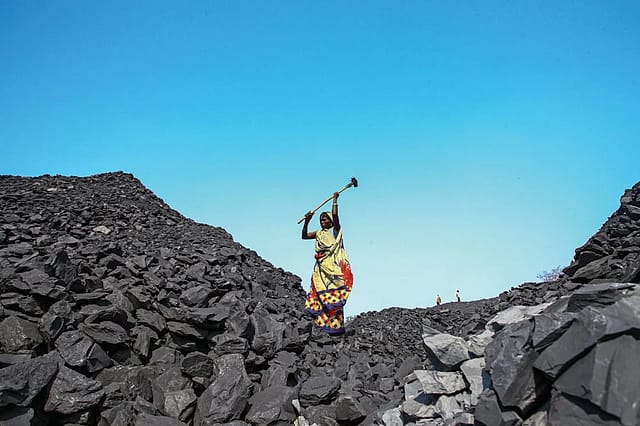
As global energy markets reel from rising tensions in West Asia, India is leaning on a familiar but formidable ally, coal, to keep its economic engine running and industries powered without disruption.
At a time when geopolitical tensions in West Asia are unsettling global energy markets, coal has once again emerged as a cornerstone of India’s energy security strategy. As fears of supply disruptions ripple through oil and gas markets, India is relying on its vast coal ecosystem to ensure uninterrupted power supply and industrial continuity.
According to a Ministry of Coal official statement released on Thursday, coal continues to anchor India’s baseload power requirements, especially for energy-intensive sectors like steel and cement, industries that are crucial to sustaining economic momentum.
Why Is Coal Still Central To India’s Energy Security?
Even as India pushes aggressively towards renewable energy, coal remains indispensable in maintaining grid stability. Its ability to provide consistent, reliable baseload power makes it critical during periods of global uncertainty.
The government emphasised that domestic coal production is being carefully aligned with rising demand. This is complemented by strategic stockpiling at mine-heads and streamlined logistics, including enhanced rail movement, to ensure seamless supply to consumers.
How Strong Are India’s Coal Stockpiles Right Now?
India’s coal reserves have seen a significant boost over the past year, reinforcing the country’s preparedness against potential supply shocks.

Open Minds 2026
26 Jun 2026 - Vol 05 | Issue 26
The power of ideas and arguments in 50 portraits
Pithead stocks at Coal India Limited (CIL) have increased from 106.78 million tonnes (MT) on April 1, 2025, to approximately 125.54 MT as of March 18, 2026. Additional reserves include about 5.75 MT at Singareni Collieries Company Limited (SCCL), 15.75 MT at captive and commercial mines, nearly 12 MT in transit, and 5.49 MT at ports and sidings.
These are further supported by around 53.41 MT of coal available at thermal power plants, enough to meet nearly 23 days of consumption at current levels.
What Steps Is The Government Taking To Ensure Supply?
To maintain adequate availability across sectors, Coal India Limited has intensified supply-side measures, including e-auctions aimed at improving market accessibility.
In March 2026, the company scheduled 29 e-auctions offering approximately 23.56 MT of coal. Since March 12, five auctions have already been conducted, with 73.1 lakh tonnes offered and 31.96 lakh tonnes successfully booked—an indicator of both demand and sufficient availability.
Additionally, coal supply to small and medium consumers is being facilitated through the State Nominated Agencies (SNA) mechanism. The Centre has urged states to project additional requirements, assuring that demand can be fully met to avoid shortages. Offtake under this mechanism is being closely monitored to ensure uninterrupted distribution.
Can Coal Continue To Support India’s Energy Transition?
While renewable energy remains a long-term priority, coal continues to act as a stabilising force in India’s energy mix. Its role becomes even more critical during geopolitical disruptions that threaten global fuel supplies.
The Ministry of Coal reiterated its commitment to maintaining a stable and transparent ecosystem through policy support, active monitoring, and coordination among stakeholders. These efforts are aimed at ensuring reliable coal availability, sustaining industrial growth, and meeting the country’s rising energy needs.
(With inputs from ANI)