#UNTOLD | Half Glass Full, Amarpreet Singh Anand & The Monk Who Never Bought a Ferrari
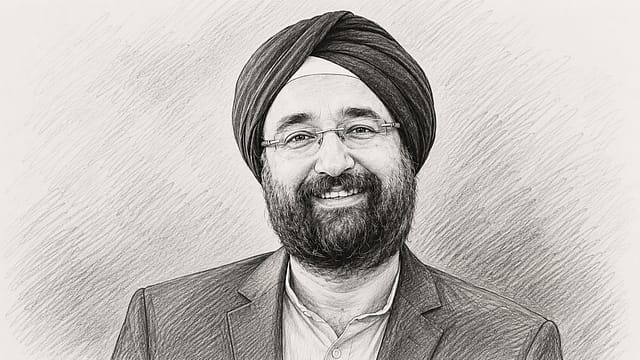
The spreadsheet made no sense.
Good Monk was barely finding its feet. Sales were trickling in. Every rupee mattered. Investors wanted growth. The team wanted momentum.
Amarpreet Singh Anand wanted to spend close to ₹30 lakh. Not on advertising, hiring or acquiring customers. On a clinical trial.
The room fell silent. Someone finally asked the question everyone was thinking.
"Why now?"
It was a fair question. The company was too young. Revenues were too small. Every startup playbook would have said the same thing: prove demand first, validate later.
Anand couldn't disagree more.
"If we don't know this works," he argued, "what exactly are we asking consumers to trust?"
The Age of Anger
31 Jul 2026 - Vol 05 | Issue 31
A raging generation makes the government relent. What's next?
The discussion went on. Marketing could wait, he insisted. Growth could wait. Even revenue could wait. Credibility couldn't.
For everyone else in the room, it looked like an argument about capital allocation. For Anand, it wasn't. It was about something much older.
Twenty-two years earlier, he had joined Cadbury and learnt that brands weren't built by advertising alone. Consumers could forgive mistakes. They rarely forgave broken trust. Years later, at Diageo, the lesson only grew stronger. Trust, once lost, was painfully expensive to earn back.
He wasn't about to build his own company on hope. Not when he could build it on proof. So, he signed off on the clinical trial.
Looking back, it feels like conviction. At the time, it looked dangerously close to madness. Especially because this wasn't the first time Anand had ignored the sensible option.
A few years earlier, he had walked away from a career that most executives would have spent the rest of their lives protecting.
The Conversation Amarpreet Singh Anand couldn't avoid
There was one conversation Anand kept postponing. Not with his boss but with himself.
Every morning, the drive to office felt familiar. The meetings were bigger than ever. The responsibilities kept growing. By every conventional measure, his career was moving exactly as it should.
But another question had quietly begun travelling with him. What if this isn't the life I'm meant to live?
He tried to ignore it for weeks. Then months. It kept returning. Sometimes on the drive home. Sometimes over dinner. Sometimes while watching his children. One day, they would grow up. One day, they would ask him what mattered. He knew the advice he wanted to give them: Take risks. Do work you believe in. Don't spend your life chasing someone else's definition of success.
The words sounded honest. Until he realised he wasn't living by them. That was the contradiction he couldn't outrun. He had become successful. He just wasn't sure he had become himself. The decision, when it finally came, was just a quiet acceptance that staying had become harder than leaving.
Around the same time, another question had begun following him home. Like many parents, Anand and his wife found themselves negotiating with a teenager whose relationship with food looked painfully familiar. Junk food was replacing balanced meals. Nutrition had become less a medical concern than an everyday argument.
For the first time in more than two decades of marketing, the consumer wasn't an abstract demographic. The consumer lived in his house.
That changed the questions he began asking. He spoke to doctors, nutritionists and scientists. He buried himself in research papers and spent hours trying to understand why families who knew the importance of nutrition still struggled to make it part of everyday life. The deeper he went, the more he realised the problem wasn't nutrition. It was behaviour.
There was, however, one final conversation with his wife. He told her what he had been thinking. He wanted to leave. Not for another company or a better title but for an idea that didn't yet exist.
It wasn't an easy conversation. There were practical questions: Income, children, savings, and the future. Questions neither of them could answer with certainty. Anand couldn't promise success. He couldn't even promise the business would survive. The only thing he could promise was that if he didn't try, he would spend the rest of his life wondering what might have been.
When the conversation ended, nothing had really changed. Except everything had. The resignation letter would come later. The decision had already been made.
The day he became nobody
The first few investor meetings felt almost unreal because they felt unfamiliar.
For twenty-two years, Anand had walked into rooms carrying invisible credentials. His business card had always spoken first. Cadbury. Diageo. Billion-rupee brands. Corner offices. By the time he began talking, credibility had already entered the room.
People listened. Now they listened differently.
Across the table sat people young enough to have started their careers while he was leading some of India's biggest consumer brands. They weren't interested in what he had done. They wanted to know whether Good Monk deserved to exist. The distinction was brutal.
One meeting, in particular, stayed with him.
A young analyst flipped through the deck, paused, looked up and began explaining why the market wasn't large enough. Parents wouldn't change their habits. Nutrition wasn't an urgent enough problem. The economics didn't work.
It was a perfectly rational argument. Anand had made arguments like that himself. Just never from the other side of the table.
For a brief moment, twenty-two years disappeared. Cadbury didn't matter. Diageo didn't matter. The titles. The awards. The promotions. None of them entered the room with him. He walked in as a founder. He walked out as one too.
The difference was that, for the first time, he realised nobody owed him belief. He would have to earn it. One meeting at a time. One consumer at a time. One product at a time.
The rejections kept coming.
Some investors thought the problem was too small. Others believed consumer education would burn more cash than the company could ever recover. A few wondered whether Anand himself was the biggest risk. He had spent two decades inside large organisations. Could someone so used to scale really survive the chaos of a startup?
The question followed him home. He never admitted it publicly. But there were evenings when even he wondered if they were right. He had left certainty behind. The only thing he had in abundance now was conviction.
And conviction, he was discovering, is a lonely currency.
The first institutional cheque eventually arrived. And that eventually turned into many more. Today, Good Monk has raised nearly ₹40 crore from investors including RPSG Capital Ventures, Sharrp Ventures and Multiply.
Back then, however, none of those names existed in the story. There was only an idea and the question of whether anyone beyond Anand believed in it.
The next phase demanded something far more personal. Friends began writing cheques. They weren't investing in a balance sheet. They were investing in twenty-two years of knowing Anand. That made every setback heavier. If Good Monk failed, he wouldn't just lose a company. He would lose the faith of people who had backed him before the business had earned it.
By then, however, another battle had already begun. It wasn't happening in investor meetings. It was happening in the lab.
Fifteen Months. One Sentence.
The idea sounded beautifully simple. Build nutrition that children couldn't see, couldn't smell, and couldn't taste. Just sprinkle it on everyday food and let the nutrition do its work.
Simple ideas, though, have a habit of becoming complicated the moment someone tries to build them.
The first few formulations didn't work. Neither did the next few. Weeks became months. Months became a year. The lab became a second office. Every iteration promised to be the last. None of them were.
Nearly fifteen months after Anand had begun chasing the idea, the team finally believed they had cracked it.
The moment they had imagined for months had arrived.
Children, real food, real reactions, no spreadsheets, no lab reports, just the people the product had been built for.
The first few spoons disappeared without expression. Someone smiled. Someone asked for another bite. Anand finally allowed himself to breathe.
Then a hand went up.
"Uncle..."
He looked across the room.
"Yes?"
"I can taste it."
Silence. Nobody said anything. Nobody needed to.
Fifteen months of work had just been reduced to one sentence: Back to the lab. It would have been easy to compromise. Mask the taste. Reduce the nutritional load. Limit the product to fewer foods. Accept that perfection was impossible. Every shortcut came with a persuasive argument. But every shortcut also defeated the reason Good Monk existed.
Anand refused. If parents had to persuade children to consume it, they hadn't solved the problem. If the nutrition changed the taste of everyday food, they hadn't solved the problem. The brief stayed exactly where it had begun. The nutrition had to disappear. Nothing else would do.
Months later, the formulation finally did what it had always been expected to do. It disappeared. Consumers never noticed. This, for Anand, was the highest compliment the product could receive. He had spent two decades building brands that demanded attention. Now he was trying to build one that disappeared into everyday life.
It felt strangely appropriate.
The Day The Team Stopped Believing
The product finally worked. The business didn't. Consumers liked Good Monk. The numbers didn't.
Month after month, the spreadsheets refused to cooperate. Sales lagged behind projections. Customer acquisition was slower than expected. Every review meeting ended with the same uncomfortable conclusion.
Something had to change.
Inside the company, the conversations became more difficult. Some believed the product was too ambitious. Others wondered whether the company was trying to educate consumers before consumers were ready to listen. A few suggested what every startup eventually hears.
"Let's pivot."
It wasn't an unreasonable suggestion. Startups pivot all the time. Markets change. Consumers surprise you. Founders adapt. The logic was impeccable. The timing felt tempting.
Anand listened. Then he asked a different question.
"Have consumers stopped believing in the product?"
The room fell silent. Because they hadn't. Parents kept coming back. Repeat purchases remained encouraging. Families weren't complaining about the product. They were recommending it. The problem wasn't belief. It was scale.
That distinction changed everything. While everyone else was staring at spreadsheets, Anand returned to dining tables. He visited homes. He spoke to mothers. He watched children eat. He asked the same question over and over again.
"What happened after you started using Good Monk?"
One answer kept appearing. Not once. Not twice. Again and again.
"We started giving it to my father."
Or "My mother uses it now."
Nobody had planned for that. Good Monk had been built for children. Consumers had quietly expanded the market. The product wasn't changing. The customer was.
For many founders, that might have sounded like a distraction. For Anand, it sounded like an invitation. The company began developing products for adults over fifty. Not because a consultant had suggested it or an investor had asked for it but because consumers had already made the decision.
The market had spoken. Good Monk had finally learnt how to listen.
The consumers who discovered Good Monk didn't arrive in waves. They arrived one family at a time. Consumers believed first. The financials took a little longer to agree.
Revenue grew from just ₹6.8 lakh in the company's first year to ₹83.5 lakh the next, before crossing ₹4.26 crore. The company expects to grow more than 3.5 times this year. It wasn't the kind of growth that creates startup folklore. It was something Anand valued far more. Proof that conviction, however slowly, was beginning to find company.
Looking back, Anand doesn't remember that period as the phase when the business nearly lost its way. He remembers it as the moment he stopped trying to teach the market what it wanted and started asking the market what it already knew.
Half Glass Full & The Good Monk
Today, Good Monk is no longer just an idea. Nearly ₹40 crore has been raised. Institutional investors have joined the journey. Revenue has climbed steadily. Another year of 3.5x-plus growth is on the horizon.
The balance sheet, however, still tells a more cautious story. Losses remain part of the journey. Anand doesn't hide from that reality. Neither does the story.
Yet Anand smiles when the conversation turns to numbers. For years, they were the least convincing part of his story.
Ironically, he seems to care about the numbers less than ever.
Ask him what changed his life, and he won't begin with a funding round or a valuation or even Good Monk.
He'll begin with a question. What right do I have to tell my children to chase their dreams if I never had the courage to chase mine?
That question didn't build a company. It dismantled a life he had spent twenty-two years constructing. Everything else came later.
Looking back, Anand doesn't romanticise entrepreneurship. If anything, he warns people against it.
"I thought it would be tough," he says. "It turned out to be a hundred times tougher."
There is no bravado in the admission. Only perspective. The investor rejections. The formulations that refused to work. The months when the business refused to behave. The long stretches when conviction was the only thing keeping the company moving.
Would he do it all over again?
The answer comes quickly. Yes. Then he pauses. There is another question he finds more interesting.
Would he have started earlier?
Forty-three is considered late in the startup world. He doesn't think so.
"I couldn't have built Good Monk at thirty."
Not because he lacked ambition. Because he lacked perspective. This company wasn't born from a market opportunity. It was born from twenty-two years of watching consumers, building brands, making mistakes, becoming a father and slowly realising that changing behaviour is far harder than launching products.
Perhaps forty-three wasn't late. Perhaps it was exactly on time. There is another misconception he gently pushes back against. People assume the biggest risk he took was leaving Diageo. He disagrees.
Looking back, the bigger risk would have been staying. Spending the rest of his life wondering whether he had mistaken success for fulfilment. That question no longer keeps him awake. Others do.
How to build a better company. How to earn the trust consumers place in Good Monk every day. How to remain worthy of the belief that friends, family, employees and investors placed in him long before the business had proved itself.
Those are problems he is grateful to have. The older one has finally been answered.
Maybe that's why Anand still calls himself a half-glass-full person. Not because life has spared him disappointment. But because every time the glass looked half empty, he found one more reason to keep pouring.
The Monk Who Never Bought a Ferrari? Maybe.
But somewhere along the way, Anand discovered something far more valuable: The courage to stop living the life he had successfully built and start living the one he truly believed was his.