Reliance, Rolls-Royce Want to Build AMCA’s Engine in India. Why This Fighter Jet ‘Heart’ Matters
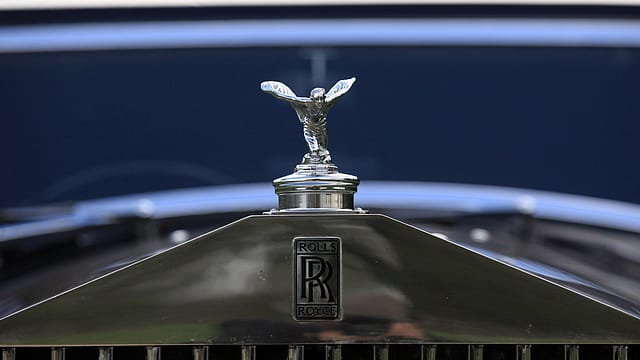
India wants to build its next-generation fighter jet at home. Now it wants an Indian heart beating inside it.
Reliance Industries and British aerospace giant Rolls-Royce have announced plans to jointly design, develop and manufacture a sovereign combat engine for India's Advanced Medium Combat Aircraft, or AMCA. And that makes this considerably bigger than another defence manufacturing tie-up. A modern fighter engine is among the most difficult pieces of technology in military aviation. India has spent decades trying to master it, but remains dependent on foreign engines for its frontline indigenous fighter programmes.
Reliance and Rolls-Royce now want to take a shot at changing that. “The partnership will offer a compelling proposition for joint development of the AMCA engine in India,” Reliance said, combining Rolls-Royce's propulsion expertise with Reliance's manufacturing and execution capabilities.
The operative words are “in India”.
Why is the engine such a big deal?
Because you can design an indigenous fighter jet and still remain dependent on another country for one of its most critical components.

Zeroing In on ECI
09 Oct 2026 - Vol 05 | Issue 41
Constitutional legitimacy versus political opportunism
The engine is the heart of a combat aircraft. It has to generate enormous thrust while surviving extreme temperatures and pressures. It needs to be powerful, reliable, fuel-efficient and compact enough to fit inside an aircraft designed for speed, manoeuvrability and stealth.
Getting all of that right simultaneously is extraordinarily difficult. Only a handful of countries possess mature capabilities to design and manufacture advanced fighter engines. India wants into that club.
Enter AMCA. The Advanced Medium Combat Aircraft is India's ambitious next-generation fighter programme. The stealth aircraft is intended to give the Indian Air Force capabilities significantly beyond the current Tejas generation and reduce India's long-term dependence on imported combat aircraft.
But building the aircraft is only one half of sovereignty. Powering it is the other. An indigenous engine would give India greater control over upgrades, production, maintenance and future fighter development without being as exposed to foreign suppliers or geopolitical restrictions. That is why the proposed Reliance-Rolls-Royce partnership matters.
What exactly are Reliance and Rolls-Royce proposing?
They want to build an entire aero-engine ecosystem rather than merely assemble engines in India. The companies are exploring the creation of a dedicated Aerospace Gas Turbine Complex in the country. The ambition is end-to-end. Design. Development. Manufacturing. Testing. Production. And support throughout the engine's operating life. Rolls-Royce would bring more than a century of advanced engineering and aero-engine experience. Reliance would bring Indian manufacturing scale, capital and execution capability.
If the partnership proceeds as envisaged, the goal is not simply to put a “Made in India” label on a foreign engine. It is to develop the capability to build one.
Why does India need sovereign engine technology?
Strategic autonomy. India's defence indigenisation push has increasingly focused on reducing vulnerabilities created by dependence on overseas suppliers for critical systems. Anant Ambani, executive director of Reliance Industries, put the argument plainly. “India's strategic autonomy requires sovereign capability in critical technologies,” he said. The ambition, he added, is to create an indigenous aero-engine ecosystem that could eventually make India globally competitive in advanced propulsion.
That last part is important. Once a country masters sophisticated gas-turbine technology, the possibilities extend beyond a single fighter. The knowledge can potentially feed into future military aircraft, unmanned systems and other advanced propulsion applications.
Haven't we tried this before?
That is the uncomfortable part of the story. India has long wanted an indigenous fighter engine, but mastering the technology has proved exceptionally difficult. The country's indigenous Kaveri engine programme, launched decades ago, struggled to achieve the performance required to power the Tejas fighter. Tejas, therefore, flies with American-origin GE engines. That experience demonstrated a hard truth about defence self-reliance. Building the aircraft is difficult. Building the engine can be even harder. Which is why international collaboration has become central to India's strategy for acquiring the technological know-how required for its next generation of fighters.
So, will Reliance-Rolls-Royce definitely power AMCA?
Not yet. The announcement is a statement of strategic intent, rather than confirmation that the Reliance-Rolls-Royce engine has been selected for the AMCA. The two companies will explore a partnership and pitch a joint-development proposition for the programme.
That distinction matters. India's fighter-engine plans involve government decisions, technical requirements, development timelines and competing international propositions before a final path emerges. So this is the beginning of a bid, not the end of the race. But it is an ambitious bid. Rolls-Royce CEO Tufan Erginbilgic said the proposed partnership would combine the British company's advanced engineering and engine expertise with Reliance's industrial capabilities to help build a self-reliant Indian aerospace ecosystem.
And why is Reliance interesting here?
Because this would push India's largest private-sector company deeper into one of the most technologically demanding areas of defence manufacturing. Reliance isn't proposing merely to become another component supplier. The Aerospace Gas Turbine Complex envisaged by the partnership would seek to create capability across the entire engine lifecycle. And the relationship could eventually extend beyond AMCA into civil aerospace and other power and propulsion technologies. That gives the proposed partnership a much larger industrial ambition.
What is really at stake?
A fighter jet can be assembled from thousands of components. But some technologies determine whether a country is truly autonomous. The engine is one of them. India has already demonstrated that it can design increasingly sophisticated combat aircraft. The harder frontier is propulsion. Reliance and Rolls-Royce are now proposing to attack precisely that problem. If they succeed, AMCA gets more than an engine. India gets closer to owning the heart of its fighter jet.
(With inputs from ANI)